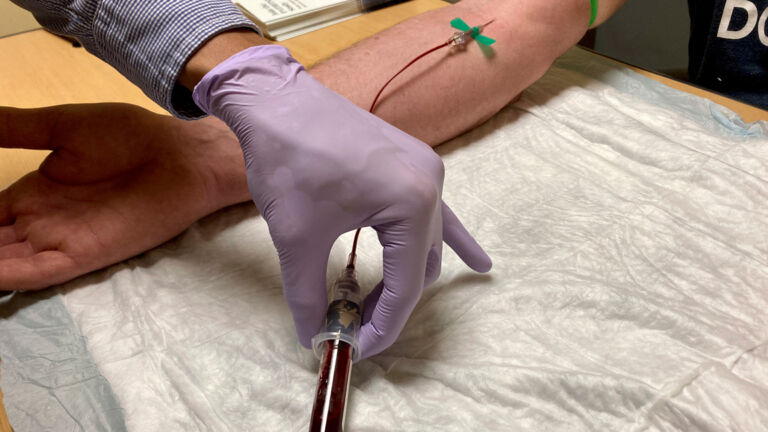
Experts from Rutgers University hosted a public meeting at Paulsboro High School Thursday night to provide an update on their work to study levels of the toxic chemical PFNA in the blood of town residents. Groundwater in Paulsboro has been found to have some of the highest PFNA contamination in the world, and that pollution spurred a drinking water crisis in the region about a decade ago. Changes to the town’s water treatment have made the water safe to drink, but scientists are now trying to figure out what, if any, the long-term health impacts will be.
The study, funded by the Centers for Disease Control and Prevention and part of a national effort, is aimed at testing 1,000 adults and 300 children in Paulsboro. So far, only 551 adults and 45 children have been tested. The Rutgers team leading the study is urging people to continue to get tested.
Early results have found declining PFNA levels in the blood of 21 people who also participated in a previous survey, meaning that the chemicals are leaving their bodies over time.
“That PFNA is removed by the treatment very effectively. And so we would expect that the results would come down. This is confirmation of that,” said Dr. Robert Laumbach, an associate professor at the Rutgers University School of Public Health.