 Credit: (AP Photo/Gillian Flaccus)
About 400 people have so far signed up for tests to determine links between “forever chemicals” and human illness at Paulsboro in Gloucester County, New Jersey’s only site in a national study, officials said.
Six months after the delayed opening of Paulsboro’s office to manage the local study, 396 people have enrolled, of whom 303 including 23 children have completed testing. But the numbers are still well short of the 1,000 adults and 300 children that officials are hoping for by next May.
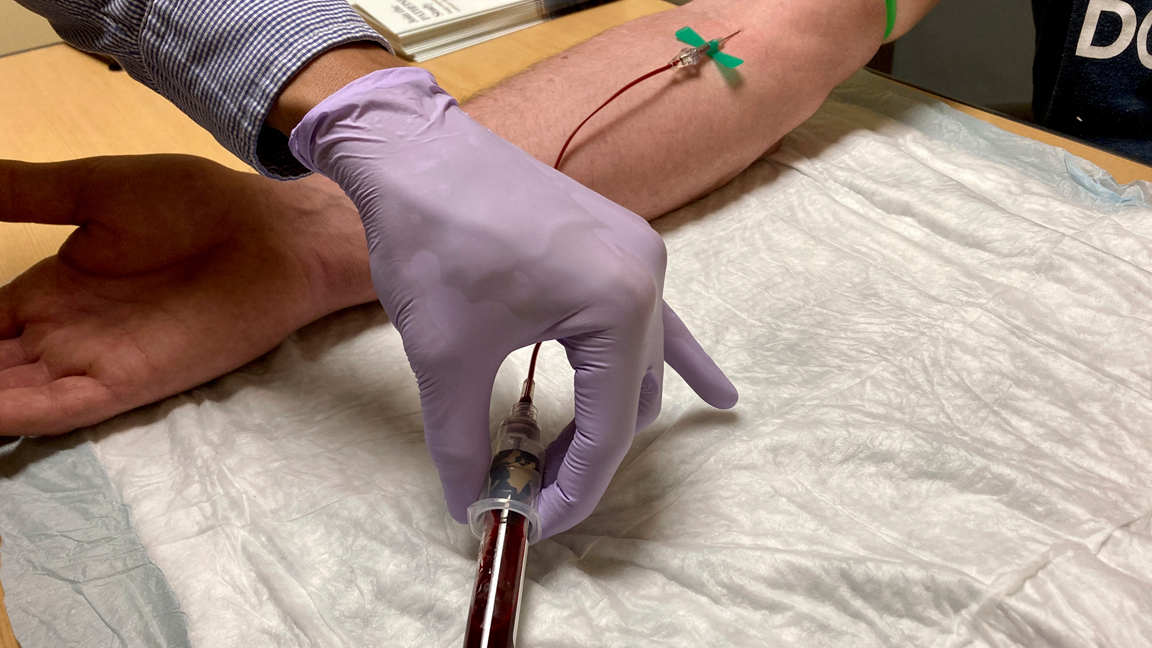
The study seeks volunteers who lived in Paulsboro from 2005 to 2014.The volunteers need to agree to have their blood and urine tested and to complete a medical questionnaire so that scientists can establish whether any illnesses are related to exposure to the chemicals, formally known as PFAS or per- and polyfluoroalkyl substances.
Paulsboro is one of eight sites for the nationwide study being overseen by the Centers for Disease Control and Prevention and the federal Agency for Toxic Substances and Disease Registry and managed locally by public-health experts at Rutgers University.
The town became a prime example for this contamination in 2014 when one of its public drinking-water wells was temporarily shut down after being found to contain a high level of PFNA, a type of PFAS chemical. Critics blamed the contamination on Solvay, a chemical company that was sued by the Department of Environmental Protection in 2020 for allegedly allowing the chemical to leak into soil and groundwater from its plant in nearby West Deptford. The company has said that it voluntarily stopped using PFNA at the plant in 2010.
The well was reopened after being fitted with filters that remove the chemical in drinking water.
More volunteers, more evidence
Now, test results from participants in the Paulsboro study are expected to provide more evidence on how health is affected by the chemicals, which are already linked to illnesses including some cancers, low birth weights, reduced response to vaccines, and elevated cholesterol.
Dr. Rob Laumbach, a Rutgers public health professor who is running the Paulsboro study, urged more people to volunteer so they will know whether their own health has been affected by drinking PFAS-contaminated water, and to contribute to wider knowledge on the emerging science of the “forever chemicals.”
“Many of us are exposed but what levels of exposure cause what levels of risk is something that we’re trying to learn from this study,” Laumbach said during an online meeting Wednesday evening. “When we do learn that in the future, then knowing what your level was currently may be especially important.
“So we really want to encourage people to participate — both as a contribution to the community in Paulsboro, to communities across the state who are exposed to PFAS, and throughout the country and around the world. But there’s some personal benefit that people get from participating. “
‘We’ve installed the state-of-the-art system to make sure our water is safe, and we’re getting ready to add on to that with another set of filtering… We probably have the safest water in the state of New Jersey.’ — Gary Stevenson, mayor of Paulsboro
In a new sign of growing scientific concern about the chemicals’ health effects, the prestigious National Academies of Science noted that more than 2,800 sites in all 50 U.S. states are shown to contain some level of PFAS, and it called the pervasiveness of the contamination “alarming.”
The research group said in July that current federal guidance doesn’t recommend when to test for PFAS, how to interpret results, or how to treat for PFAS exposure. It urged doctors to offer blood tests to patients who are likely to have a history of elevated exposure to the chemicals.
Change in standards
In June, the Environmental Protection Agency sharply lowered its recommended health standards for PFOA and PFOS, two of the most commonly found PFAS chemicals in drinking water, after years of criticism by advocates who said earlier guidelines were too lax to adequately protect public health. The agency also issued new health advisories for two so-called replacement chemicals which have been used by some manufacturers in response to emerging evidence that the new substances were at least as toxic as the original chemicals.
Since 2014, New Jersey has become a national leader in setting strict health standards for three of the chemicals — PFNA, PFOA and PFOS — in drinking water. The state’s utilities are now required to meet those standards. PFAS are known as “forever chemicals” because they don’t break down in the environment and accumulate in the human body.
‘Paulsboro is very competitive, it’s a big football town, it’s a big wrestling town, so we are going to try to bump our numbers up and try to get a higher placement by the end of May.’ — Kerry Margaret Butch, community engagement coordinator
In Paulsboro, Mayor Gary Stevenson urged more people to sign up for the testing. He said there’s no doubt that Paulsboro’s water is safe to drink now, thanks to the PFAS-filtration equipment that has been installed over the last decade.
“We’ve installed the state-of-the-art system to make sure our water is safe, and we’re getting ready to add on to that with another set of filtering, and we have state documentation to back that up,” he said, during Wednesday’s conference. “We probably have the safest water in the state of New Jersey.”
But he acknowledged that current conditions don’t protect people who might have drunk contaminated water in the past, and those, he said, should participate in the study.
Knocking on doors
Study officials will now go door to door with the aim of getting more people in the town of about 6,000 to sign up by the end of the enrollment period in May 2023.
Kerry Margaret Butch, community engagement coordinator with the study, defended the numbers so far, saying they are in the middle of the range of sign-up rates in other places, and ahead of those seen in Horsham, Pennsylvania, where about 1,000 people have signed up, though in a much larger community of some 80,000 people.
“Paulsboro is very competitive, it’s a big football town, it’s a big wrestling town, so we are going to try to bump our numbers up and try to get a higher placement by the end of May,” Butch said. She promised that professional staff will minimize any discomfort caused by having blood drawn.
If the required number of participants is not reached by May, there is some discussion of the study being extended, she said.
Still, participants will likely wait for months after providing samples to get their results because of procedures at the federal testing centers where samples are analyzed, said Laumbach.
He said he recently submitted the first batch of 50 samples and doesn’t expect to see the results for some time.
“I imagine there shouldn’t be any reason not to send them back immediately when we get them. But the big holdup right now is us getting them back from CDC so we can give them back to people,” he said.
But he said the anticipated delay isn’t likely to worsen the health outlook of anyone who has been exposed because the chemicals stay in the body for years, and their level will not change significantly over a period of months.