Credit: (Genesis Obando/NJ Spotlight News)
A skinny young woman carefully approaches the Integrity House van on Frelinghuysen Avenue in Newark, a big bucket hat barely concealing two swollen black eyes she said resulted from a beating with a baseball bat.
Nurse Natacha Vincent tenderly examines the woman’s wounds, gently coaxing from her the information Vincent needs without scaring her away with invasive questions, and decides the swelling needs to be drained. The van is spotless inside, but not sterile, and Vincent knows the infection risk. She gives the young woman water, snacks, basic wound care supplies and the address of a free clinic around the corner.
This is harm reduction.
The young woman may not go to the clinic, but Vincent and her colleagues at Integrity House — which has been providing services for people with addictions for more than five decades — have seen how one interaction with a mobile health nurse can lead to more. Next time the young woman might want clean clothes, or a HIV test. If they can help her stay alive, some day she might ask about drug treatment.
 Credit: (Genesis Obando/NJ Spotlight News)
“Ultimately, we’d love everyone to be abstinent, but that’s not realistic,” said Julie Totton, who oversees Integrity’s mobile community care program, which includes the van. It also provides the opioid-overdose antidote naloxone, or Narcan, medication to treat opioid addiction, help with housing, transportation and more. The van operates three days a week; on Wednesdays it’s parked on Frelinghuysen Avenue, near McClellan Street, across from a McDonalds.
“If we can get someone to test their heroin and know that there is fentanyl in it, that’s harm reduction,” Totton said.
Robin Shorter, Integrity’s senior director of community engagement, agreed. “If we can get you to have a pocketbook full of condoms as you go out to make your money to get your drug supply, not only do I keep you safe, I keep the community safe. There are just so many benefits,” she said.
“Abstinence is ideal, but I’m a person with lived experience,” Shorter added, pointing to her years of chronic drug use. “But it’s not for everyone right now. You start to develop a relationship, share experience, give them a vision of what works,” she continued. “The better you feel about yourself, the more you start to trust us, and that therapeutic relationship develops.”
More on harm reduction: an interview with Robin Shorter
Harm reduction trend in NJ
New Jersey officials have recently embraced harm reduction — an approach designed to reduce overdose deaths, infectious disease and other harms associated with drug use, without imposing stigma or judgment on the people needing help or requiring them to change their behaviors or be “sober” to get services. The state is committing $24 million in funds from the national opioid settlement over two years.
Health commissioner Dr. Kaitlan Baston, an addiction specialist, said this investment has allowed New Jersey to expand its roster of harm reduction services from programs in seven counties to a mix of mobile and brick-and-mortar initiatives that reach 19 of its 21 counties. The initial programs — in Asbury Park, Atlantic City, Camden, Jersey City, Newark, Paterson and Trenton — had survived on $4 million annually in recent years after nearly a decade of little or no public funding.
“We have more than we need to do. But this is a huge, huge investment,” Baston said in May at the state’s first harm reduction conference, something she said will become an annual event. “And it’s just the beginning. This was just the first tranche of funding.”
On the road, in the street
Integrity House launched its mobile van program in May 2023, funded with some $240,000 from the office that oversees addiction services within the state Department of Human Services. Approximately 1,500 people have engaged with the program since then, Shorter said.
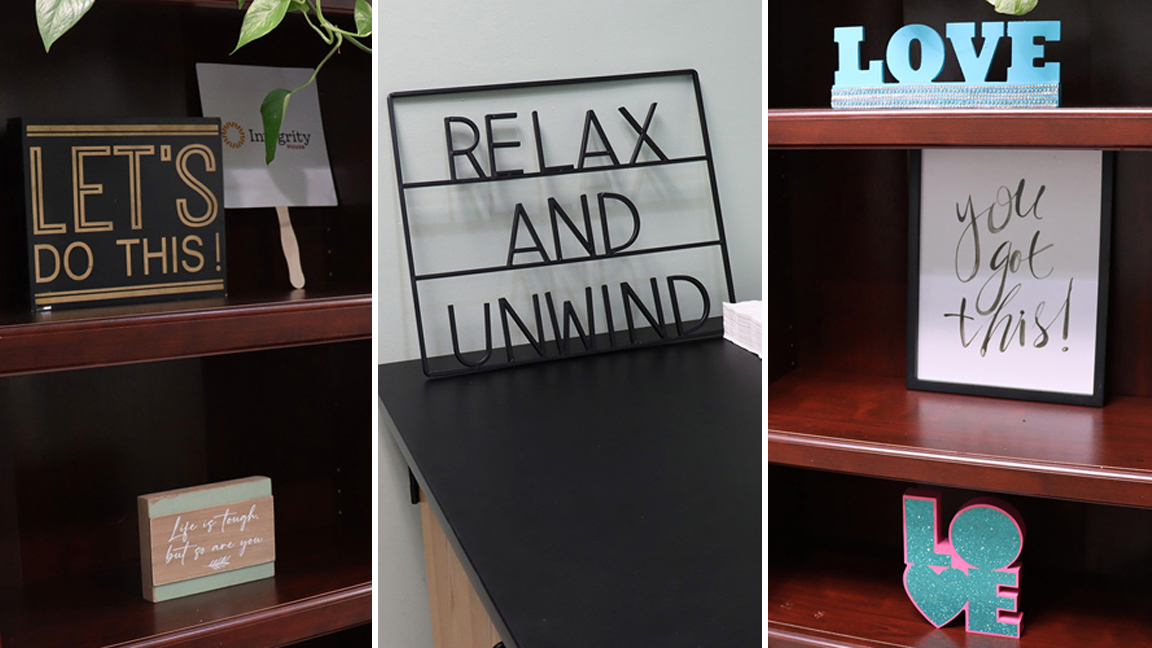
This year Integrity used $150,000 from the state Health Department to establish a brick-and-mortar harm reduction program in downtown Newark. In late August they opened a bright, cheerful storefront site at 26 South Street, near the corner of Broad Street, which operates Tuesdays and Thursdays from 10 a.m. until 2 p.m.
 Credit: (Lilo H. Stainton/NJ Spotlight News)
Robert Budsock, Integrity’s president and CEO, said the location is central, easy to access by bus and on the same block as other Integrity House services, including a comprehensive free clinic that offers mental and physical health care, directly across the street. It’s also a place where drug use is happening, he said, and where overdoses are common. “The folks who need these services, this is where they are,” Budsock said.
Integrity’s recovery programs are designed to be accessible to all, including those without health insurance, a home or identification. But historically this work required abstinence, something Budsock agreed is not for everyone.
“What do we do with those folks that are not ready for treatment? Do we kick them to the curb? Do we give up on them? Do we shun them from society?” he asked. “Or do we open up our doors and open up our arms and provide some comfort to them and some services that are going to help them be healthier, live longer, and hopefully, eventually, become the best version of themselves?”
Changing approach
Harm reduction is a relatively new addition at Integrity House; Shorter and Totton conceded they were skeptical, until they learned more.
 Credit: (Lilo H. Stainton/NJ Spotlight News)
“Integrity House has changed. My views have changed. The views of our board have changed, and the views of our staff have changed as a result of the research and the outcomes demonstrating how harm reduction saves lives,” Budsock said.
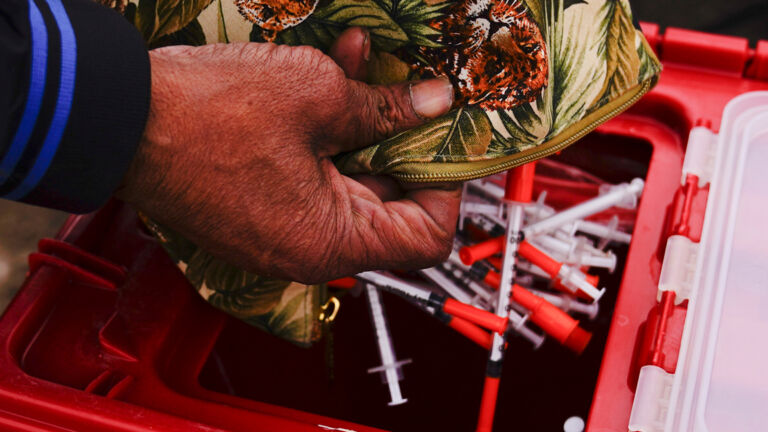
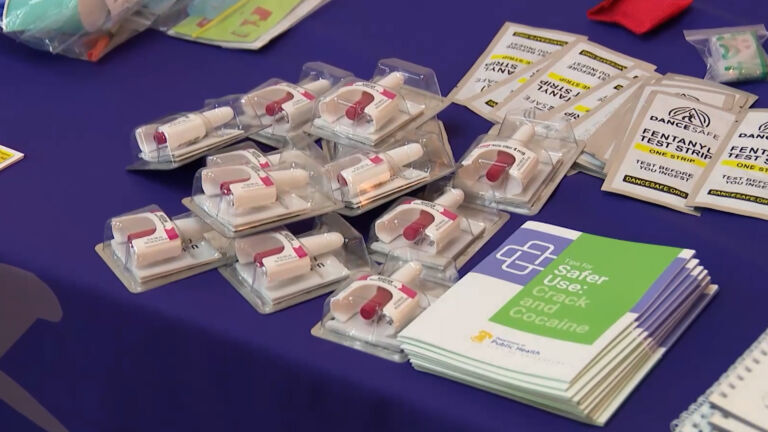
Like the mobile van, the fixed harm reduction site on South Street offers snacks and water, condoms, fentanyl test strips, naloxone, referrals and more. It also provides sterile syringes to help reduce the spread of blood-borne infections among IV-drug users, a service Integrity House hopes to add to the van in the coming months. Supplies are available for anyone who needs them, including family members of people who use drugs.
The number of fatal overdoses in New Jersey has declined over the past two years after peaking in 2021, when more than 3,100 residents died from drug use. There were nearly 2,600 overdose deaths in 2023 and, as of August, drug fatalities are trending even lower this year.
But drug deaths are on the rise in New Jersey for Black and Hispanic residents, statistics show. Black people had an overdose fatality rate of 51.4 per 100,000 population compared to 38.9 for white residents, according to the state’s overdose data dashboard.
Forgotten people
Budsock said the growing availability of naloxone has helped reduce deaths overall, but with suffering on the rise for some communities, there is more work to do. The South Street location is an important step to expand Integrity House’s harm reduction footprint, but he and his colleagues agree the van remains critical to reach some clients.
 Credit: (Genesis Obando/NJ Spotlight News)
“It’s the forgotten population, that invisible population that doesn’t really fit anywhere,” Shorter said. The downtown location can feel inaccessible to those without transportation or identification, she said, or because they are in a wheelchair or wanted by the police. “Just issues upon issues, layers of issues. We try to keep the person with us [at the van] just long enough so we can peel away some of the layers and make them feel a little bit better,” she said.
For many of the van’s clients on Frelinghuysen Avenue — a desolate stretch of warehouses, abandoned buildings and empty lots — this area is home, Shorter and Totton said. Drug use may be the easiest way to face the cold and fear that can accompany homelessness or dull the pain of losing a loved one, they said.
“A lot of these people haven’t left this six-block radius in years,” Totten said. “And they come back every week and talk to us. They know they’re being seen. They know they’re being heard.”