
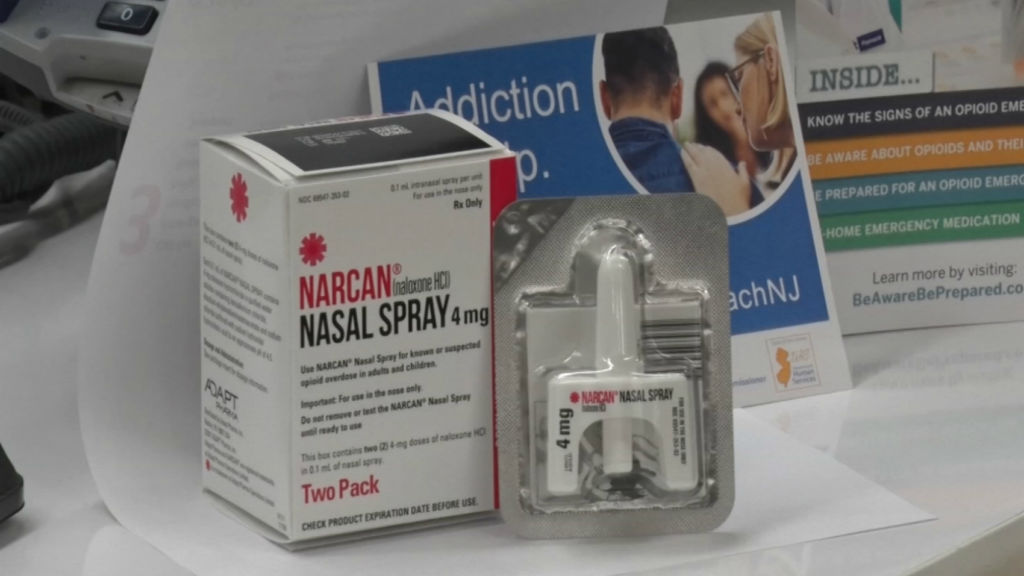
Over the past five years New Jersey has distributed nearly 460,000 doses of the opioid antidote naloxone to individuals, community organizations and first responders — an effort experts believe has helped in turning the tide on drug-related deaths in this state.
But while fatal overdoses were down overall in 2022 — the first year-over-year decrease in nearly a decade in the state — New Jersey has reported a rise in drug-related deaths among Black and senior residents. State officials are now responding with a small but carefully targeted harm-reduction program.
Using $200,000 from a larger federal grant, the state Department of Health said it will purchase naloxone kits that can test for fentanyl — a potent synthetic additive often found in street drugs — and other life-saving supplies. These items will be distributed by grassroots partners who work with people who use drugs at specific sites where Black and Hispanic people have overdosed in high numbers in recent years, the state said.
“While no corner of our state has been spared the devastating impact of the opioid overdose crisis, we know that this crisis is having a disproportionate impact on Black and brown communities right now,” Health Commissioner Judy Persichilli said announcing the program early this month. “Getting these critical tools into hardest hit areas will save lives.”
Since 2018, the state Department of Human Services, which oversees addiction treatment, has distributed some 212,000 two-dose naloxone kits through various give-away programs and an online portal, which launched last year. Officials said some 400 pharmacies have also enrolled to provide the drug — in nasal spray or subdermal shot — free of charge, thanks to a program Gov. Phil Murphy announced earlier this year.
“We look forward to more and more pharmacies participating and getting life-saving naloxone into as many hands as possible,” DHS Commissioner Sarah Adelman said.
Opioid antidote
Law-enforcement personnel and first responders have also administered nearly 60,000 doses of naloxone (also known as Narcan) since 2018, according to data compiled by the state attorney general’s office, including nearly 1,300 times just in January of this year.
Figures from the state medical examiner indicate 2,892 people died of drug-related deaths in 2022, down from 3,124 in 2021, and 592 fatalities have been reported thus far in 2023. However, fatality rates among Black and Hispanic residents here are increasing, with the number of overdose deaths up 28% for Black people in New Jersey between 2021 and 2022.
‘Getting naloxone to community groups doing on-the-ground work in their neighborhoods is essential if we want to save lives.’ — Jenna Mellor, New Jersey Harm Reduction Coalition
Advocates for harm-reduction services — which can help people who use drugs stay alive, avoid infection and connect with other assistance — welcomed the initiative but said more was needed to truly meet the needs in New Jersey, including better access to clean needles. The state health department has been talking about adding to the seven existing needle-exchange programs for at least a year but has faced challenges in building local support. (The new grassroots initiative does not involve needle distribution.)
Some advocates are also more focused on Gov. Phil Murphy’s plans to distribute more than $600 million in funds from national court settlements involving opioid manufacturers and sellers. Last week Murphy signed a bill to create a fund and codify the existence of an advisory council that will help determine how to divvy up the money to treatment, prevention and harm-reduction efforts.
Welcomed help
Participants welcomed DOH’s support for their work.
“It definitely does help subsidize our program. Our resources are very limited,” said Bre Azanedo, who leads the harm-reduction efforts at Black Lives Matter Paterson, one of the grassroots organizations that will benefit from the new DOH program. “It’s not enough, but it does help us a lot.”
BLM Paterson recently opened a resource center at its Broadway headquarters, Azanedo said, where people can escape the cold and connect with housing, detox or treatment services. But much of their harm-reduction work is on the streets, providing condoms and Narcan to sex workers who use drugs, as well as educating neighbors about their needs to reduce the stigma and shame, she explained.
“Our community has been left out of the conversation on harm reduction for so long,” Azanedo said. “And it’s not just syringes and Narcan.”
The new state program is designed to target communities that have seen overdose rates rise in recent years, The department used data from police and other emergency responders to identify nearly three dozen locations where at least nine overdoses have been reported in two or more years since 2019, it said. This revealed four common types of locations: transportation centers, correctional facilities, motels and apartment complexes.
The department declined to release a list of the sites, citing confidentiality concerns. The grassroots partners range from BLM Paterson and the Newark Community Street Team to the Mercer County Human Services department, according to Nancy Kearney, the department’s deputy communications, and the agency is encouraging more to sign up. However, the program will only last through August, when the federal grant is set to expire, she said.
While short-lived, some advocates praised the health department initiative for its data-driven approach and the decision to engage grassroots groups who have established connections with people who use drugs.
“Getting naloxone to community groups doing on-the-ground work in their neighborhoods is essential if we want to save lives,” said Jenna Mellor, director of the New Jersey Harm Reduction Coalition, which serves as a naloxone conduit to other groups and individuals, in some cases through the U.S. Postal Service.
“Naloxone is an incredible, lifesaving medication — but it only works if the people most likely to witness overdoses in their communities have it on them, in as much quantities as they need, not only to use but also to distribute to their friends and social networks,” Mellor said. “This initiative is an important step to making that possible.”
