
 Credit: (NJ Spotlight News)
In 2023, New Jersey legislators contending for every seat on the ballot will be running for the first time in redrawn districts, adding some uncertainty about the makeup of the State House at a tumultuous political time for the state and nation.
All 120 seats in the Legislature are in contention, and with only Senate seats atop the ticket, there’s likely to be a low turnout. The last time the Senate led the ballot in 2011, just 27% of all those registered to vote cast ballots.
One thing for certain, there will be at least a few new faces once all the votes are counted next November, as a number of legislators have already announced their retirements. They include Sen. Christopher Connors (R-Ocean), the longest-serving Republican in the Legislature, and first-term Sen. Jean Stanfield (R-Burlington). Assembly members Parker Space and Hal Wirths, both Sussex County Republicans, and Republican Kevin Rooney of Bergen are also packing it in.
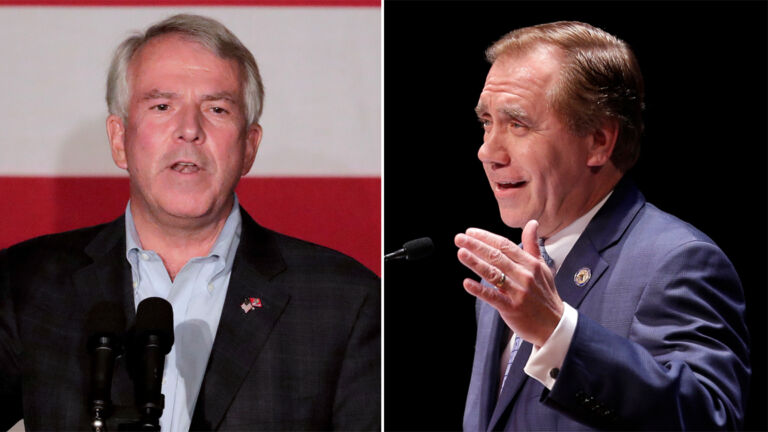
Partisan compromise in NJ legislative redistricting effort gives reformers hope
Republicans have said the new map, chosen by an unusual bipartisan vote last February, gives them the chance to pick up a number of seats and possibly take control of at least one house. They are also emboldened by their party’s gains in recent state elections.
Flipping Senate seats
But political observers say that could be a stretch, maintaining the GOP may be able to flip two districts at most, which would allow Democrats to continue single-party control in Trenton, albeit with smaller margins.
“It would be a truly steep, uphill climb,” Micah Rasmussen, director of the Rebovich Institute for New Jersey Politics at Rider University, said of the GOP’s ability to take control of the Senate.
The party would need to unseat five Democrats while holding on to the 16 seats they currently control. “To see that level of broad turnover across all regions of the state, you’d expect something seriously lopsided in the current political environment,” Rasmussen said.
“What I would have wanted to see in 2022 to suggest this kind of shift is Monmouth Republicans coming closer to Pallone, the Gloucester Republicans taking control of the county, and the Somerset Republicans winning some countywide races,” he continued. “But we didn’t see any of that, and so while I’ll never say ‘never,’ we’re just not detecting that deep of a sea change at the moment.”
‘In a low-turnout election, like we expect 2023 to be, small groups can have an outsized influence.’ — Ben Dworkin, Rowan Institute for Public Policy and Citizenship, Rowan University
On the other hand, Republicans picked up a net seven seats in the 2021 election, including the unforeseen upset of then-Senate President Steve Sweeney and his running mates in the 3rd District in the southwestern part of the state. Pundits attributed those and other losses in South Jersey at least in part to the national shift of working-class Democrats to the Republican Party. The 4th District, which will include parts of Atlantic, Camden and Gloucester counties, is likely to be a key battleground Democrats will try to defend this fall.
Too soon for prognostication?
Still, it’s too early to predict what may happen 10 months from now and whether the arguments legislators already have been making will resonate with the expected small number of voters who cast ballots.
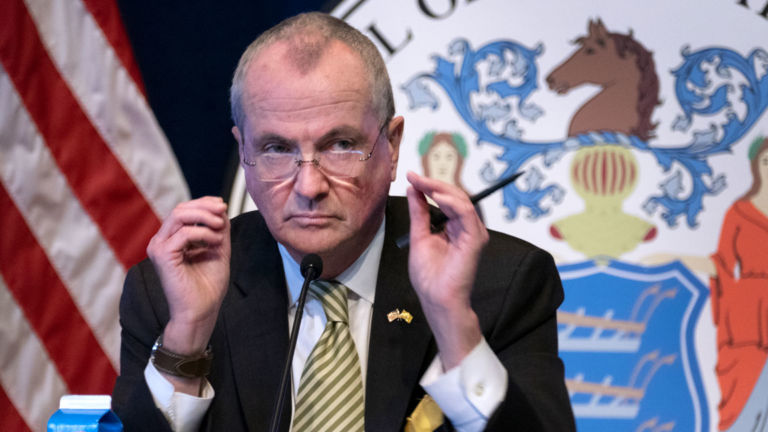
Governor underperformed Senate colleagues in a dozen districts, lost the most ground in South Jersey
“In a low-turnout election, like we expect 2023 to be, small groups can have an outsized influence,” he said. “So if you can motivate a small group of parents about school curriculum, or you can motivate a small group of pro-reproductive rights voters in a particular district, it can make the difference. The close races are going to be decided by 500 or 1,000 votes.”
During his response to Gov. Phil Murphy’s State of the State address last week, Sen. Steve Oroho (R-Sussex), the Republican leader in the Senate, gave a preview of what GOP candidates are likely to focus on during this year’s campaigns, including school curriculum mandates.
Sex education
Although the state’s sex education standards were adopted in 2020, it wasn’t until early last year, when local boards of education began discussing what would be taught, that some parents began to complain. Ever since, conservative Republican lawmakers have been stoking the issue and adding complaints about mandated teaching on diversity and inclusion.
Although not before Congress, a number of Republican House candidates made their opposition to the state standards part of their campaigns last year, so it is bound to show up in legislative races.
‘My sense is that we’ll see more economic, dollars-and-cents issues in South Jersey, where they are felt most acutely, and more social issues like abortion rights and gun safety as we move northward.’ — Micah Rasmussen, Rebovich Institute for New Jersey Politics, Rider University
“Instead of focusing on improving student achievement in reading, writing, and math, Gov. Murphy and Democrats have politicized our schools by injecting their radical ideologies into state education standards, which ends up being a time-wasting distraction in our children’s classrooms,” Oroho said last week. “Parents are upset about this. They feel like they’ve been denied a voice in their children’s education, and they’ve been mocked and chastised by Democrats when they’ve come to Trenton to express concern. Those parents deserve to be heard.”
Rasmussen said this state midterm will be a referendum on Murphy’s performance, as he is far better known than legislators.
“My sense is that we’ll see more economic, dollars-and-cents issues in South Jersey, where they are felt most acutely, and more social issues like abortion rights and gun safety as we move northward,” he said.
State spending is sure to be an issue as well, as the recent growth in taxes collected has moderated and as the state could be in the midst of an economic downturn by midyear. There is also less federal COVID-19 aid to spread around this year than in past years.
Taking the Republican tack, Oroho described the state budget process as “out of control” and chastised Democrats for having “no shame in tacking on billions in pork every year with no legitimate review or oversight.”
‘Our crime problem certainly wasn’t helped by Gov. Murphy’s early release of thousands of inmates from our prisons…’ — Sen. Steve Oroho, Republican leader in the Senate
Conversely, Democratic incumbents have taken to showcasing the money they have brought back to their districts for local parks, VFW halls and other pet projects, often referred to as pork or Christmas tree items in Trenton. They are also likely to tout the $2 billion “Anchor” property-tax rebate program that should provide up to $1,500 to homeowners, depending on income, as well as increased school aid if they represent a district where most schools got more money.
GOP candidates also are expected to try to portray the administration’s and Democrats’ policing and environmental policies as extreme.
Gas stoves on front burner
“He wants families to spend tens of thousands of dollars, and businesses millions of dollars, to replace their clean, efficient, and affordable gas appliances with electric versions that cost four times more to operate. The result will be huge increases in energy bills,” Oroho contended.
“The governor’s energy plan calls for massive wind farms to be built within sight of many beaches along the Jersey Shore. That will put New Jersey’s $45 billion tourism economy at risk, including half-a-million jobs that support families in our Shore communities and beyond,” he added.
Touching on crime, a popular Republican talking point nationally, Oroho brought up the early release of thousands of inmates in recent years. Most were due to the COVID-19 pandemic; a new law providing “pandemic credits” to many offenders with less than a year left on their sentences began releasing individuals up to eight months early the day after the 2020 presidential election and continues to release inmates. (Those convicted of murder or aggravated assault are ineligible, as are repeat sex offenders.)
‘Extremism writ large and abortion, more specifically, are now state issues.’ — Ben Dworkin, Rowan Institute for Public Policy and Citizenship, Rowan University
According to the state Department of Corrections, close to 7,600 people were released between November 2020 and November 2022 under the law. That helped reduce the state prison population by about a third.
“Our crime problem certainly wasn’t helped by Gov. Murphy’s early release of thousands of inmates from our prisons, or restrictions he and Democrats placed on police that prevent them from stopping rowdy mobs of teens who are visibly breaking the law,” Oroho said, referencing in particular increased car thefts, which Murphy contends were lower in the last four months of 2022 than the prior year.
The DOC has not done a recidivism study on the pandemic credits release. One conducted by a Rutgers professor found the rate of reoffending to be on a par with that of typical prison releases.
Right to bear arms
Republicans seeking office in some parts of the state, the south and west most likely, will also campaign against what Oroho described as the “unconstitutional restrictions on law-abiding firearm owners” enacted by Murphy “and Trenton Democrats.”
Alternatively, state efforts to control where people can carry guns, following last year’s U.S. Supreme Court ruling, will play well in many Democratic districts. And most Democrats will be lauding something else some Republicans have complained about, which is New Jersey’s codifying of abortion rights and providing funds to improve security at family planning clinics and expand the number of abortion providers.
Oroho, in a separate press release earlier this month, criticized what he called Murphy’s “extreme plan to use taxpayer dollars to fund more abortions without limits right up until the moment of birth.” But a majority of New Jerseyans have shown support for abortion rights, and some Democratic challengers in red districts already are portraying their opponents as extreme on women’s reproductive freedom.
“Extremism writ large and abortion, more specifically, are now state issues,” Dworkin said. “On the Republican side, their wedge issue targets parents’ rights and talks about sex education and school curriculum in general.”
For his part, Murphy did not propose any major progressive policies in his State of the State speech, unlike previous addresses. Many see this as an effort to prevent giving Republicans more ammunition in this year’s elections.
Also last week, he announced his support for ending the corporate-business tax surcharge that has generated $600 million for the state budget. That’s a move that has already drawn displeasure from left-leaning groups, but could help Democrats win some support from pro-business interests.
