Credit: (Passaic Valley Water Commission)
 WASHINGTON — For almost 20 years, the Passaic Valley Water Commission, a utility that provides water to roughly 800,000 people, has operated three open-air reservoirs in violation of a federal safety regulation.
Now a proposal pending in a federal court in New Jersey would shield the commission from any liability if customers get sick from tainted water — and give the utility until 2054 to comply with the rule.
Since 2009 the Safe Drinking Water Act has required utilities to cover or treat uncovered water storage sites — places vulnerable to pollution, pathogens and debris — for public health. The commission has yet to enclose or treat the water in its three open-air reservoirs: Levine in Paterson, and New Street and Great Notch, both in Woodland Park.
The commission, known locally as the PVWC, “has been working for many years to address the federal requirement that its three open finished-water reservoirs be covered or otherwise taken out of service,” Yitz Weiss, chief financial officer for the utility, said in an emailed response to NJ Spotlight News on Tuesday about the proposal. “The schedules have been modified over time as PVWC worked through the engineering, regulatory, permitting and other requirements associated with these major infrastructure projects.”
“There is no newly discovered threat to public drinking water, and the current filing does not reflect a finding that PVWC’s drinking water is unsafe,” Weiss said.
Public input sought
The U.S. Department of Justice and New Jersey state government, through the Department of Environmental Protection, submitted the proposed agreement, called a consent decree, in court. The public comment period closes Sept. 14.
Spokespeople for the Department of Environmental Protection and Gov. Mikie Sherrill, a Democrat, did not respond to requests for comment or to explain a compliance deadline of almost 30 years.
Matthew Nies, a Department of Justice spokesman, declined to comment in detail on the matter. In general, Nies said, the department “reserves the right to withdraw or withhold its consent to the proposed consent decree if the comments, views, and allegations concerning a judgment disclose facts or considerations which indicate that the proposed judgment is inappropriate, improper, or inadequate.”
The agreement is the latest consent decree for New Jersey reached during the second Trump administration. Other deals include a requirement to improve water quality in the Delaware River to protect the Atlantic sturgeon, cleanup of a toxic waste site in Passaic County and remediation of what are known as forever chemicals in a Salem County town.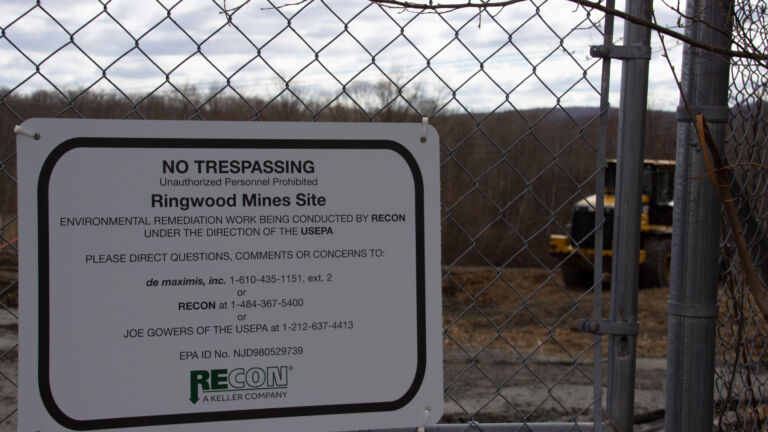
In their complaint, attorneys for the U.S. and the state accused the Passaic Valley Water Commission of violating the Safe Drinking Water Act and the 2009 rule. They demanded the court order the commission “to commence and complete construction of the covers for the Great Notch, Levine, and New Street Reservoirs or begin treatment of discharge water for human consumption.”
Under the proposed agreement, the commission agreed “to develop projects designed to bring the “Reservoirs into compliance” with the 2009 rule.
In March 2009, the utility entered into a deal with state environmental regulators to complete steps to reach compliance with the federal rule, according to the proposed pact. An agreement has been “amended and restated three times over the years,” the consent decree says, allowing the commission more time to comply.
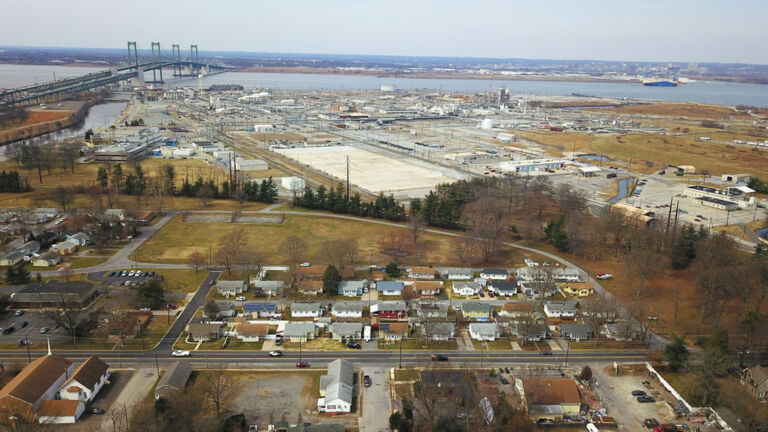
“After conducting a feasibility study, PVWC’s consultants concluded that for the Levine and New Street Reservoirs, the only viable option was to take them offline, drain them in whole or in part, and install concrete tanks” the document continues.
Construction to bring the Levine Reservoir into compliance, at a cost of about $41 million, is the furthest along of the three reservoirs. Completion of tanks for the Levine site are expected in mid-2027.
Microscopic parasites
Before it reaches the public, “raw surface water” flows through an agency treatment plant, then pumped into the reservoirs, and then to customers.
“Unfortunately, since these reservoirs are uncovered, they are subject to bacteriological and chemical contamination from wildlife and other natural and man-made causes,” the commission says on its website, noting that the quality of the water “may be compromised.”
“While the water withdrawn from the reservoirs is rechlorinated onsite to provide further disinfection, chlorine is not considered very effective against all pathogenic microorganisms such as Giardia and Cryptosporidium,” the website reads.
Cryptosporidium is a microscopic parasite that causes diarrhea. “Uncovered finished water reservoirs are vulnerable to contamination from stormwater runoff,” the complaint reads.
After flooding from Hurricane Ida in 2021, stormwater entered the New Street Reservoir, prompting the commission to issue a boil advisory for four cities. That advisory lasted 43 days and affected roughly 230,000 people.
That was the last time the commission issued a boil- advisory due to reservoir water conditions, Weiss said. “A boil-water advisory is a precautionary public-health measure and does not, by itself, mean that contamination has been detected.”
The commission was among more than 100 New Jersey water systems found in 2019 to be operating with unsafe levels of lead in their lines.