
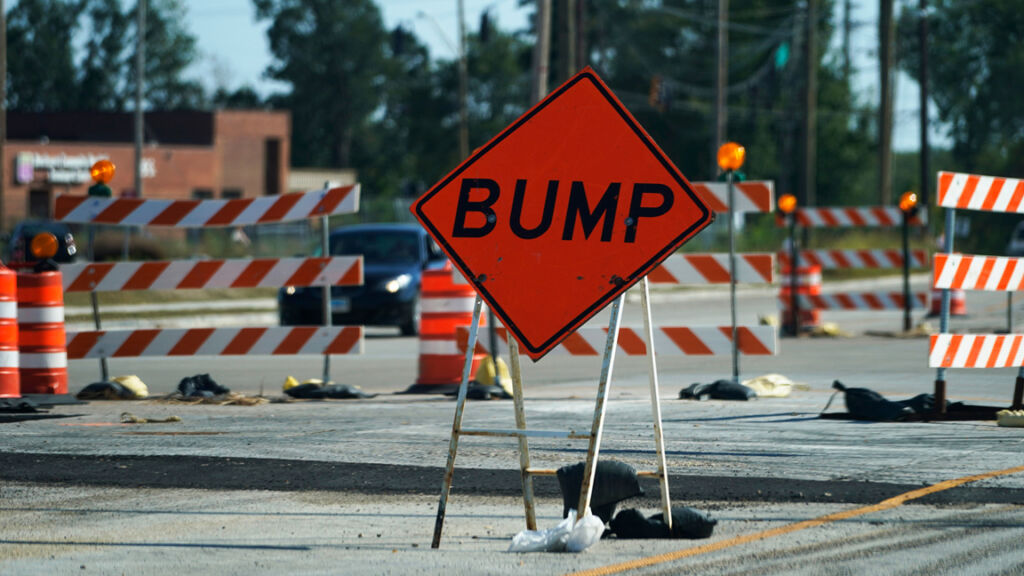
 Credit: (AP Photo/Nam Y. Huh)
 A key legislative panel cleared a debt refinancing plan expected to generate as much as $120 million in cash for New Jersey’s gasoline-tax funded Transportation Trust Fund.
Members of the Legislature’s Joint Budget Oversight Committee voted last week to authorize the refunding of a maximum $2 billion in bonds issued by New Jersey’s Transportation Trust Fund Authority.
The finance plan for the refunding issue reviewed by the bipartisan panel indicates current market conditions should allow for roughly 5% savings, with the proceeds going right back into the trust fund, officials said.
“That means more money will go directly to critical transportation infrastructure projects across New Jersey — from fixing potholes to fortifying local bridges to modernizing our mass transit stations — all while reducing debt for future generations,” said Sen. Paul Sarlo (D-Bergen), chair of the oversight panel.
Protected from raids
New Jersey’s Transportation Trust Fund, which is a separate account from the state budget, is the source for billions of dollars in annual spending on road, bridge and rail infrastructure improvements
The state gasoline tax is a primary revenue source for the trust fund, called the TTF. The state constitution requires that all revenue raised by the gasoline tax be deposited into the TTF, protecting it from being raided for other purposes by governors and lawmakers.
Approval of the TTF bond refunding plan comes as President Donald Trump’s unpopular war in Iran continue to raise gasoline prices nationwide significantly due, in part, to the disruption of tankers in the Strait of Hormuz, through which 20% of the world’s seaborne oil passes.
A gallon of gasoline sold in New Jersey this week was roughly $1 more than the same time last year, according to AAA New Jersey.
Other sources of TTF revenue include a registration fee paid by the owners of zero-emission vehicles, a portion of New Jersey’s annual sales tax collections and contributions from state toll-road authorities.
The TTF was last reauthorized in 2024, when then-Gov. Phil Murphy and Democratic legislative leaders approved more than $10 billion in new spending over five years.
The gasoline tax is subject to annual adjustments, with the latest on Jan. 1, to ensure that TTF spending remains on course. That adjustment increased the per-gallon levy to 49.1 cents for gasoline, and 56.1 cents for diesel fuel.
Annual decision
State government’s top public-finance officials meet each year in mid-November to determine whether the current gasoline-tax rate is expected to raise enough revenue to support the TTF’s multiyear finance plan. If the officials detect a significant shortfall, they are legally required to make an adjustment to maintain balanced trust fund spending.
State law also requires all TTF bond refundings to produce net present value, taking long-term costs and savings into account to determine whether the refinancing is worthwhile.
The refinancing plan reviewed by members of the oversight committee calls for using what are called equal maturity bonds, meaning the refunding will be paid over the same timeframe as the original debt, said David Moore, director of the state Department of the Treasury’s Office of Public Finance.
Moore told members of the panel the refunding issue is expected to save $120 million on a cashflow basis, and nearly $90 million in net present value. The expected savings will be used as cash to help pay for transportation-infrastructure projects, he said.
“It can only be used for transportation purposes, and it doesn’t have any benefit to the general fund,” Moore said.
This story is made possible in part by the Corporation for Public Broadcasting, a private corporation funded by the American people.
