Credit: (AP Photo/Vahid Salemi)
WASHINGTON — Since Israeli and U.S. forces attacked Iran in late February, support for the war among members of Congress has split along predictable lines: Republicans in favor, Democrats against.
That pattern largely holds, as critics have forced full House and Senate floor consideration for dozens of symbolic votes condemning the war.
Of the 13 Senate votes to end U.S. military operations against Iran, only three have passed. In the House, it’s just two. And only once, on June 3, have both chambers of Congress cleared a resolution to end the war: The House voted 215-208, followed by the Senate, 50-48.
After the Senate voted on June 23 — again, 50-48 — to halt U.S. military action versus Iran, President Trump denounced the result as “poorly timed and meaningless” and said it “provided aid and comfort” to Iran.
Now, as he and fellow Republicans stand by the war, Americans’ support for it is slipping. The conflict has driven up fuel and grocery prices, inflation and interest rates, and 95% of Americans say the U.S. has an affordability crisis, according to a Harris Poll released on July 7.
Come November midterms, voters will decide whether Republicans will maintain control of the House and Senate and keep Trump’s priorities on track.Venezuela and Lebanon
Congress, the sole branch of the U.S. government empowered to declare war, has not done so for Iran.
Nor has the administration come to Congress to request a war declaration for military action against Venezuela, which U.S. forces attacked in January, seizing former dictator Nicholás Maduro. House Democrats have also failed to compel a preemptive halt of U.S. forces from action in Lebanon.
The U.S. and Israel struck on Iran on Feb. 28. In late March, 61% of Americans disapproved of the president’s attack, while 37% approved, according to a Pew Research Center survey. Among Republican voters, 69% approved of how Trump had handled the conflict.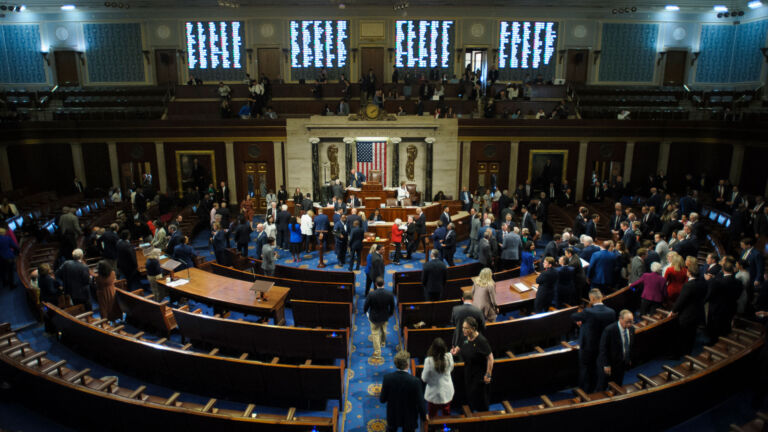
Support has waned slightly, in particular toward the president. Only 33% of Americans said the war against Iran is worth fighting, while 64% said it “has not been worth it,” according to an Associated Press-NORC Center for Public Affairs poll released July 30.
Republican support has dipped, to 61% who view the war as worthwhile, while just 10% of Democrats do.
The poll of 1,165 adults was conducted July 23-27 via online methods and landlines and cell phones. It has a margin of error of plus or minus 3.7 percentage points.
Failed measures
Rep. Josh Gottheimer (D-5th) forced one such Iran measure to a 212-212 House floor vote in May. Tie votes fail.
“I support the administration crushing the Iranian regime,” Gottheimer said during floor debate on his legislation, urging Trump to come to Congress with a plan for the war. “But that said, you cannot leave the United States Congress any longer — you can’t leave the American people — in the dark.”
The House and Senate, where Republicans hold majorities, have also repeatedly defeated measures to rein in the president’s legal authority to wage war in Lebanon and Venezuela.
The House, before recessing for the summer, agreed to a $95 billion budget plan whose $73 billion in military funding is mostly for the ongoing war against Iran. That money has not been appropriated.
Democrats, including Sen. Cory Booker from New Jersey, have demanded open congressional hearings on the war and failed.
“The Trump administration must answer questions publicly under oath in front of the American people, not just behind closed doors,” Booker, a member of the Senate Foreign Relations Committee, wrote John Thune, the Republican leader of the chamber.
‘Another Afghanistan’
New Jersey GOP Reps. Jeff Van Drew (R-2nd), Chris Smith (R-4th) and Tom Kean Jr. (R-7th) have held steady with the administration over the war.
“This is not, I don’t believe, the time to cut the legs out from underneath the president,” Van Drew said of the war in an interview with NJ Spotlight News. “We don’t want it to be another Afghanistan, which was a terrible embarrassment.”
Kean missed several votes on restricting the president’s war powers while he was mysteriously absent from Washington, D.C., for months. Upon his return he disclosed that he had been treated for depression.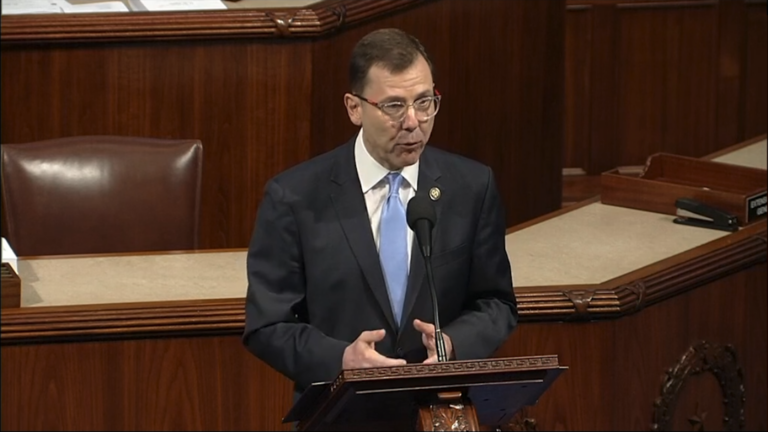
Defense Secretary Pete Hegseth, briefing Congress recently, said the cost of the war was about $37.5 billion.
Rep. Donald Norcross (D-1st) said in recent interview with NJ Spotlight News he was skeptical of the Pentagon’s cost estimates.
“I want to see the real figures,” Norcross said. “Any war is expensive, through the pocketbooks of the people paying for the equipment. Certainly serious to those who put their lives in jeopardy.”