
 Credit: (John Reitmeyer/ NJ Spotlight News)
Gov. Phil Murphy is leaving office later this month, but a key member of his administration is staying on to lead the department that oversees the multibillion-dollar state budget and other core financial operations.
Gov.-elect Mikie Sherrill announced earlier this week that she will nominate Aaron Binder, who currently serves as deputy treasurer in the state Department of the Treasury, to take on full leadership of the department as treasurer once Sherrill takes office on Jan. 20.
Binder’s nomination, which is subject to state Senate confirmation, ensures continuity as Murphy gives way to Sherrill, a fellow Democrat and former congresswoman who is a newcomer to state government.
Binder served as a top budget committee staffer in the state Assembly before joining the Murphy administration, where he oversees the Division of Taxation, the offices of Management and Budget and Revenue and Economic Analysis, as well as the Division of Revenue and Enterprise Services.
If confirmed, he would succeed current treasurer Elizabeth Maher Muoio, who has led the department throughout Murphy’s eight years in office.
In a statement, Sherrill stressed the importance of having an “experienced leader” at Treasury, a 3,000-employee department that oversees major state financial functions, including the annual budget, taxation and administration of the public-employee pension system.
“Together, we will ensure that New Jerseyans’ tax dollars are being spent wisely, continue to fully fund our pension system, and work to invest in the programs that help families make ends meet,” Sherrill said.
Murphy could not run for reelection last year due to constitutional term limits. But during his tenure, and with Muoio serving as treasurer and Binder as a top deputy, New Jersey has seen a string of credit-rating upgrades from major Wall Street rating agencies.
State government has also resumed making full annual pension contributions, retired billions in bonded debt and boosted the size of its budget reserves since Murphy, a former Wall Street executive, took office in early 2018.
“I look forward to working with the Governor-elect to continue building fiscally responsible budgets that invest in the future of our state, lowers costs for families, and ensure that New Jerseyans’ tax dollars are being spent wisely, efficiently and are invested in the areas that matter most,” Binder said in a statement distributed by Sherrill’s transition office.
Praise for Sherrill’s pick
Muoio, a former state lawmaker who served on the Assembly Budget Committee, has given Binder’s selection her endorsement, saying she “could not be more pleased” to see him become Sherrill’s nominee for treasurer.
“It is deeply gratifying to be handing the reins to a trusted and talented colleague who has worked alongside me and who values the mission and people of Treasury as much as I do,” Muoio said.
“Aaron is an excellent choice, and I know he and the Treasury team will continue to serve the people of New Jersey well,” she said.
Binder’s selection has also drawn praise from several top lawmakers, including those who play a key role in appropriating the nearly $60 billion that’s spent each year through the state’s annual budget.
“New Jersey is fortunate to have his leadership, and I cannot wait to see all that he will accomplish in this next chapter,” said Assembly Budget Committee Chair Eliana Pintor Marin (D-Essex).
Still, Binder will take the helm at Treasury during a period of potential turbulence.
Overall tax collections have been running slightly ahead of last year’s totals through the first half of the state’s July-to-June fiscal year, but the nearly $60 billion budget itself is operating with a more than $1 billion gap between planned annual spending and revenues, according to budget documents.
And while Murphy and lawmakers have tapped budget reserves and other one-time sources of revenue to cover the structural gap in recent years, Sherrill comes into office at a time when those types of options are becoming more limited.
New policies enacted by Republican President Donald Trump and the GOP-led Congress are also shifting more costs down to the state level, adding to the pressure to hike taxes at a time when many basic necessities like housing and utilities have become unaffordable for many New Jersey residents.
Transparency
For her part, Sherrill has stressed affordability issues as a key concern. And she also promised voters while campaigning that she would improve oversight of the state spending, including by establishing a “plain-language budget” that would, among other things, make it easier for residents to track changes in state spending over the long-term.
“These plain-language budgets will clearly show where the money comes from — including taxes, fees, and other revenue — and how it is spent, broken down by program, department, and initiative,” according to a transparency and accountability agenda released by Sherrill’s campaign last year.
Budget transparency has emerged as a key issue during Murphy’s tenure, with many advocacy groups from across the political spectrum expressing concern in recent years about how top Democratic legislative leaders have handled the final weeks and days of the budget-approval process in Trenton.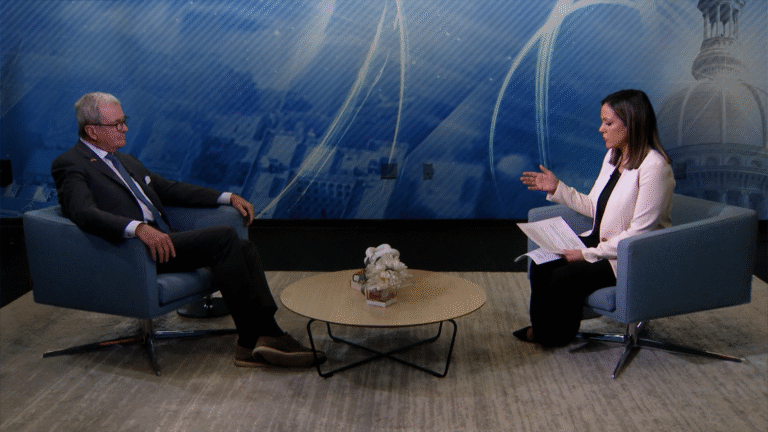
Last summer, as the final draft of the annual budget came together inside the State House, lawmakers tacked on hundreds of millions in last-minute spending, with little time for public oversight. The sponsors of the added spending were also not disclosed by majority Democrats until weeks after the new fiscal year was underway.
Murphy talked about transparency and the budget process in a wide-ranging interview with NJ Spotlight News last month.
“We’ve got a laundry list of things we did that are in the good government (and) transparency space,” Murphy said. “The one we didn’t get done . . . I’d love the end of the budget process to have a longer open window, if you fill.”
“The budget is almost $60 billion (and) about 98% of it is part of the budget presentation the governor makes in late February or early March. It’s out there for months,” Murphy went on to say.
“It’s the last sliver of it, and I’d love to see that changed,” he said.
