
 Credit: (AP Photo/Nam Y. Huh)
Jill Moghadam of Marlton has made sure that her young child is fully vaccinated this winter, including against the flu, based upon the immunization schedule recommended by the American Academy of Pediatrics.
Her daughter, Nora, just turned two years old in November, Moghadam said, and has received shots to protect against Hepatitis B, respiratory syncytial virus (RSV), diphtheria, tetanus and pertussis (DTap) and measles, mumps and rubella (MMR), among others.
“I trust my pediatrician to make the right choice for our family,” Moghadam, 36, told NJ Spotlight News in a recent interview.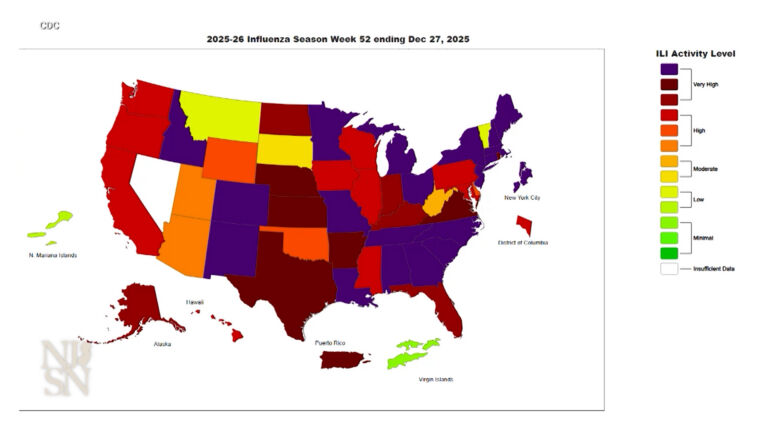
“I brought my daughter to the pediatrician’s office that I went to as a child because I had such a great experience there and I know some of the doctors are still there. I trust them to keep us healthy, just like they did for me.”
Moghadam’s efforts to protect her daughter are familiar for thousands of families across New Jersey, but the vaccinations are getting new attention as the state Department of Health reports New Jersey’s first confirmed pediatric flu death of the season and flu rates are at the highest in years.
The child who died, from the northern region of the state, was under five years old and had no known ailments according to the state department.
New Jersey has some of the highest flu rates in the nation so far this winter, according to the Centers for Disease Control and Prevention. This particular virus is Influenza A — the H3N2 strain — and has spread rapidly across the country due to recent holiday travel. There were a total of 9,288 influenza cases in New Jersey for the week ending on Jan. 3, an increase of over 2,000 cases compared to this time last year, according to the latest data from the state Department of Health.
The uptick in cases in New Jersey comes as federal health officials are overhauling the nation’s childhood vaccine schedule, narrowing the list of shots required for many children and shifting some decisions to conversations between families and their doctors.
It’s a move that some New Jersey health leaders have warned could create confusion for families.
States, not the federal government, have the authority to mandate vaccinations. The state Department of Health and the American Academy of Pediatrics continue to recommend flu vaccinations for everyone six months and older.
“From the state’s perspective, we are certainly continuing to encourage everybody to get vaccinated, and we’re continuing to make vaccines as freely available as possible,” said Dr. Edward Lifshitz, the medical director for the communicable disease service at the New Jersey Department of Health. Lifshitz also said the state provides vaccines for free or at extremely low cost to people who qualify, mainly those on Medicaid or who are uninsured.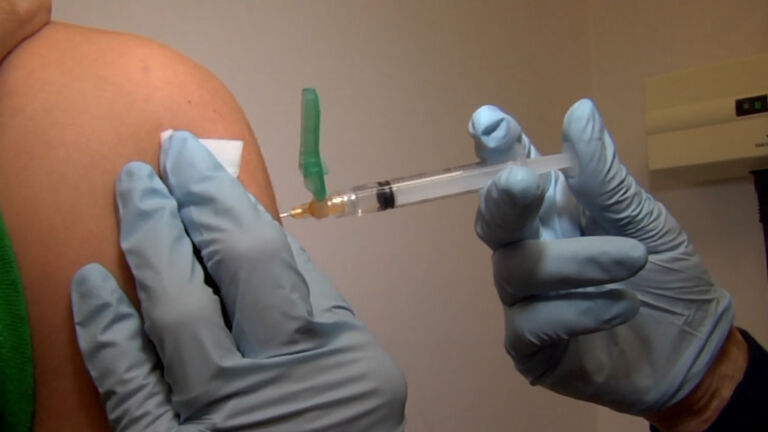
“Through other steps, we are continuing to have insurance companies pay for the vaccine for everybody, so cost should not be an issue as far as anybody in New Jersey going ahead and getting the flu vaccine,” Lifshitz added.
Dr. Jennifer Chuang, a pediatrician who specializes in adolescent medicine, said in an interview with NJ Spotlight News that pediatricians’ recommendations for vaccines have not changed much through the years.
“We’ve always recommended the already established childhood immunization schedule, including recommending flu vaccine as well,” said Chuang, the vice president-elect for the New Jersey Chapter of the American Academy of Pediatrics.
While New Jersey has historically had “pretty good” vaccination rates, Chuang said she worries that in recent years these vaccination numbers have started to come down.
“I do worry that we’re going to see the rates go even lower in the near future,” said Chuang. “And I do worry a lot that we’re going to see a lot of those illnesses that we thought were long gone come back, and that will be very upsetting to see those kids get ill.”
Jeff Brown, the acting commissioner for the state Department of Health, also said in a recent interview with NJ Spotlight News that the state will continue to follow long-established, science-backed vaccine policies, even as the federal Department of Health and Human Services revises its guidance for certain childhood immunizations.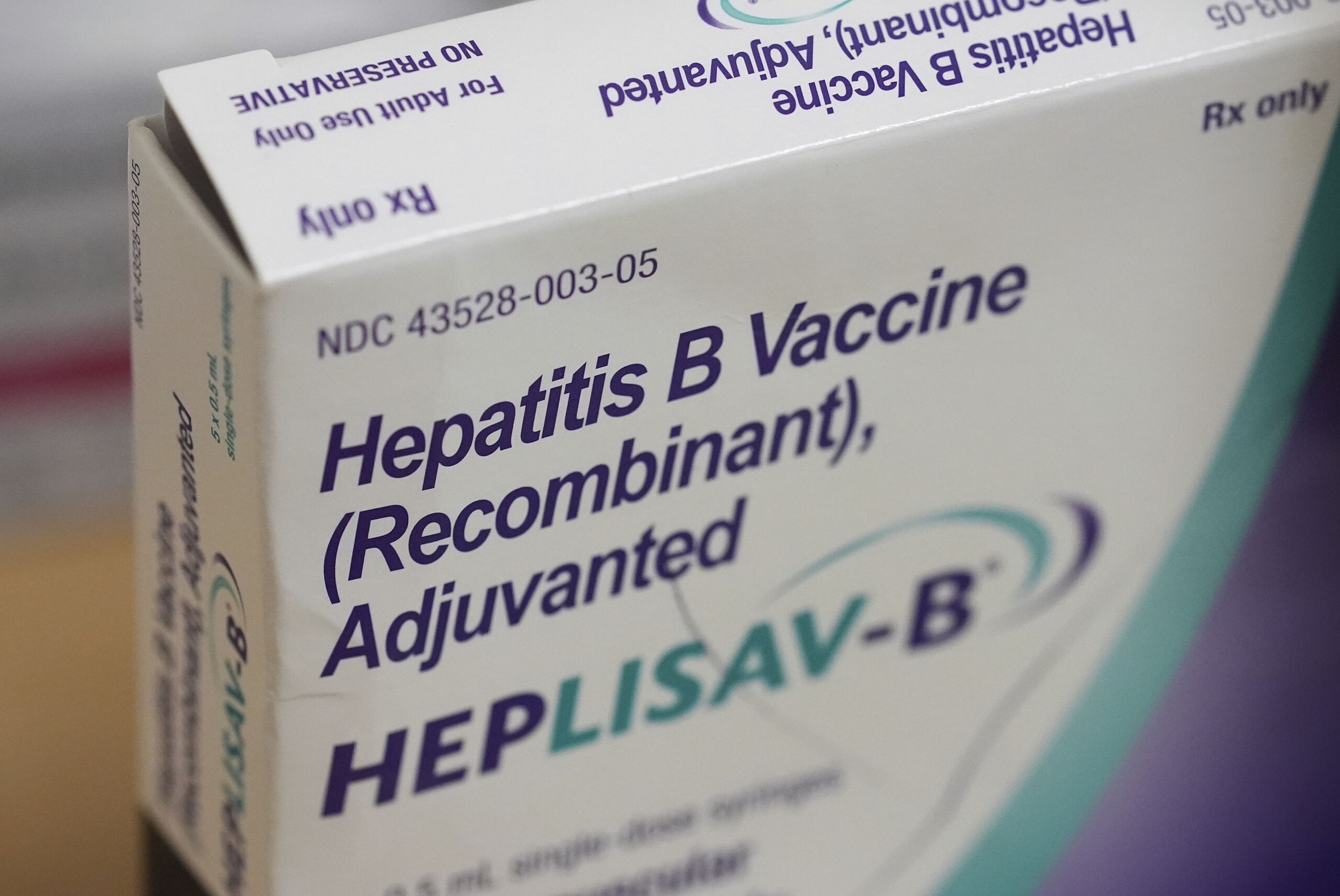
The state will also maintain its longstanding vaccine recommendations and insurance coverage requirements, according to Brown.
Certain people are at greater risk for serious complications from the flu, including children younger than five years old, and especially children younger than two. People who are 65 and older, those who are pregnant and people who have medical conditions such as asthma, heart disease and diabetes are also at greater risk, according to the state Department of Health.
Moghadam of Marlton noted that it was “heartbreaking” to hear of a child dying this year in New Jersey from the flu, a preventable disease.
“As a parent, and also as an educator of young children, I try to be open and honest with my friends and the parents that I work with because I think there’s a lot of misinformation out there and fear mongering when it comes to vaccines,” said Moghadam.
“It shouldn’t be a scary thing and you shouldn’t feel bad for doing everything you can to protect your child.”
— Briana Vannozzi contributed reporting to this story.
