

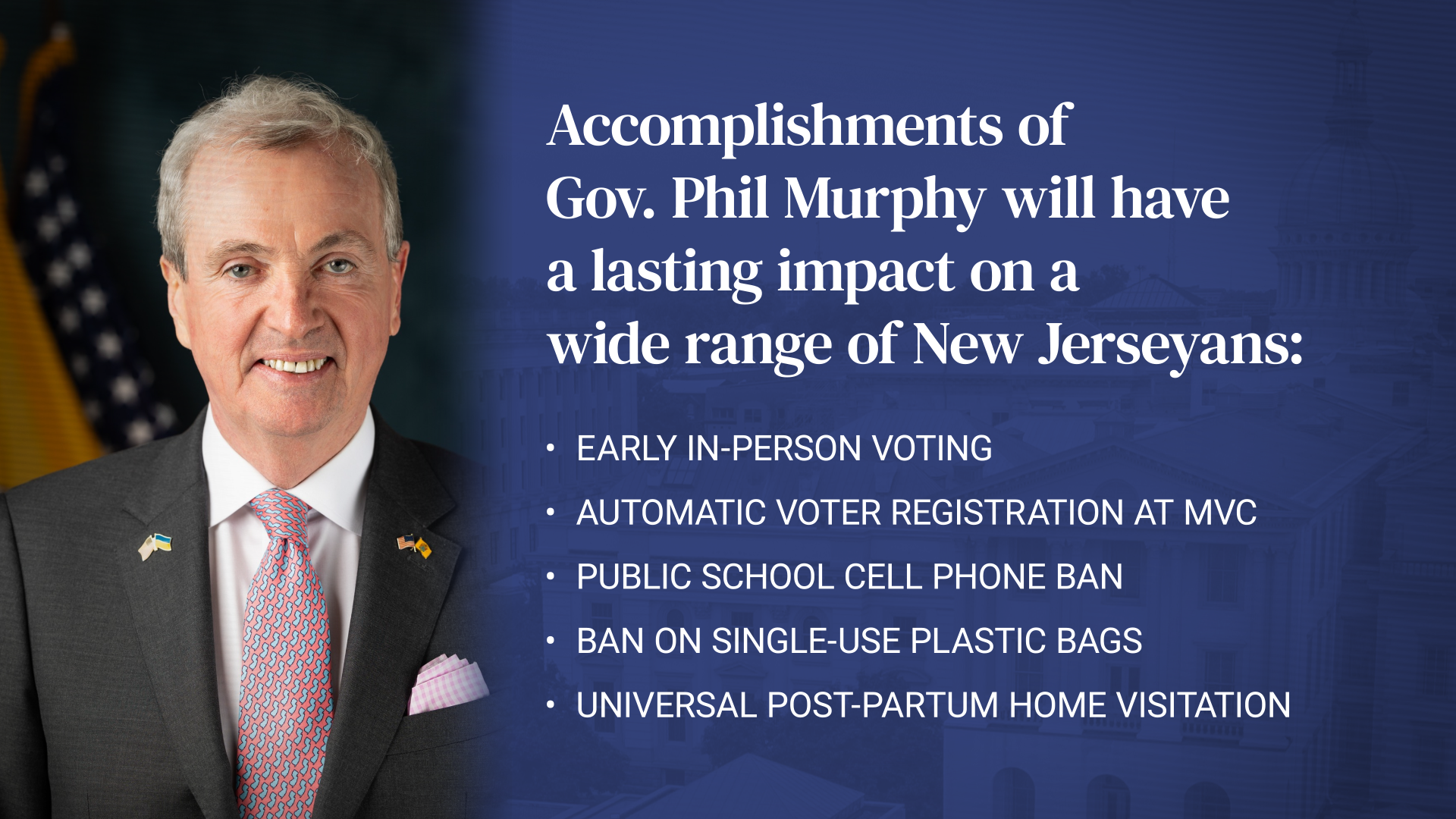
 As Gov. Phil Murphy readies for his final State of the State message tomorrow, he can look back on a host of impactful actions and a broad range of successes, particularly in criminal and social justice reform, the state’s fiscal health and progressive economic policies.
Almost eight years after Murphy took office, the political committee that supports him, Stronger Fairer Forward, has begun airing an ad touting Murphy’s record in providing property tax relief, increasing wages and bolstering public trust in the state’s fiscal health. Murphy, 68, sums up his tenure in the ad saying, “We did what we said we’d do.” The governor’s office has prepared several pages listing close to 200 accomplishments over 30 areas of state government.
He added to that legacy yesterday, signing an executive order circumventing New Jersey’s strict law prohibiting anyone convicted of an indictable offense from serving on a jury. The order allows most people – an estimated 350,000 – who had such a conviction as of yesterday to be called for jury duty after completing any sentence and post-release supervision.
Nicole Rodriguez, president of the progressive organization New Jersey Policy Perspective, said Murphy will be remembered as having “implemented long, lasting change for everyday people” and has a right to celebrate his victories.
“Governor Murphy really showed that progressive policy and fiscal responsibility are not opposites,” she said.
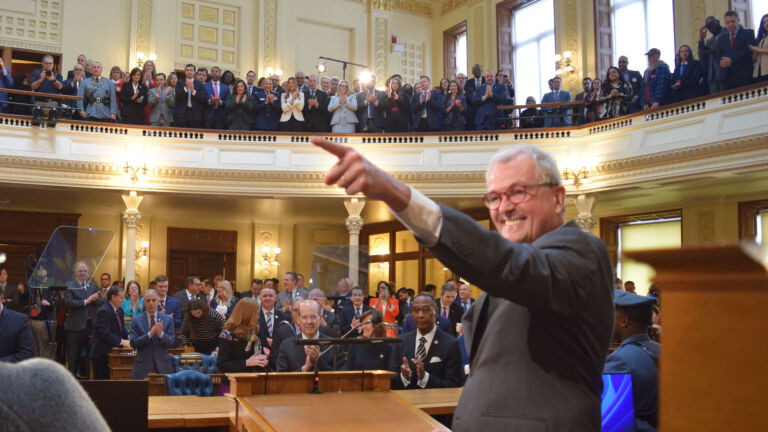
That Murphy won a second term was an achievement itself. No Democrat had done so since Brendan Byrne in 1977 and Murphy bucked a trend that typically has seen New Jerseyans elect a governor of the party that differs from that of the man who won the presidency the year before — Democrat Joe Biden won the presidency in 2020. Two terms with a Legislature of the same party enabled Murphy to accomplish much of what he initially campaigned on in 2017.
“It’s hard to compare governors in New Jersey,” said Dan Cassino, professor of government and politics at Fairleigh Dickinson University and executive director of the FDU Poll. “(Chris) Christie is going to be long remembered, more for his personality than his accomplishments. Just the fact that he served two terms is going to put Murphy in the top tier of recent governors, as he had more time to get things done, but he was never splashy.”
Murphy’s accomplishment with a lasting impact is the increase in the minimum wage for most workers, which rose gradually from $8.60 in 2018 to $15 in 2024 and continues to rise annually with inflation – this year it increased to $15.92. New Jersey’s minimum wage is among the highest in the nation and more than double the federal $7.25 minimum. Rodriguez said that despite the dire predictions by detractors at the time, the wage increase “hasn’t harmed businesses, and businesses have actually stepped up and even gone above and beyond” the state minimum.
Some of the most significant actions of the Murphy administration are ones that “have been quiet and easy to miss,” Cassino said. Many involve state finances, including making full annual contributions to the state pension system, as calculated by actuaries, for five years running, counting the current state budget. These are the first such pension payments to be made since 1996.
State finances
Murphy’s pushes to improve the condition of the public-employee pension system and to bolster budget reserves have drawn praise from major Wall Street rating agencies as the state’s credit rating itself has been moved up several notches in recent years.
These came with a price. State spending increased dramatically during Murphy’s tenure, as the size of the state’s annual budget expanded from just over $37 billion during his first year in office to near $60 billion as he prepares to step away.
A former Wall Street executive, Murphy also increased taxes on millionaires and top-earning corporations, among others, to bring in more revenue as the size of the state’s annual budget has grown. And he did so over loud objections from many Republican lawmakers and business groups, among others.
Revenue growth has also occurred naturally over that same timeframe, with a big surge in tax collections coming on the heels of the COVID-19 pandemic amid a broader national economic recovery. The billions in federal COVID relief aid that the state received were crucial to many of his policies.
Annual spending on direct property-tax relief is also up – 300% compared to a decade ago, according to a NJ Spotlight News analysis of state budget documents. Renters once again became eligible for state-funded property-tax relief benefits and an existing state income-tax deduction for local property taxes was expanded, from up to $10,000 to up to $15,000.
Murphy worked with Democratic lawmakers to enact a series of targeted tax cuts during his time in office. Among them was the establishment of a child tax credit and an expansion of the state’s earned income tax credit.
By taking a balanced approach with targeted tax credits while raising taxes on the wealthiest residents and businesses, Rodriguez said Murphy “materially improved economic security while stabilizing the state finances.”
Criticism
Progressive groups are more critical of actions later in Murphy’s second term to expand film tax credits and the recently established Stay NJ tax relief program, a high-cost benefit program not indexed to need. Rodriguez said those “really missed an opportunity to better align tax policy with equity and fiscal responsibility.”
Administration officials see both of those differently. They tout Stay NJ as a positive part of the state’s property tax relief efforts – the $600 million program is designed to reimburse home owners age 65 and older up to half their property tax payments. And they declared the film and digital production industry saw a record level of spending in New Jersey and 30,000 crew jobs in 2024.
 In recent years, Murphy worked with lawmakers to send hundreds of millions in statutorily dedicated tax revenue annually to NJ Transit, the state’s public bus and rail agency, to support its operating budget. Dealt a significant financial blow by the COVID-19 pandemic and the shift in commuting patterns that followed, NJ Transit relied heavily for several years on federal pandemic aid that has since run dry. But the tax surcharge on top-earning businesses generating that dedicated revenue is due, by law, to expire on Dec. 31, 2028, and it’s unclear whether NJ Transit will be in a position to offset the revenue loss by the time that tax sunsets.
Riders’ fares have increased as NJ Transit has had to contend with inflation and rising employee benefits costs, even as riders have often lodged complaints on social media about the quality of service.
Murphy also boasts of having fully funded the state’s school aid law for two years in a row, increasing state payments to schools by almost $4 billion since taking office. That funding law has been controversial, though, giving millions more to some districts while others have had to cut staff and programs and raise taxes.
Marguerite Roza, director of the Edunomics Lab and a research professor at Georgetown University’s McCourt School of Public Policy, said giving increased funds to school districts is not necessarily worthy of praise.
“It’s insufficient to celebrate giving money to districts unless the money is delivering more value,” she said. Roza added that New Jersey students’ performance on national reading and math tests remain lower than a decade ago and low-income students in Mississippi, which spends much less per student, outperform their counterparts in New Jersey.
The state’s overall financial picture could be turning darker. Murphy’s final budget is operating with a more than $1 billion gap between planned annual spending and revenues, according to budget documents. And while Murphy and lawmakers have tapped budget reserves and other one-time sources of revenue to cover the structural gap in recent years, those types of options are becoming more limited at the same time new policies enacted by Republican President Donald Trump and the GOP-led Congress are shifting more costs down to the state level.
Social justice
Budgetary matters played a crucial role during Murphy’s tenure, but he may wind up being better remembered for his social justice accomplishments.
“When we are comparing this governor to all previous New Jersey governors, I think he is among the top when it comes to civil rights and civil liberties issues,” said Amol Sinha, executive director of ACLU-NJ. “I also think that when we’re comparing this governor to his peers across the country, his contemporaries, I think he’s amongst the top.”
He applauded the state’s successes in curbing incarceration under Murphy. The implementation of the bail reform that preceded Murphy, the public health emergency credits program that led to nearly 9,000 people being released early from jails and prisons and the clemency granted to more than 300 individuals were all significant actions that Sinha called “powerful and meaningful.” The state’s prison population dropped by a third over the last eight years.
Matt Dragon, a member of New Jersey Communities for Accountable Policing, agreed, but said the state has not done enough to reform policing. Dragon faulted Murphy for signing a law that allows police to review body camera footage before writing up a case report, which “provides a clear opening for them to craft a narrative that puts them in the best light without contradicting the video.”
Four years ago, the state put in place the Arrive Together program pairing mental health professionals either in person or by phone with law enforcement to better handle some police calls and try to prevent use of force in responses involving a person in crisis. To date, none of the more than 15,000 interactions under the program has led to police using lethal force. But there have been police shootings of civilians outside the Arrive program.
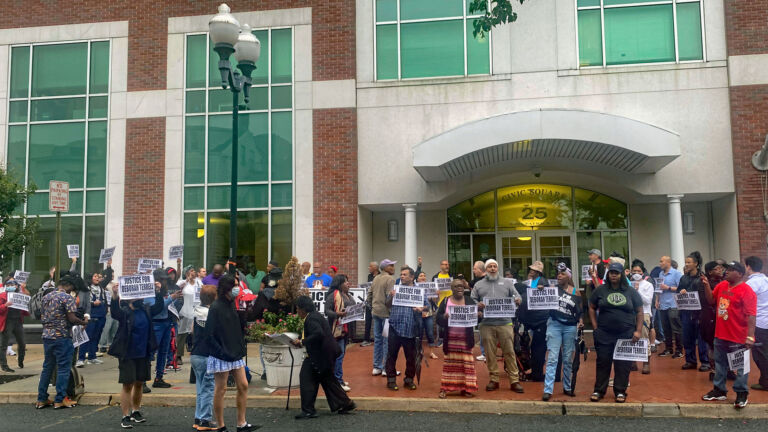
Dragon said the Arrive program is a start, but police who have killed civilians rarely face justice.
Sinha said the state needs civilian complaint review boards with subpoena powers to investigate allegations of use of force and abuse of power against police and was critical of Murphy for not supporting these. On the other hand, he praised Murphy for enacting the police licensure law.
The legalization of adult recreational use marijuana was another major accomplishment that has impacted New Jersey residents. Voters approved the legalization in 2020 and Murphy signed laws enacting the changes a few months later. Sinha said that prior to legalization, police were making about 30,000 arrests a year for cannabis possession.
Under Murphy’s leadership, the state also took important actions to help New Jersey’s large and diverse undocumented immigrant population, estimated at roughly 530,000 by the American Immigration Council. These include providing driver’s licenses to all, regardless of immigration status, making undocumented college students eligible for financial aid, providing funds for legal aid to those facing deportation and the attorney general’s directive limiting collaboration between local police and federal immigration agents where no criminal warrant has been issued.
“As we’re seeing right now, ICE (U.S. Immigration and Customs Enforcement) being as rogue and as dangerous as it is, it is crucial that we do whatever we can to make sure that New Jerseyans are protected and so the Immigrant Trust Directive is something that I would tout as one of the things that sets New Jersey apart,” Sinha said. “There’s been a lot of work to make sure that New Jersey is one of the fairest and most welcoming states in the country.”
In the wake of the U.S. Supreme Court’s overturning of the Roe v. Wade decision protecting abortion rights, Sinha praised Murphy for stepping up to ensure that women in New Jersey continue to have reproductive freedom. Murphy restored previous cuts, increased funding for women’s health services and is spending money to try to attract more practitioners to provide reproductive health care. He also signed the law codifying what Sinha called “one of the strongest rights to an abortion in the country.”
Still, Murphy must also own what a broad group of advocates called one of the biggest disappointments of his tenure: His signing two years ago of a bill that Sinha said “basically gutted the Open Public Records Act” and made it harder for people to get government documents and sue for access when they are denied.
“I don’t know who bears responsibility for it, whether it’s the Legislature or the governor or both, but he signed it into law,” Sinha said. “In a time when there is heightened distrust of government and people are trying to make sense of what’s going on in the world, we need more transparency, not less.”
Housing
The Murphy administration and lawmakers took seriously the state’s lack of affordable homes and enacted a process for municipalities to set realistic housing obligations and adopt plans that allow for their construction. It’s still early in the implementation and unclear how many new homes may be added as a result, but housing advocates say the promise is there.
Staci Berger, president and CEO of the Housing and Community Development Network of New Jersey, called the law “incredibly forward thinking and really responsible.” But she faulted the governor for raiding more than once the state’s Affordable Housing Trust Fund, which is supposed to pay for home construction. This year, only about a third of an anticipated $125 million in the fund is being spent for its intended purpose.

Overall, though, “there’s a lot to be thankful for and proud of that the Murphy administration has done,” Berger said. She cited policies during the COVID-19 pandemic that prevented evictions and delayed foreclosure proceedings as having “saved countless lives.” Murphy also used more than $300 million in COVID relief funds to cover construction costs for 100% affordable housing developments. And Berger praised Murphy for ending racial profiling in home appraisals and spending hundreds of millions of dollars to address lead poisoning prevention and remediation in water and paint.
COVID-19 pandemic response
Murphy’s handling of the COVID-19 pandemic is a large part of his legacy. New Jersey was among the first states to be hard hit in early March 2020, when there was little information about the virus or how to treat it. He shuttered much of the state relatively quickly in an attempt to stop the spread of the deadly virus, which sent unemployment skyrocketing and upended education for more than 1 million students. Close to 24,000 New Jerseyans died in the year after officials confirmed the first case here.
Businesses reopened gradually and the state’s economic recovery has been robust. But student achievement continues to lag following long periods of remote learning, with the state making funds available to try to close remaining gaps. A report on the impact on nursing and veterans homes, where the age and health of residents and communal living contributed to large numbers of illnesses and deaths, critiqued the state’s response and is serving as a basis for recommended changes.
Murphy said he did what he thought best, based on the information available at the time.
A number of sources gave him high marks for his handling of the vaccine rollout once it became more widely available in early 2021, as well as for his targeted use of federal relief dollars.
“Whether he likes it or not, Murphy’s terms in office are going to be defined by the COVID pandemic,” Cassino said. “His response to it was a major factor in the 2021 election; the federal money that came in as a result was vital to his agenda in the second term. No one signs up to be a pandemic-era governor, but it’s the biggest factor in what Murphy was, and wasn’t able to do.”
This story is made possible in part by the Corporation for Public Broadcasting, a private corporation funded by the American people.

