
 Credit: (Genesis Obando/NJ Spotlight News)
After eight years at the helm, Gov. Phil Murphy says he plans to travel – starting on the night he leaves office – and decompress. As for what’s next, he didn’t completely rule out running for office again, possibly for the presidency, though he said it’s unlikely.
“I would not take anything off the table right now,” said Murphy, 68, during an interview with NJ Spotlight News last week. “I would ascribe a very low probability to that, but I take nothing off the table.”
As for what he will do?
“We’re going to travel, literally leaving the state night of the 20th,” Murphy said. “I will not be one of those folks who shows up at a ribbon cutting and sits in the second row. You’re seeing the last of me as a public matter in New Jersey, but I’ll be here always for the privately for folks. But we’ll take some time off, go off the off the grid, get recharged, rested, and figure out where we go from there.”
Tammy Murphy is the chair of the host committee for the 2026 FIFA World Cup taking place in the Meadowlands and so the Murphy family, who are soccer fans, will be involved with that through July 19.
“But beyond that, not sure, and not worried about not being sure,” Murphy said. “So we’re going to go around, see some places and hand the keys to (Gov.-elect) Mikie (Sherrill) and (Lt. Gov.-elect) Dale (Caldwell).”
During the interview, Murphy reflected on his two terms in office, boasting a broad spectrum of accomplishments ranging from economic growth to improvements in social justice and the fulfillment of 50 of 52 of the promises he made during his first campaign.
Murphy was a political neophyte and Wall Street executive when he ran for governor against five other Democrats, spending $22.5 million of his own money, most during that first 2017 primary election. That amount is the fourth largest personal outlay by a candidate for governor in state history. Murphy won the primary easily and went on to beat then-Republican Lt. Gov. Kim Guadagno in the general election by nearly 18 points.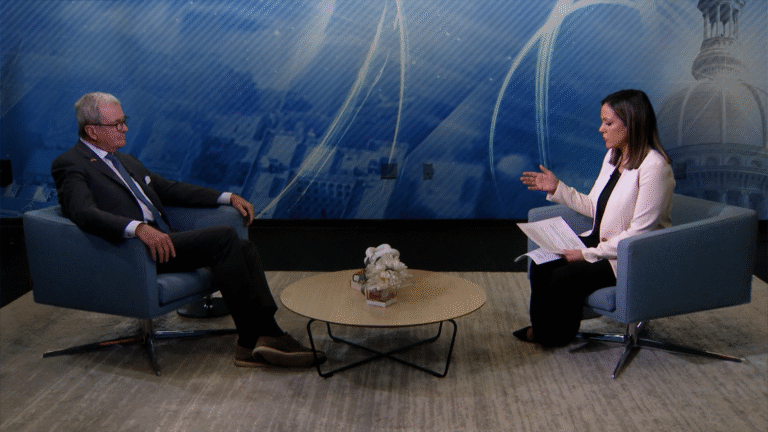
The cost, Murphy said, was “absolutely” worth it.
“It’s been the been the position of a lifetime,” Murphy said. “The honor, the responsibility, the substance of the work, the way the state has, I would argue, has been transformed, measured by a lot of different ways … Worth every penny and then some.”
It is impossible for him to choose what his most important accomplishment was, Murphy said, but he thinks the one with the longest lasting impact will be the dozen strategic innovation centers created around the state. These centers focus on such sectors as artificial intelligence, fintech, life sciences, aerospace and biotech and have drawn nearly $500 million in private sector investments off $190 million in state investments, according to the governor’s office. Among these is the NJ AI Hub, which will partner Princeton University, Microsoft, startups and other collaborators working on startup acceleration and workforce development.
“Those strategic innovation centers will be a huge driver of the startup economy,” Murphy said. “You’re starting to see evidence of it already. We went from kind of middle of the pack to a top three venture capital destination state in the nation, behind only California and New York.”
In the area of education, Murphy cited a number of policies, including new curriculum requirements for the teaching of climate science K-12, as well as ethnicity-based curricula. He also cited twice fully funding the state school aid formula, which had been underfunded since its inception.
Murphy also said he is “incredibly proud” his administration was able to expand pre-K education to 230 new districts. But he is also disappointed that he was unable to bring free pre-K education to all public schools in the state, saying “we sure as heck tried to get there.”
Lack of funding was a major obstacle to implementing universal pre-K and other policies, Murphy said, noting the state budget surplus was only about $400 million when he took office in January 2018.
“That means you have to say no to a lot of stuff that you really want to do,” he said.
One expensive, and complicated, problem the state continues to grapple with is a lack of affordable housing. Murphy said his administration has “closed the gap meaningfully” in units built since he took office and those that will result from the law he signed last year codifying the court’s mandated low-cost housing approval process. He said he hopes lawmakers over the next month will send to his desk some regulatory reform bills that could make it easier to build even more units.
Another goal dependent on funding is the replacement of all lead water service lines by 2031. New Jersey is far from that goal and work to document all the state’s lead service lines remains far from over, according to state and federal data. Replacing the toxic lines is costly work, and many community water systems rely on funding from the federal government. But the future of that funding is unclear, as the Trump administration has proposed massive cuts to the EPA. It’s unclear whether the federal government will continue to provide funding to replace these lines.
“You’ve got an administration in Washington right now and Congress that, I would almost use the words, that are hostile to programs like this,” Murphy said. “They’re philosophically, for reasons that escape me, opposed to helping the most underserved communities, the most at-risk communities in America. So I’m not optimistic about Washington, in the current configuration, stepping into the financial breach on this.”
Still, research shows there is damage done by lead, whether leaching into drinking water or in lead paint that children ingest. While not willing to speak for the priority the incoming administration of Democrat Mikie Sherrill would place on this issue, Murphy said that working to eliminate lead hazards is “doing right by our kids, particularly kids who are in underserved communities.”
For most of the last year, Murphy found himself walking a tightrope in dealing with the federal government in this second Trump administration. Murphy has been measured in his public criticisms of the president, especially compared with some other Democratic governors, such as Gavin Newsome of California and JB Pritzker of Illinois, who have drawn the president’s wrath. Yet Attorney General Matt Platkin has filed or joined 42 lawsuits against Trump administration policies that include birthright citizenship, restrictions on funding for crime victims and solar and wind energy edicts.
“Number one, you never want to subvert your values, not defend people’s backs, communities that are under attack, and we haven’t,” Murphy said. “But you pick World War Three with these guys, and you pay a big price … They make decisions that impact you, measured in billions of dollars, and I’ve got to keep that in mind as well. Having said that, we’ve been pretty vocal.”
Murphy praised Platkin’s work: “Every one of those suits has to be approved by me, personally. And there’s been some benefit of, by the way, having a little bit of a separation, right? But every one of those has to come through my desk.”
While looking forward to a vacation, Murphy signaled he would like to put some final priorities in place before leaving office. For instance, he said he hopes the current lame duck legislative session will send him measures that could help the state’s financial health and ban student cell phone usage in schools. He also said he will be granting clemency to more individuals this week – he so far has granted pardons to or commuted the sentences of 283 individuals.
His accomplishments in the broader area of social justice, including expungement reform, enacting recreational adult-use cannabis and eliminating mandatory minimum sentences for non-violent drug offenses, also bring him great pride.
“I don’t think any state in America has done what we’ve done over the past eight years,” Murphy said. “I wouldn’t trade what we’ve done. That doesn’t mean we’re perfect, or that life is rosy for everybody, I get that. But we’ve done a ton on that front.”
