
 Credit: (NJ Spotlight News)

A New Jersey Superior Court judge has ended – at least for now — an effort by three dozen municipalities to overturn the state’s new affordable housing process, whose goal is to add thousands more low-cost houses in the state.
Mercer County Superior Court Assignment Judge Robert Lougy rejected all the claims made by the municipalities in the Local Leaders for Responsible Planning coalition, led by Montvale Mayor Mike Ghassali.
In an 81-page ruling issued Tuesday, Lougy dismissed the two lawsuits from the group with prejudice, meaning they cannot be refiled. Among the claims Lougy rejected was the municipalities’ contention that the 2024 law remaking the process for determining local affordable housing obligations exceeded the constitutional obligation established by the state Supreme Court in a series of rulings known as the Mount Laurel doctrine.
“The significant opinions of our Supreme Court have defined what the Constitution requires in providing affordable housing and emphasized the important role of the legislative and executive branches in fulfilling that obligation,” Lougy wrote.
The municipalities first sued in September 2024 challenging the law and this should end that legal effort in state court. Other efforts to stay the law while the case was proceeding were denied, as were applications for reconsideration to the New Jersey Appellate Court and an appeal to the Supreme Court. Still pending is a federal lawsuit the organization filed earlier this year in which they contend the law violates the equal protection clause of the U.S. Constitution because it exempts the most densely populated urban municipalities from future housing obligations. So-called urban aid municipalities are required to rehabilitate existing low-cost housing stock.

Affordable housing advocates cheered Tuesday’s ruling, and complained that the mayors who brought the suit are using taxpayers’ money to finance the challenges, rather than building low-cost homes.
“It’s outrageous that a handful of wealthy towns are spending hundreds of thousands of dollars in taxpayer money trying to block the affordable homes New Jerseyans desperately need,” said Josh Bauers of Fair Share Housing Center, which pushed for the dismissal of the suits. “Thankfully, Judge Lougy saw through their baseless claims — and the overwhelming majority of municipalities are already moving forward to create the homes our families, seniors, and people with disabilities urgently need.”
Earlier this year, 423 towns adopted and filed housing plans with the courts earlier this summer. That represents three quarters of the municipalities in the state, the largest number of municipalities that have participated in the affordable housing process in its 50-year history.
The Supreme Court first ruled in 1975 in a case involving Mount Laurel Township that municipalities could not zone to exclude low-income housing and have an obligation to allow their “fair share” of the regional need for affordable homes. During that history, the process has been handled by a state agency or the courts. Last year’s law created a process whereby the state calculated municipal housing obligations – roughly 81,000 units statewide – and municipalities submitted plans that agreed with the state’s estimate or spelled out how many the community could reasonably accommodate given water, sewer and open space constraints. Although a final estimate of how many homes municipalities are willing to zone for is unavailable, it will wind up being a fraction of the original state estimate.
Some communities have embraced the law and are allowing more houses to be built. East Brunswick plans to redevelop the Brunswick Square Mall into a mixed-income, mixed-use development and use town-owned land for a 100% affordable housing development for 25 families. Galloway Township, which will redevelop multiple sites along the Route 9 and White Horse Pike corridors into mixed-income housing. Paramus Borough intends to continue redeveloping large shopping malls into mixed-income housing along the Route 17 corridor.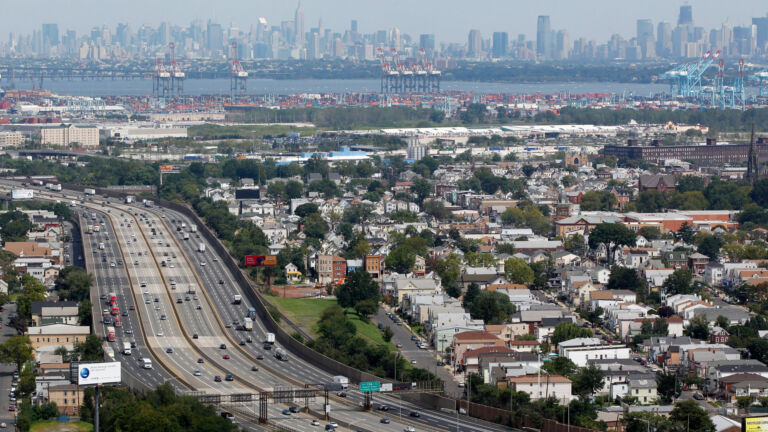
Towns with valid housing plans are immune from challenges by builders, but those who don’t follow the law could be forced to allow the construction of high-density developments with four market-rate units for every affordable one if they lose a suit brought by a builder.
Fair Share Housing Center, which has been an advocate for low-income residents in the process, filed challenges to the plans of 16 municipalities, requesting revocation of their immunity, because it says their housing efforts do not fully comply with the law.
Those challenges, which had to be filed by the end of August, are in mediation. Municipalities will have until the end of the year to make changes to their plans. Any disputes remaining after that are to be resolved in an expedited court proceeding in early 2026. All final housing plans and implementing ordinances must be in place by next March 15.
