
 Credit: (AP Photo/Mel Evans)
Earlier this month, the national organization Black Men Vote held a town hall meeting at Kean University focused on civic engagement and issues impacting Black men.
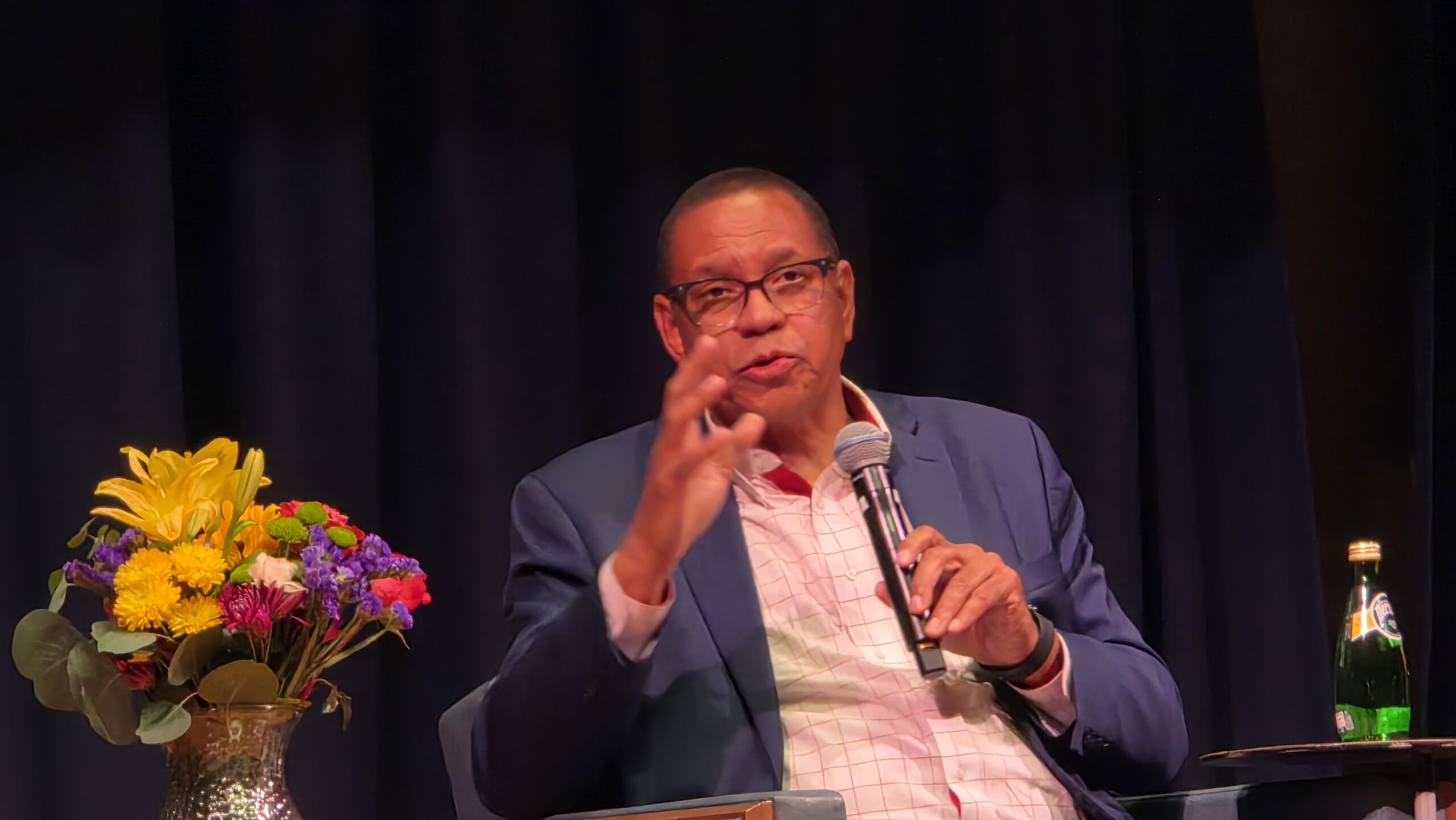
“One of the things that has troubled me is the apathy,” said Dale Caldwell, president of Centenary University said to an auditorium only about a third full. “This room should be filled. Folks should be coming out, seeking out, ‘Is there something for me?’”
While the event was billed as nonpartisan, Caldwell is running for lieutenant governor with Mikie Sherrill, the Democratic candidate for governor. The other two speakers were Newark Mayor Ras Baraka, who ran in this year’s Democratic primary for governor, and Kean University President Lamont Repollet, a former state education commissioner under Democrat Gov. Phil Murphy. Organizers said Republicans were invited but none responded.
Much of the discussion centered on what the Democratic Party can do to get Black men, in particular, interested in voting and how it can actually help people.
New Jersey Democrats are aware they need to target Black and Latino voters to win the governor’s race this year. Those voters have traditionally voted for Democrats, but last year’s presidential results showed they were not as reliable Democratic votes.
Democratic Vice President Kamala Harris won New Jersey by about six percentage points. However, Harris collected about 400,000 fewer votes than Joe Biden did to win the presidency in 2020. And last year New Jersey had the second-largest swing toward Donald Trump of any state in the nation.
A 2024 post-election analysis by the Pew Research Center found a drop-off in support for Harris nationally. About 75% of Black men voted for Harris, down from the 87% who backed Biden and while 89% of Black women voted for the Democrat, that was six points lower than four years earlier. Trump got roughly half the Hispanic male vote, up from 39% in 2020, and while Harris won the vote of Hispanic women with 52%, that was 13 points lower than Biden got in 2020.
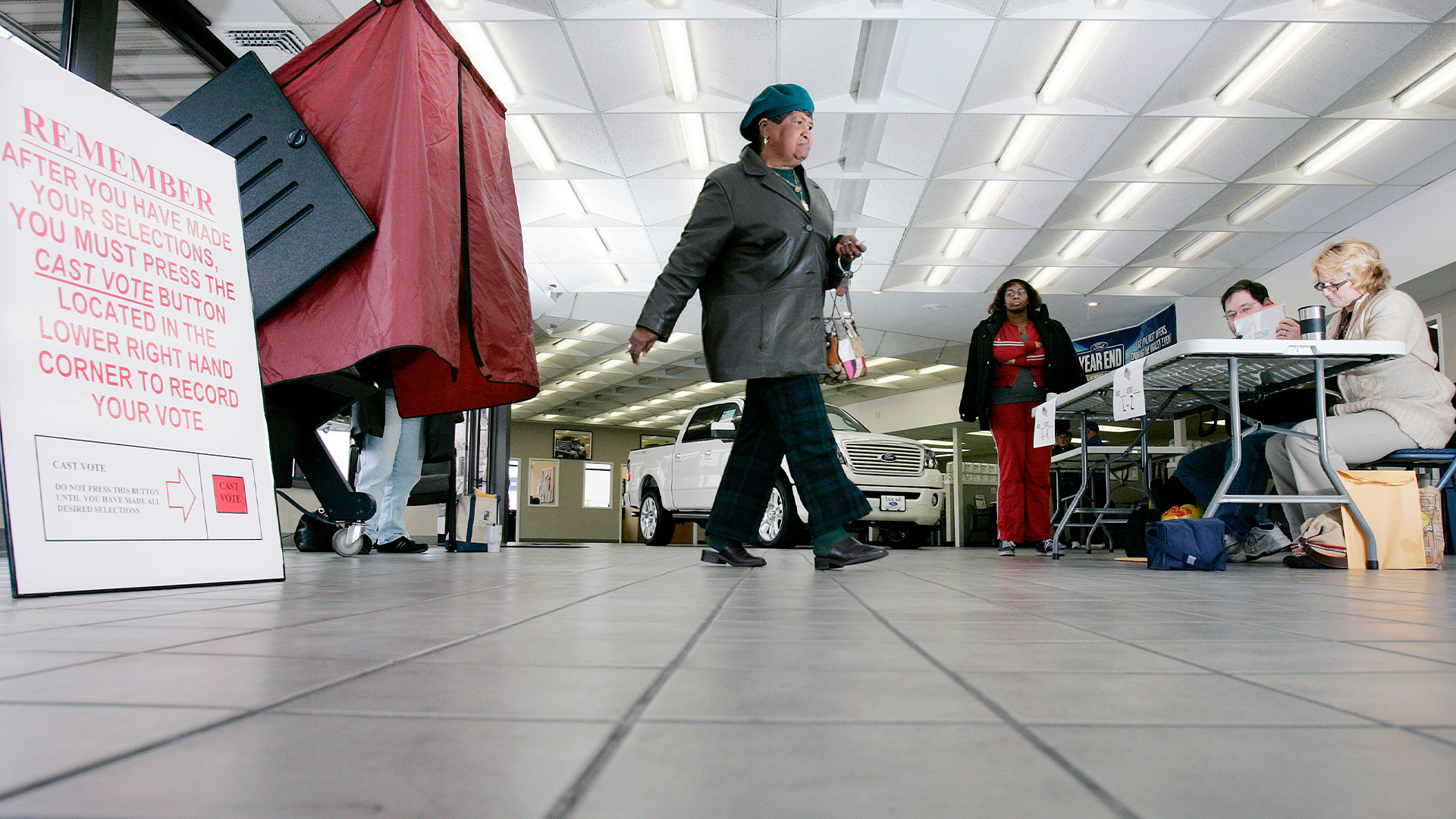
In New Jersey, more than 300,000 fewer people voted in 2024 than in 2020; 65% of all those registered voted last year, compared with 72% four years earlier.
“Black men in New Jersey are not just potential voters, they are the margin of victory,” — Michael Bland, executive director of Black Men Vote
If history is any indication, turnout will be much lower this year – typically about 40% of those registered vote in the state’s gubernatorial elections. In 2021, the number was about 2.65 million voting.
Michael Bland, executive director of Black Men Vote, said that any candidate running for governor of New Jersey needs the support of Black men.
“Black men in New Jersey are not just potential voters, they are the margin of victory,” he said.
The need to attract Black and Latino voters became even more urgent last week, with the issuance of a poll by Emerson College that found the race to be tied, with each candidate having 43% support, 11% undecided and 3% backing independent candidates. The margin of error was +/-3.1 points.
New Jersey voting data does not track race or ethnicity, but the latest American Community Survey data from the U.S. Census Bureau estimates that close to four in 10 New Jerseyans is Black or Hispanic so they comprise a substantial chunk of the electorate.
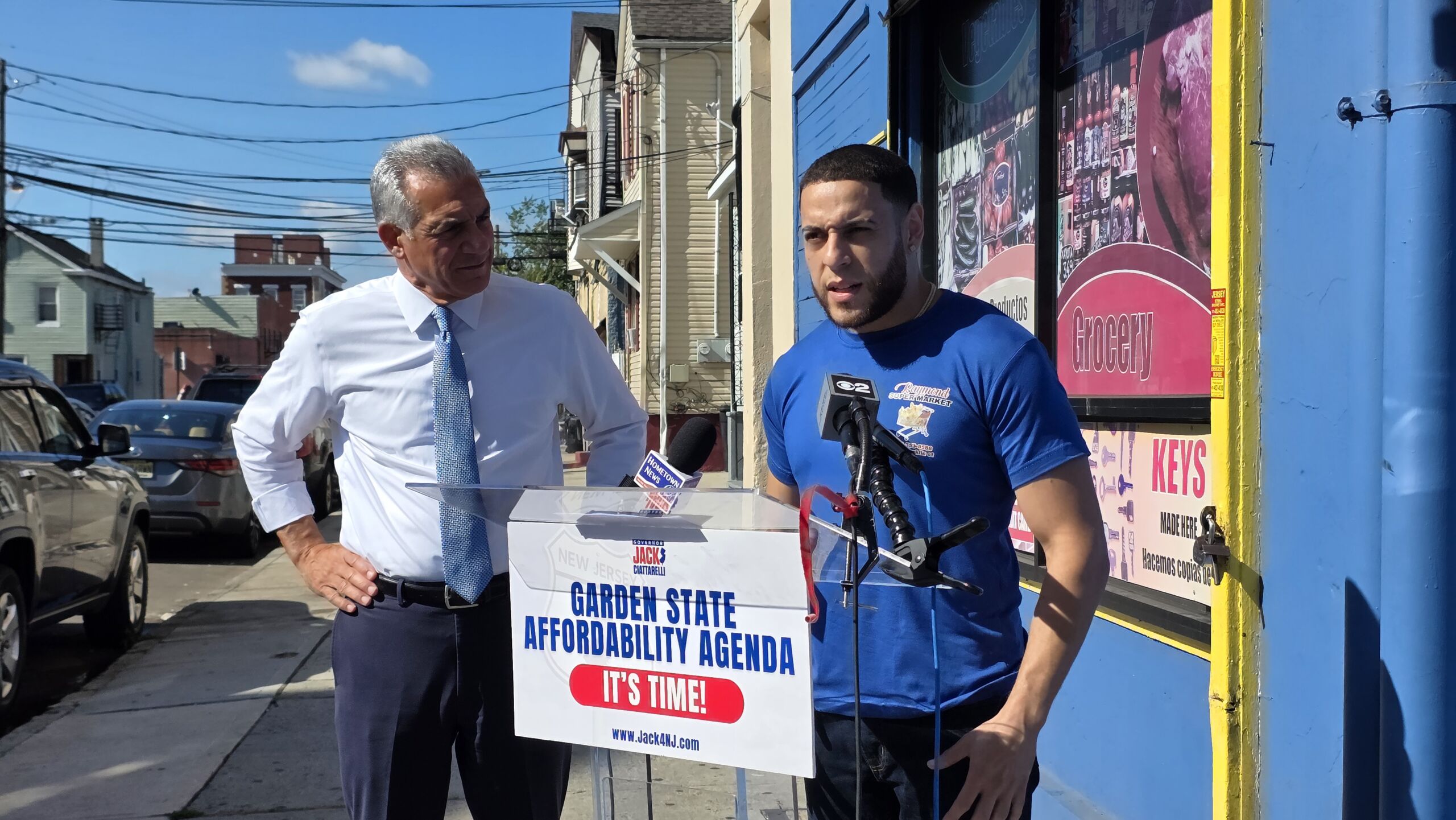
Almost a year after his loss in 2021, Ciattarelli said one reason why he didn’t beat Gov. Phil Murphy was because, “My team was too white.” He has been reaching out to people of color at events and his campaign website includes a link to “coalitions” pages titled “Blacks Back Jack” and “Hispanic Americans Back Jack” that offer a way to sign up via the page or text for more information. Ciattarelli has made visits to traditionally Democratic areas, including multiple stops in Newark, Paterson and Elizabeth.
“We’re getting a very warm welcome from minority communities all across the state, and it’s because they, too, want change,” Ciattarelli said during a campaign stop at a pizzeria in Clinton last week. “They feel the Democratic Party is taking them for granted. And they want good public schools. They want safe communities. They want economic opportunity, and those are all things I talk about each and every day.”
 Credit: (NJ Spotlight News/Colleen O'Dea)
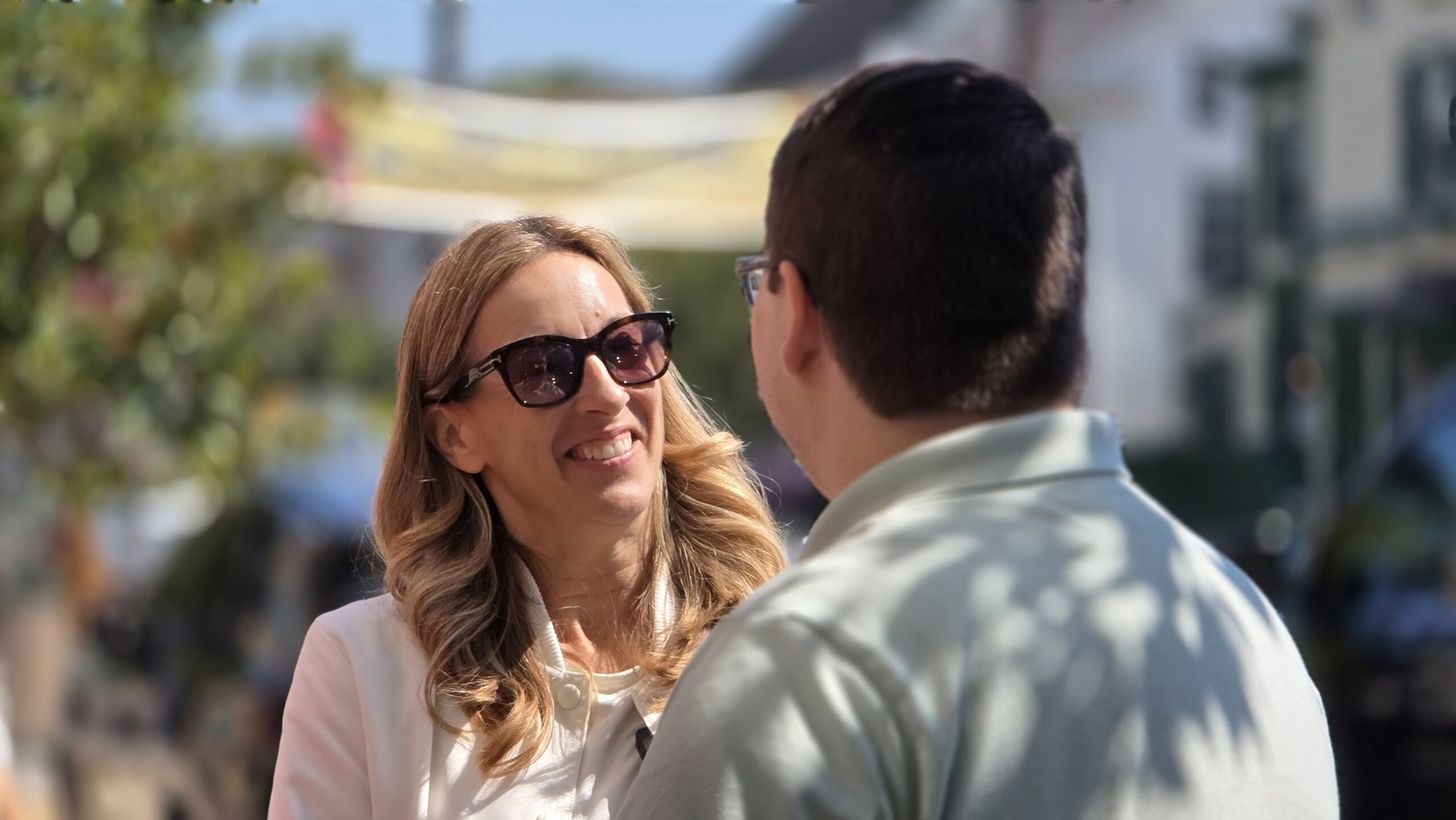
She has held numerous events with people of color, including this month alone in Newark with state Sen. Teresa Ruiz (D-Essex) and in Atlantic City earlier this week with Baraka, who finished second in the Democratic gubernatorial primary and subsequently endorsed Sherrill. Last Thursday night, she discussed her policies before a full auditorium with New Jersey members of the Divine Nine, the National Pan-Hellenic Council of historically African American fraternities and sororities.
The Sherrill campaign also has released a Spanish-language ad and an independent group backing her has funded a negative ad against Ciattarelli in Spanish.
Still, she has faced some criticism for not reaching out enough to Black and Hispanic residents.
Last week, when she appeared on WNYC’s The Brian Lehrer Show, Sherrill took a call from a man from Jersey City who identified as an African American and said he supported her but also was having a hard time getting people excited for her candidacy.
“I’m very pleased with Mayor Baraka’s endorsement, as it was a great move for you, however, I am not feeling it … and a few of my friends and colleagues, too, are not feeling it,” he said. “The Black community here and some of my Spanish brothers here, Latinos, Latinas, we don’t see you, we don’t feel you.
Sherrill responded that she had been in Hudson County the day before and pledged to be back there “numerous times.” She added that in addition to the effort in Spanish, she is also engaging with the Black community and Asian Indians, saying, “We’re going everywhere because we have an incredibly diverse state.”
 Credit: (NJ Spotlight News/Colleen O'Dea)
“Throughout the campaign, Mikie has partnered directly with Black and Latino communities, listening to their concerns and bringing future legislative partners into these conversations to ensure productive work begins immediately,” said Carly Jones, a campaign spokesperson. “Mikie recognizes that economic empowerment strengthens communities of color … A Sherrill-Caldwell administration will give Black and Latino New Jerseyans meaningful representation to ensure Trenton serves everyone.”
Many Black residents and progressives backed Baraka in the primary and were very disappointed at his loss. While most will likely vote for Sherrill, it’s unclear how many will work hard to more broadly get out the vote for her.
The Rev. Charles Boyer, pastor of Greater Mt. Zion A.M.E. Church in Trenton and founder of the group Salvation and Social Justice, said he doesn’t sense a groundswell of support for either candidate among Black congregations.
“I think Black clergy are in a lot of angst, I think more than any other time, about this governor’s race,” he said. “The looming shadow of what’s happening in Washington, D.C., I think, is most prevalent in most of our minds, particularly Black clergy that spend a lot of time ministering to the poor, to the hungry, those of us that aren’t super flashy, but really care about people the Trump cuts, the white nationalism coming out of D.C., those things are looming, and they are very much a factor in this New Jersey’s governor’s race … We have one candidate that’s a MAGA candidate, and then we have the other candidate who disappointed us severely with her yes vote on the Charlie Kirk resolution. So we’re really conflicted dealing with all of this. I think many of us, most of us, probably know where we’re leaning, but I don’t think there’s huge excitement amongst any of us.”
Ciattarelli discounted Boyer’s description that he has gone MAGA.
“I’ve gone full New Jersey. And I look forward to working with the reverend on a number of issues that are specific to the Black community here in New Jersey after we win,” Ciattarelli said.
In the House, Sherrill voted in favor of a resolution honoring Charlie Kirk, the conservative political activist killed in Utah on Sept. 10. In a later statement condemning political violence, Sherrill said “Charlie Kirk was advocating for a Christian nationalist government and to roll back the rights of women and Black people — this flies in the face of every value I hold dear and that I fight for. But the Constitution protects free speech, even for those I vehemently oppose … it’s up to all of us to stand against political violence.”
Boyer said he knows and had grown to respect Ciattarelli, but his acceptance of Trump’s endorsement and support for the president’s far-right policies “undermines all of that, because all of that is a direct threat to my humanity and my people’s well-being.” Boyer wrote an opinion piece in July saying he couldn’t “allow someone who has bowed at the altar of MAGA” to speak in his church and was one of more than three dozen clergy who signed an op-ed that ran on the New Jersey Globe website in which they wrote, “So let it be made very clear: any self-respecting, God-fearing, people-loving Black person—especially those of faith—should reject Jack Ciattarelli on Election Day.”
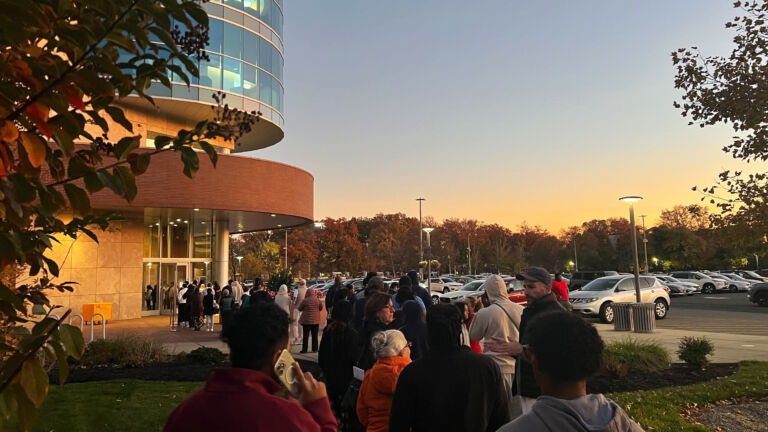
But getting people to vote could be a challenge itself.
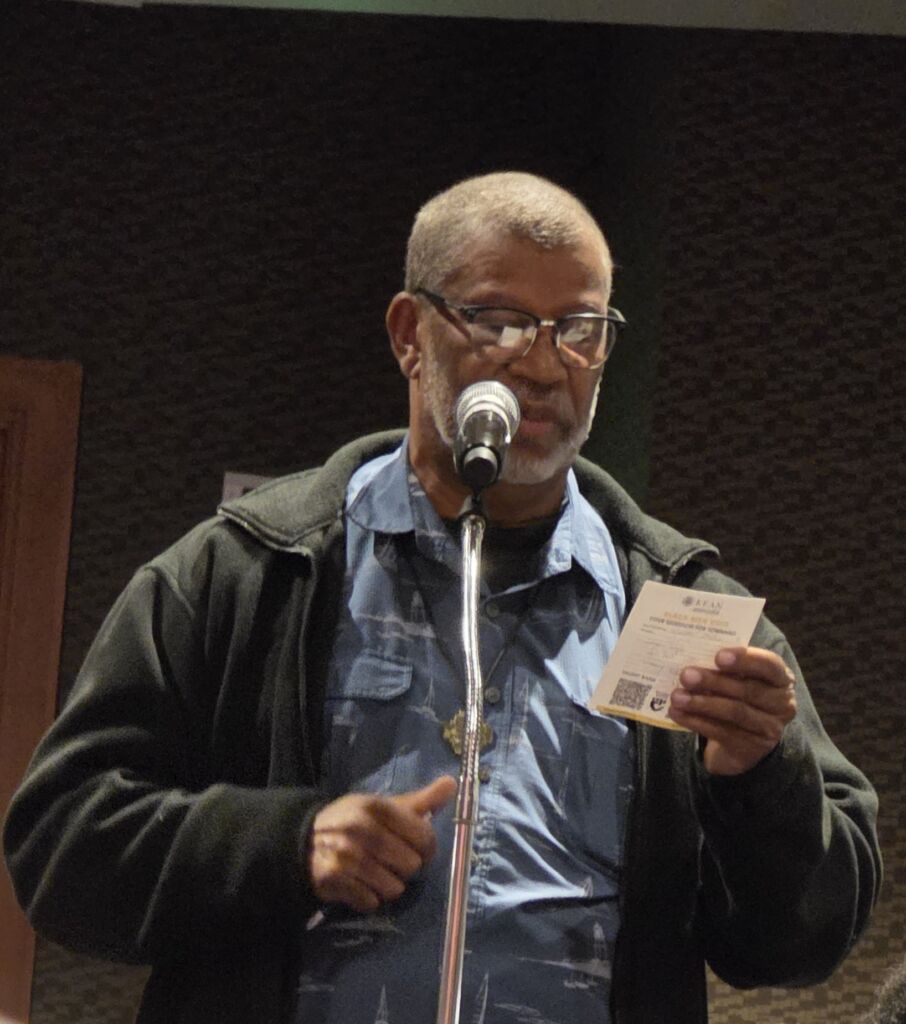
“We can register someone to vote, but if they don’t vote immediately, they will never vote, they just lose the enthusiasm,” said Stafford Miller in addressing the speakers at the Black Men Vote townhall. “How can we intentionally be committed to engaging with someone in a relationship to get them to vote, because I’m speaking for people who are on the corners of Atlantic Avenue and Broadway and Market Street. These brothers don’t vote. They have no desire to vote and don’t see the joy of voting. So how can we just be intentional and say, ‘I’m going to make this man my project, or that woman my project to get them to get to the polls, not just to register, but to vote.’”
Caldwell said he has met too many people who don’t care about voting, but did not have an easy answer to how to motivate them, but asked for help from those in the audience.
“At what point do we, as people of color, wake up to realize that if we do not vote, everything that we stand for can be taken away?” he said. “I’m realizing that we have to really change the discussion in a way that’s very personal — to say how this is going to affect you and your family … It’s just amazing the malaise in voting. So I need all of you to go out to share some of this stuff and go forward.”
 Credit: (NJ Spotlight News/Colleen O'Dea)
Sen. Benjie Wimberly (D-Passaic), who attended the townhall, said afterward that Democrats have two major jobs to get more of the base to vote.
“The key really is almost that you have to agitate your voter base, with our community and in particular, Black men,” he said. “Every time Donald Trump opens his mouth, there’s a reason for you to get out and vote. Every time there’s an executive order there’s a reason to come out … You have to get people to choose hope over despair. You have to inject hope into their veins, like, ‘There is a chance you can be successful.’ And we have to give examples.”
Boyer said the clergy and other Black organizations – including the NAACP and Divine Nine – play an important role, as well. Such programs, as Souls to the Polls, seek to educate congregants and get them to go to vote together. But it’s important to reach beyond congregations and into the community to have an even greater impact.
“I do think my job and the job of Black clergy as a whole is to make the Black vote that much more potent and powerful,” he said. “A lot of folks have checked out, they’ve been disappointed. And the message that I’m trying to get out to folks, which is critically important, has always been important, but now more than ever, is if folks win without you, they will govern without you, and so checking out is not an option, because we can’t check out of civic engagement, out of voting, and then be mad when people are taking advantage of us or not paying attention to us. So Black clergy has to do a really good job of connecting, not only with our pews, but also getting connected with the barber shops and the beauty salons to have these kind of discussions.”
Make the Road Action New Jersey, which supports immigrants and working-class Latinos and all people of color, is working to reach 100,000 people to get them to vote. The group is focused particularly on Elizabeth, Passaic and Perth Amboy, which have large Hispanic populations and where Donald Trump added thousands of votes in 2024, compared with 2020, while turnout dropped precipitously. The group planned to join other progressive organizations and unions in launching an effort to try to get more people engaged and bring some of those who voted for Republicans last year back to the Democratic fold.
“Voter turnout in some heavily Democratic areas—particularly among marginalized communities—was significantly lower,” Make the Road Action stated in its release announcing the canvass. The groups plan to engage “one-on-one to share vital election information and what a (Republican nominee Jack) Ciattarelli administration could mean for working families including masked ICE agents in our streets, increased energy bill costs, and healthcare cuts for 500,000 New Jersey residents.”
