
 Credit: (John Mooney/NJ Spotlight News)
On a hot summer afternoon, a middle-school-aged girl in a pink T-shirt and black yoga pants took her seat at U.S. immigration court in Newark. She lives with three family members but showed up to court with a woman she had only met once before.
The girl’s mom, also facing deportation, was too scared to come to court, the woman who had accompanied the child at the mother’s request explained. Judge Tamar Wilson called the mother’s failure to appear “unacceptable.”
“I understand why, but her daughter is facing deportation and left her alone to face me,” Wilson said. She directed the chaperone to get the girl’s mom, who was waiting nearby but had not entered the building, or her daughter would need to speak to Immigration and Customs Enforcement agents about her safety.
As she sat on a bench in the courtroom waiting for her chaperone to get her mother, the girl kept her eyes on a lined notebook with her name, address and school written in Spanish. She tore a piece of paper from the notebook and as she ripped it into smaller and smaller pieces, they fluttered to the floor of the courtroom while other children faced the judge.
When her mother arrived in the courtroom, she sat down next to her daughter and wrapped her arms around her as the girl leaned into the embrace. The pair then got up from their seats and went before the immigration judge at the front of the room. The judge gave the mother a list of attorneys that offer free legal services for children and warned her that she must be in court for her daughter’s next appearance.
That family’s apparent fear inside the Newark courtroom is one example of the environment created by the Trump administration’s increased immigration enforcement, which includes immigrants being detained just outside of court. Some parents, afraid of deportation themselves, are increasingly deciding to stay home and send their children facing deportation to court with someone in their circle who is a legal resident.
Newark Immigration Court had more than 216,000 total pending cases as of June, a number that has been growing since President Donald Trump took office.
Newark Immigration Court is housed in the Peter W. Rodino Jr. Federal Building on Broad Street. Child cases are heard on the 13th floor.
Another middle-school-aged girl showed up to her hearing with her cousin’s partner instead of a parent or legal guardian.
“Like everybody else, they’re scared to come to court,” the cousin’s partner said.
Most children show up to court when their case is decided, and the rate is higher for children who are represented by an attorney, according to a report from the American Immigration Council.
Some have attorneys, some don’t
Newark Immigration Court, which operates under the jurisdiction of the U.S. Department of Justice, is just over three miles from Delaney Hall Detention Facility, one of the largest such facilities on the East Coast and one of many expected to incarcerate increasingly more people because of the explosive growth in funding for immigration enforcement.
The U.S. Department of Homeland Security may send immigrants who illegally enter the United States a “Notice to Appear,” giving them a date to argue their case in immigration court to stay in the country.
Children, some of whom arrived in the country alone, often face the uncertainty and fear of appearing in immigration court without an attorney, since they do not have the same right to a court-appointed lawyer that U.S. citizens do. There are attorneys that offer free legal services to children but waits can be long and the legal system can be difficult to navigate, especially for non-English speakers. Children who arrive in the country alone may not have the means to pay for a lawyer on their own.
Newark Immigration Court had more than 216,000 total pending cases as of June, a number that has been growing since President Donald Trump took office. In March, there were 190,000 pending cases, according to Syracuse University’s Transactional Records Access Clearinghouse.
A big backlog
The court in Newark has the fourth-largest backlog of any city, behind Miami, New York and Chicago. This means longer waits for immigrants to receive humanitarian protections and find jobs working legally.
The Newark Immigration Court has the fourth-longest backlog of asylum cases at 98,000 children and adults as of March.
In Newark, the average number of days an immigrant waits for their case to be heard after receiving a “Notice to Appear” from the Department of Homeland Security is 907. This is the fourth-longest wait time of immigration courts nationwide, according to the Transactional Records Access Clearinghouse.
NJ Spotlight News observed several days of immigration court hearings in Newark throughout the summer. People are allowed to observe, but taking pictures and using audio and video recording devices is not permitted inside the courtroom and NJ Spotlight News withheld details to identify the children facing deportation to protect their identities.
Not enough attorneys
In most immigration court cases, the first few hearings are usually short, preliminary sessions lasting less than 15 minutes. Immigration judges in Newark frequently give children additional time to find an attorney before returning to court for an individual hearing on their case. The judge shared a list of attorneys that offer free legal services to children whom they or their families can contact. The children, or their attorneys, make their case to the judge, often through an interpreter who translates between English and the children’s best language.
The mother of a high-school-aged boy without an attorney showed the judge a letter from the New Jersey Consortium for Immigrant Children indicating that he is on a waiting list for an attorney. Wilson said in court she likes to see evidence that the respondents are trying to find an attorney, even if they haven’t found one yet.
A middle-school-aged girl who did find an attorney appeared in court without him, since he tried to attend the hearing through a video call without seeking the judge’s permission. Wilson told the girl that the attorney knew he wouldn’t be allowed to join via video and reassured her that his absence was not her fault. Wilson reset her case for a few weeks later.
Of the 276,886 people involved in immigration court proceedings in New Jersey from October 1997 to June 2025, only 125,556 were represented by lawyers, according to the Transactional Records Access Clearinghouse. Immigrants have much better odds of being permitted to stay in the country if an attorney represents them.
New Jersey is one of a few states with a state-funded program offering free legal representation to unaccompanied children. The program is administered by the state Office of New Americans, but the wait list is long, and many children still show up to court without representation. The New Jersey Consortium for Immigrant Children manages the intake and referral hub and is one of eight legal service providers involved in the program.
‘Faulty’ data
As the court backlog has grown, so has the demand for immigration lawyers. And it is not clear how many children are now in removal proceedings.
The Transactional Records Access Clearinghouse does not track the number of minors facing deportation because the federal data is “too faulty to be trusted.”
From 2009 to 2023, nearly 800,000 unaccompanied minors were apprehended at the U.S.-Mexico border. Researchers at the University of Chicago and Boston University identified 483,432 cases of unaccompanied minors in removal proceedings in U.S. immigration court during that period, according to a paper published in March. About half of those unaccompanied minors’ cases ended in deportation.
Asylum cases
For those seeking asylum, which is protection offered to immigrants who are already in the United States and are scared to return to their home country due to fear of persecution, the wait can be especially long. The Newark Immigration Court has the fourth-longest backlog of asylum cases at 98,000 children and adults as of March. Cases increased 8% from January to March, according to the Transactional Records Access Clearinghouse.
A high-school-aged girl who illegally entered the United States in 2023 filed for asylum and is scheduled for an individual hearing in 2029 when the judge will rule on the merits of her case. Wilson gave her a legal document explaining the evidence needed for her asylum application. The document is in English, not Spanish, which is the girl’s best language.
One high-school-aged boy who appeared in court was approved for special immigrant juvenile status last year but is still waiting for his green card. The judge set an individual hearing date in 2029 and told him she hopes a visa becomes available by then.
Throughout the proceedings, Wilson reminded children before the court of the importance of staying in touch with their attorneys so they could help them prepare their case. If not, their application could be denied and they would be ordered deported, as in the case of a high-school-aged boy ordered deported this summer.
He first appeared before the court in 2024 and was told he needed to file his asylum application by his most recent hearing in August or removal would be possible. The boy’s attorney said he didn’t hear from the boy and was unable to prepare his asylum case.
When asked by the judge, the boy said he “didn’t know” why he hadn’t stayed in touch with his attorney.
“How do you forget? You’re facing deportation,” Wilson said.
The attorney for the Department of Homeland Security asked for the boy to be ordered removed to Guatemala, and Wilson agreed. The boy has the right to appeal, but he is now without an attorney. Wilson granted his attorney permission to withdraw from the case because the boy was not responding to him.
Special cases
Immigrants who are under 21 and have been abandoned, abused or neglected by a parent can also apply for Special Immigrant Juvenile status. If they are approved, they can qualify for lawful permanent residency and get a green card — but wait times are long. The program, which Congress created in 1990, has a cap on the number of visas that can be issued annually, which means people often must wait years to get their green card.
As of January, people who filed their application before Jan. 1, 2021 were eligible to get their green cards based on Special Immigrant Juvenile status. All the slots for green cards based on Special Immigrant Juvenile status for the federal fiscal year ending on Sept. 30 have already been used.
There are more than 100,000 children in the Special Immigrant Juvenile backlog across the country who remain in legal limbo without permanent protection. As of March 2023, there were more than 5,000 in New Jersey, according to a report conducted by the End SIJS Backlog Coalition. It is very possible that number is higher today, said Samantha Rumsey, legal director for the New Jersey Consortium for Immigrant Children.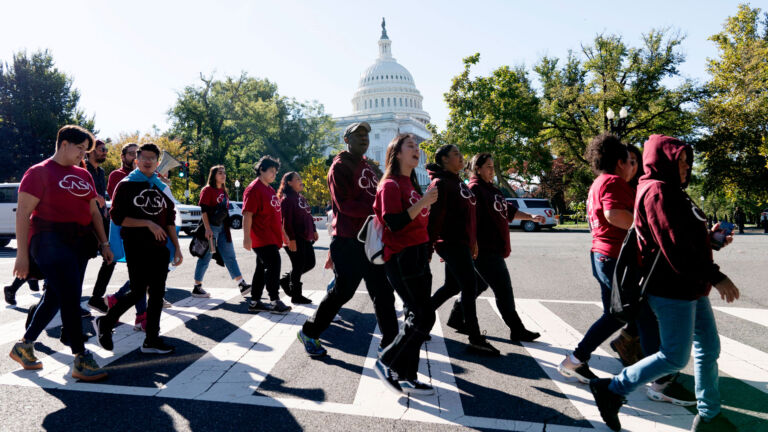
Under former President Joe Biden’s administration, approved young people with Special Immigrant Juvenile status could get employment authorization and deportation protection while they waited for their status to be adjusted to legal permanent resident under a “deferred action” policy. The program was similar to the deferred action program for childhood arrivals, known as DACA, which provides deportation protection and work authorization for people brought to the United States as children.
The Trump administration cut deferred action for people with Special Immigrant Juvenile status in June, leaving people without work permits or protection from deportation. This prompted a lawsuit filed in July by the National Immigration Project seeking to reinstate the policy.
One high-school-aged boy who appeared in court was approved for special immigrant juvenile status last year but is still waiting for his green card. The judge set an individual hearing date in 2029 and told him she hopes a visa becomes available by then.
“It’s very difficult to say whether someone with a priority date in 2024 will or will not become eligible for adjustment by 2029,” Rumsey said.
