
 Credit: (AP Photo/Darron Cummings, File)
Planned Parenthood health centers in New Jersey will continue to care for all patients who seek birth control, cancer screening or a test for sexually transmitted infections, the organization says. But these clinics can no longer get paid for this work through Medicaid.
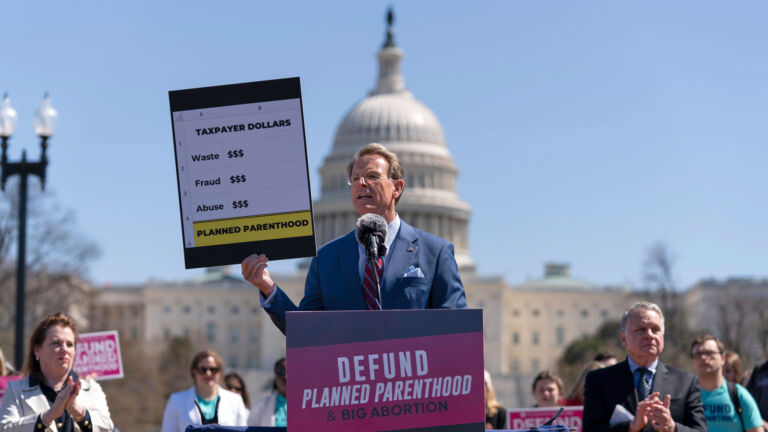
On Monday a federal appeals court judge blocked a Trump administration effort to suspend payments through Medicaid, the state and federally funded health insurance program, to certain Planned Parenthood organizations nationwide, including those that provide abortion. Planned Parenthood sought to block the government’s suspension of payments, which it called a “backdoor abortion ban.”
But the ruling appears to apply to just a subset of Planned Parenthood groups nationwide. It leaves the nonprofit Planned Parenthood affiliates in New Jersey — which do offer abortion services — searching for other ways to cover the cost of all care for roughly 37,000 patients insured through Medicaid that they serve each year, organization officials said.
“We really want people to hear that Planned Parenthood affiliates are still seeing patients,” Wojtowicz said. “We’re still committed to not turning away anyone from care.”
Supportive donors
Health care advocates have warned that funding reductions could force some Planned Parenthood sites to close nationwide, but Wojtowicz said the affiliates in New Jersey have been strengthened by supportive donors and the administration of Gov. Phil Murphy, a Democrat in his second and final term who has prioritized abortion rights and access. “We’re very lucky to be here in New Jersey,” she said.
When Murphy took office in 2018, he restored an annual appropriation of nearly $7.5 million for women’s health services, much of it going to Planned Parenthood, that had been cut under former Gov. Chris Christie, a Republican. In the wake of the 2022 Supreme Court decision that eliminated nationwide protection for abortion access, Murphy and fellow Democrats boosted state funding for related services to $50 million annually.
U.S. District Judge Indira Talwani ordered the Trump administration to keep Medicaid dollars flowing to Planned Parenthood organizations that do not provide abortion or were paid less than $800,000 through Medicaid in 2023.
The federal change stems from the tax-cut and funding reduction law President Donald Trump signed on July 4 — which passed Congress with only Republican support — that sought a one-year suspension for Medicaid payments to family planning centers in low-income communities that either offered abortion or received more than $800,000 in Medicaid payments in 2023. It did not mention Planned Parenthood by name but seemed to target the group — the nation’s largest provider of family planning services — and also impact two other large women’s health systems, court records show.
The law, which increased the national deficit and implemented massive tax cuts for wealthy individuals and corporations, also gutted federal support for Medicaid itself. State officials estimate it will cost New Jersey $3.3 billion annually in the years to come and could end coverage for 1 in 5 state residents in the program, which now insures 1.8 million people in New Jersey and pays for 40% of births in the state.
The court fight
Planned Parenthood challenged the law and two weeks ago U.S. District Judge Indira Talwani in Boston issued a restraining order temporarily blocking the cuts. In her ruling Monday, she said the Trump administration’s efforts to halt Medicaid funding for Planned Parenthood organizations that were reimbursed at a certain level or provided abortions violated the First Amendment rights of other Planned Parenthood groups who were likely to lose funding as well out of confusion over the measure or future policy changes.
“Planned Parenthood Members who do not provide abortion services will need to decide whether to disaffiliate from other Planned Parenthood Members before October 1, 2025, or risk ineligibility for Medicaid reimbursements because of their continuing membership in Planned Parenthood Federation,” Talwani wrote.
“[T]his uncertainty has an immediate chilling effect on Members’ right of association. Given this chilling effect,” she said, “Plaintiffs’ unconstitutional conditions claim is ripe.”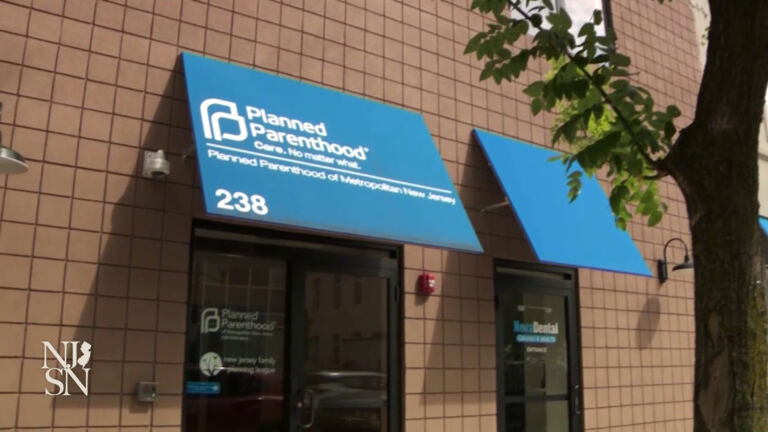
Talwani ordered the Trump administration to keep Medicaid dollars flowing to Planned Parenthood organizations that do not provide abortion or were paid less than $800,000 through Medicaid in 2023. Congress has long prohibited the use of any federal funds to pay for abortions, other than in rare exceptions, but family planning services and supplies are a mandatory benefit under Medicaid, Talwani’s ruling notes.
Planned Parenthood operates nearly 600 facilities in 47 states and provides telehealth in the remaining three. But only 10 member organizations — smaller ones, like Planned Parenthood of Delaware, and those that don’t provide abortion, like several affiliates in the South — would be protected by the decision, according to the ruling.
The Trump administration argued that “democratically elected components of the Federal Government collaborated to enact that provision consistent with their electoral mandates from the American people as to how they want their hard-earned taxpayer dollars spent.” Talwani acknowledged that right, but said it had to be done within constitutional bounds.
What next?
Wojtowicz, in New Jersey, said she anticipated the case would be appealed to the U.S. Supreme Court, but expected it to side with the Trump administration. “We know it’s not a friendly Supreme Court,” she said.
Wojtowicz pointed to a June decision in which that court ruled that individual Medicaid recipients do not have the legal standing to sue to get care, other than abortion treatment, from Planned Parenthood. South Carolina, a party in that case, is seeking to end Planned Parenthood’s participation in its Medicaid program, something a growing number of states are seeking to do.
While the tax-cut law halts Medicaid payments to the subset of Planned Parenthood groups for one year, Wojtowicz said she expects the restrictions to be extended for additional years under Republican leadership. Like previous fights over the use of federal Title X funding for family planning and the “gag rule” that limits discussion of abortion among reproductive health providers — both of which engulfed Planned Parenthood in the past — she anticipates Medicaid funding will be the focus of ongoing debate.
“This is going to be the new political football,” Wojtowicz said.
‘We really want people to hear that Planned Parenthood affiliates are still seeing patients. We’re still committed to not turning away anyone from care.’ — Kaitlyn Wojtowicz, executive director, Planned Parenthood Action Fund of New Jersey
In her ruling, Talwani acknowledged concerns raised by Planned Parenthood about the impact funding cuts could have on patients, especially those in rural or underserved areas that have no other source of reproductive care. The change might even work against Republicans’ stated goal of reducing abortions, court documents note, while also driving up rates of sexually transmitted infections and other diseases.
“Patients are likely to suffer adverse health consequences where care is disrupted or unavailable,” the ruling says. “Moreover, decreased access to contraceptives and the corresponding increase in the number of unintended pregnancies caused by excluding Planned Parenthood Members from Medicaid will likely result in an increased number of abortions.”

