Credit: (AP Photo/Evan Vucci, File)
WASHINGTON — The nominee to lead the National Oceanic and Atmospheric Administration defended proposed cuts to the agency that has shed thousands of employees, many of whom were fired, during the second Trump administration.
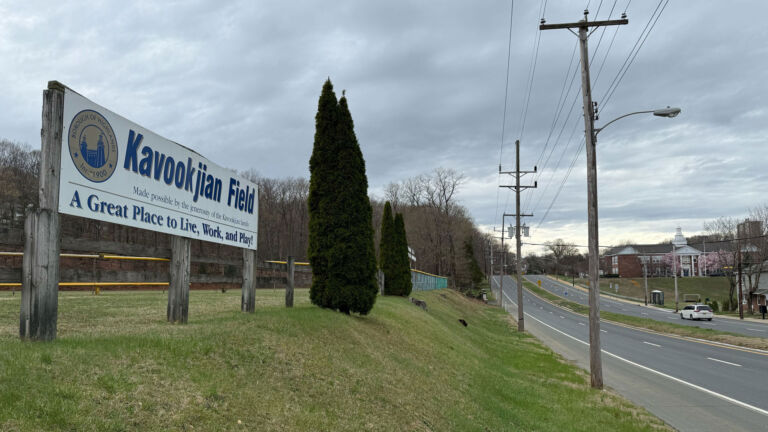
One of those proposed cuts is to the Geophysical Fluid Dynamics Laboratory at Princeton University’s campus in Plainsboro, one of several research hubs the White House wants to close.
During his Senate confirmation hearing, Neil Jacobs, who worked at NOAA during the first Trump term, said human activity makes weather more extreme, the overwhelming consensus of climate scientists.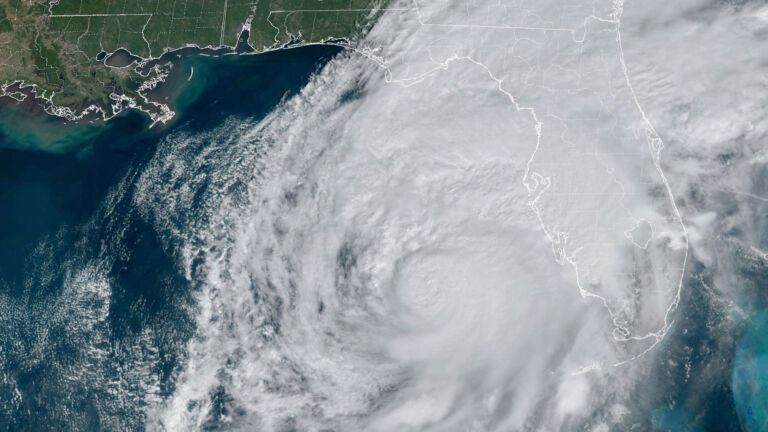
“You see human influence being part of the concern when it comes to climate change, when it comes to extreme weather?” asked Sen. Andy Kim (D-NJ), who is on the Senate Commerce, Science and Transportation Committee, which oversees NOAA.
“Yes, there’s influence,” Jacobs said Wednesday.
Jacobs said he would not bow to political pressure to approve a public statement — something he did during his previous stint at the agency, according to a federal investigation.
 Credit: (AP Photo/Mark Schiefelbein)
Jacobs’ nomination must clear the Senate committee and pass a vote of the full chamber before he’s confirmed.
With roughly 80% of its residents living in counties that border the Atlantic Ocean, New Jersey is acutely reliant on accurate weather safety information, in particular for flooding and extreme storms.
Trump administration eyes severe NOAA cuts
The Trump administration is pushing for sharp cuts to the staff and budgets of NOAA and other federal science agencies, as well as broader cuts to science and research in its latest budget proposals to Congress.
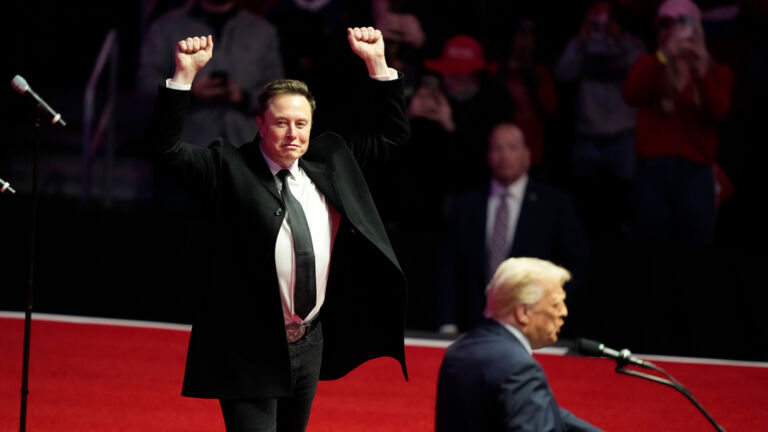
NOAA’s climate branch, the Office of Oceanic and Atmospheric Research, would be defunded and eliminated under the budget, a move that would close a network of labs nationwide, including the site in Plainsboro.
“Some of that’s being transferred to the [National] Weather Service,” Jacobs said.
The White House needs approval from Congress, which is responsible for drafting and voting on the annual federal budget, in order to cement its proposed cuts.
Democratic senators dismissed the idea that NOAA’s responsibilities could be covered with less money and fewer people.
A federal inquiry into the incident known as ‘Sharpiegate’ found Jacobs violated NOAA’s scientific integrity policy when he oversaw a statement that sided with Trump, not the meteorologists in Alabama.
The agency’s budget request projects NOAA staff will decline from about 12,000 to roughly 10,000 full-time employees.
“We can’t just shift these resources somewhere else,” said Sen. Maria Cantwell of Washington, the top Democrat on the committee. “NOAA has to do its own weather forecasting.”
Sen. Lisa Blunt-Rochester, a Democrat from Delaware, the country’s lowest-lying state, said, “Gutting NOAA is a costly mistake.”
The Trump administration has removed climate data from publicly available resources, such as the website Climate.gov, a former repository of climate data that now directs visitors to the main NOAA website, and the sprawling Republican bill that became law last week includes eliminating dozens of low- and zero-carbon energy tax incentives.
Role in ‘Sharpiegate’
In 2019, President Donald Trump showed a NOAA map in the Oval Office altered with a black marker to convey that a storm at the time, Hurricane Dorian, was threatening Alabama.
Trump said, falsely, that there was a “95% chance probability” that Alabama would be struck.
 Credit: (AP Photo/Evan Vucci, File)
National Weather Service staff in Alabama quickly issued a public statement, saying the storm would move too far east to hit Alabama.
A federal inquiry into the incident known as “Sharpiegate” found Jacobs violated NOAA’s scientific integrity policy when he oversaw a statement that sided with Trump, not the meteorologists in Alabama.
‘I worry about Dr. Jacobs’ ability to be the leader the country needs, especially as climate change is supercharging extreme weather across the United States.’ — Carlos Martinez, Union of Concerned Scientists
“There’s probably some things that I would do differently,” Jacobs said Wednesday when Democratic Sen. Ben Ray Luján of New Mexico brought up the incident.
“Would you sign off on an inaccurate statement due to political pressure, yes or no?” Luján asked.
Jacobs: “No.”
Is NOAA’s mission threatened?
Carlos Martinez, a climate scientist with the Union of Concerned Scientists, a nonpartisan nonprofit group, said he is worried about the Senate confirming Jacobs.
“As NOAA administrator, Dr. Jacobs will bear responsibility for standing up to reckless administration staffing and budget cuts that threaten NOAA’s mission,” Martinez said. “I worry about Dr. Jacobs’ ability to be the leader the country needs, especially as climate change is supercharging extreme weather across the United States.”
As greenhouse gases from the burning of fossil fuels layer the planet, Earth’s air and oceans warm, in turn shifting weather patterns, melting ice and altering water flows.
A warmer atmosphere can hold more water, leading to extreme events, like the flash floods that killed more than 100 in central Texas this weekend.