
 Credit: (AP Photo/David Goldman, File)
 As many as 25,000 legal immigrants in New Jersey — including refugees and victims of domestic violence and human trafficking — are expected to lose their Medicaid coverage in the fall of 2026, according to state estimates.
Some migrant populations can stay enrolled in the state and federally funded insurance program, according to state Medicaid officials, including legal permanent residents and immigrants from Cuba, Haiti and certain Pacific islands.
But the massive tax and spending-cut law pushed by Republicans in Congress and signed July 4 by President Donald Trump will eliminate Medicaid coverage for other migrant groups by October 2026, a change critics say will leave families with fewer health care options and less stability in general.
“I think the key bottom line here is, effective next October … the list of categories of immigrants who can receive full Medicaid benefits will shrink significantly,” said Greg Woods, the assistant commissioner at the state Department of Human Services, who oversees the Medicaid program, during a meeting of the state Medicaid advisory committee in mid-July.
The changes to Medicaid include adding work requirements and restrictions on hospital aid. These are expected to cost the state $3.3 billion annually in the years to come and could force some 350,000 people out of the plan, according to the department’s calculations.
In general, “the safety net will get a little bit weaker,” Woods said.
 Credit: (NJ Department of Human Services)
‘A lot of confusion’
New Jersey is home to more than 2 million immigrants, according to a 2020 report from the state’s Office of New Americans, the most recent available. More than three-quarters are here legally. Human Services predicts 15,000 to 25,000 legal immigrants could lose Medicaid benefits under the new federal law.
“We’re hearing a lot of confusion” from people in immigrant communities, Laura Waddell, the health care program director for New Jersey Citizen Action, told NJ Spotlight News. Citizen Action is one of several nonprofits that partner with the state to help people enroll in NJ Family Care, the state’s Medicaid program, or connect with other affordable coverage options.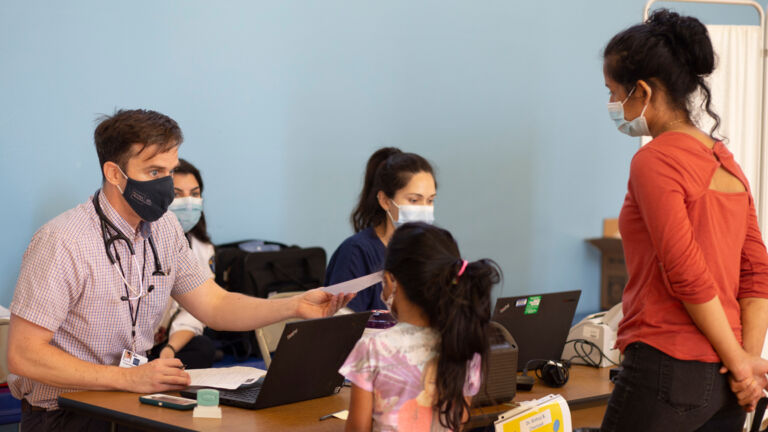
Waddell said interest in NJ Family Care is strong in many immigrant communities, something she attributed in part to the hard work done by the state and community organizations like Citizen Action to educate people about the program and its benefits. “And now people are excited and happy,” she said. “People want to be able to participate.”
NJ to still ‘cover all kids’
The changes to Medicaid come amid growing fear within foreign-born communities in New Jersey and nationwide in the wake of widespread arrests and detentions by federal immigration authorities, cuts to critical services and other policy shifts that are expected to harm communities of color. Earlier this month the Trump administration also blocked undocumented families’ access to Head Start, the federal early education program.
The cuts to Medicaid, however, will not stop New Jersey from continuing to use state taxpayer dollars to fund its “cover all kids” initiative, which provides health care to undocumented children whose families meet the NJ Family Care program’s regular income-eligibility requirements. Republicans in Congress proposed penalizing states that continued offering these plans — estimated to cost New Jersey $700 million annually, state officials said — but that provision was dropped from the final bill.
‘This is going to be awful, but what can we do at the state level to see how we can lessen [the impact of] these changes? That’s where our heads are at.’ — Laura Waddell, health care program director, New Jersey Citizen Action
Woods said his team is still sorting through the details of how the new law will apply to various immigrant groups “but as a sort of general signpost I would say ‘cover all kids’ is not directly impacted by this provision.”
“Well, there’s a little bit of a silver lining,” said Teressa Edelstein, a public health and nursing home leader who is a member of the Medicaid advisory board.
New Jersey is one of 14 states, plus Washington D.C., to commit state or local dollars to covering undocumented children, according to KFF, a nonprofit health policy analyst. Roughly 47,000 children have been enrolled in NJ Family Care through this program, which was launched in January 2023, according to state budget documents, and the state set aside $164 million for their care for the fiscal year that began in July.
‘A lot of work to do’
Woods said the Department of Human Services is working to prepare outreach materials that state officials and community groups can use to communicate the coming changes to NJ Family Care members, health care clinics and hospitals, and the county offices and community groups that handle much of the Medicaid enrollment.
“We have a lot of work to do,” Woods told the advisory committee, “in particular around outreach to members and education and thinking about ‘are there alternative sources of coverage that immigrant members of our community who are going to lose access to Medicaid may be able to seek?’”
Waddell, with Citizen Action, and Mary Coogan, president and CEO of Advocates for Children of New Jersey and a Medicaid advisory committee member, said organizations like theirs are eager to help. “I appreciate the [assistant] commissioner’s statement saying that the agency is committed to making sure people don’t lose their coverage,” Coogan said during the meeting.
Citizen Action is also going to create outreach materials, Waddell told NJ Spotlight News, and plans to hold webinars, training sessions and other in-person and online events to get the word out about the impending changes. “We’re going to get out there and do what we do to make as many people as possible aware of these changes and when to expect” them, she said.
Waddell said advocates also hope to take positive action to expand access to care, not just defend against the cuts to Medicaid. Citizen Action and its allies support efforts to make NJ Family Care open to more people by enabling them to buy into the state’s Medicaid plan, a less costly option than commercial policies. To address the underlying issue of the high cost of care, she said advocates also urge the Legislature to expand the work of the Office of Health Care Affordability and Transparency and empower the state’s new Drug Affordability Council to do more to address the cost of medication.
“We’re also looking at what policy levers New Jersey can use to mitigate this impact” of Medicaid changes, Waddell said. “This is going to be awful,” she said, “but what can we do at the state level to see how we can lessen [the impact of] these changes? That’s where our heads are at.”
This story is made possible in part by the Corporation for Public Broadcasting, a private corporation funded by the American people.

