Credit: (RWJBarnabasHealth)
A free cancer-screening program that has likely saved or extended the lives of thousands of New Jersey residents has itself escaped a potentially terminal blow.
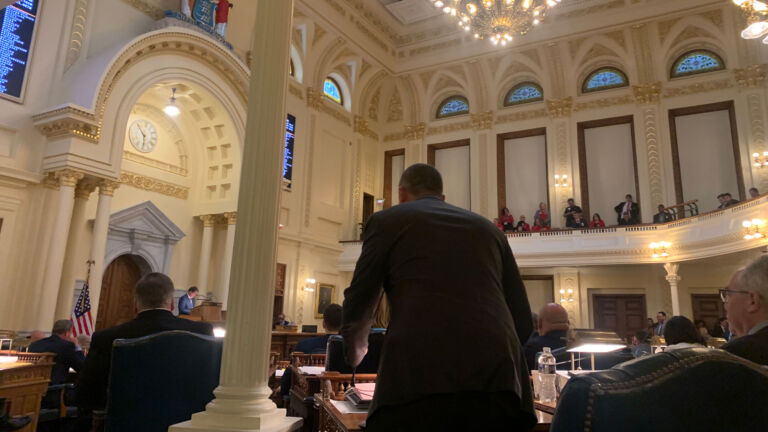
The Screen NJ program run by Rutgers University’s Cancer Institute saw its full state funding restored through changes New Jersey lawmakers made to the nearly $59 billion final budget for fiscal year 2026, which Gov. Phil Murphy signed into law in late June. Cancer Institute leaders said a funding cut could force the program to downsize drastically and eliminate services, leaving many people without access to cancer screening.
The funding was part of $728 million in additional spending Democratic leaders in the Legislature added to the budget Murphy proposed in February. Lawmakers added money for local pet projects and clubs, social service organizations, educational initiatives, school renovations and other capital construction, health care programs and more.
“Too many lives are still lost to cancer because the disease isn’t caught early when treatment is most effective,” state Sen. Gordon Johnson (D-Bergen) told NJ Spotlight News in an email. “Screen NJ has done a tremendous job expanding access to lifesaving screenings across New Jersey, reaching thousands, particularly in our most vulnerable communities.”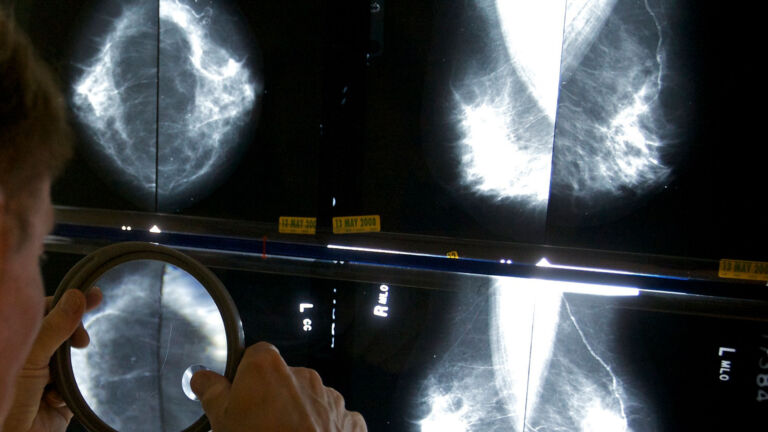
Johnson and Sen. Andrew Zwicker (D-Mercer) led the efforts to ensure Screen NJ receives $3 million under the new budget, according to legislative staff. It was also a priority for Democratic leaders in the Assembly, a spokesperson said. Murphy’s original budget included $1.5 million for the program, which had received $3 million last year and as much as $4 million annually in the past.
Importance of early detection
“Many forms of cancer often go unnoticed in their early stages, making routine screenings the first line of defense against them,” Zwicker said in an email to NJ Spotlight News. “I am thrilled that this program, which has already helped thousands of people access the testing and treatments they need, now has the funding to do so for years to come.”
Officials at the Rutgers Cancer Institute did not comment on the funding restoration this week. Dr. Steven Libutti, the institute’s director, told lawmakers during budget hearings in March that the program had provided free cancer screenings to some 110,000 people since 2018, more than three-quarters of whom did not have health insurance, making it harder for them to access preventive care.
More than 57,000 new cancer cases were detected in 2022 in New Jersey, according to the most recent data available from the state’s cancer registry database.
Of those screened, nearly 10,000 were discovered to have early-stage cancers or pre-malignant lesions, Libutti said at the time. Another 4,000 patients were diagnosed with cancers that were more advanced, but still treatable, a Rutgers spokesperson said this spring. The program also helps connect patients with care, resulting in thousands of lives saved, the spokesperson said.
 Credit: (RWJBarnabasHealth)
In addition to free screenings and patient assistance Screen NJ — a partnership that also involves Rutgers University and the state Department of Health — also seeks to educate people and build awareness of the need for regular cancer checks. If full funding was not restored, Libutti warned that Screen NJ would need to lay off 75% of its patient navigators and half the education staff.
Zwicker said Screen NJ was doing “vital” work.
“I’m proud and grateful that we fully restored funding in this year’s budget so Screen NJ can continue its vital mission and give more people a fighting chance through early detection,” Johnson said.
Federal cuts
The restoration of state support comes as health care and patient advocates brace for the impact of massive federal funding cuts in the Republican-led tax law bill President Donald Trump signed on July 4. In the years to come, the law is expected to eliminate $3.3 billion annually from federal resources for the state’s Medicaid program, which now covers 1.8 million low-income residents, and could force nearly 1 in 5 people out of the program.
More than 57,000 new cancer cases were detected in 2022 in New Jersey, according to the most recent data available from the state’s cancer registry database, with breast cancer leading among women and prostate cancer the top concern for men. Black residents are more likely to be diagnosed with and die from cancer in New Jersey, compared to white residents, statistics show.
Screen NJ is not the only cancer-related program funded in the latest state budget. In all, the budget includes more than $100 million for various screening, treatment and reporting efforts, including at least $46 million for the Cancer Institute’s other work, including a pediatric cancer program and a partnership with University Hospital in Newark to diversify treatment trials. Another $32.4 million was set aside for a program run by Cooper University Hospital in Camden that provides cancer care services to South Jersey residents.