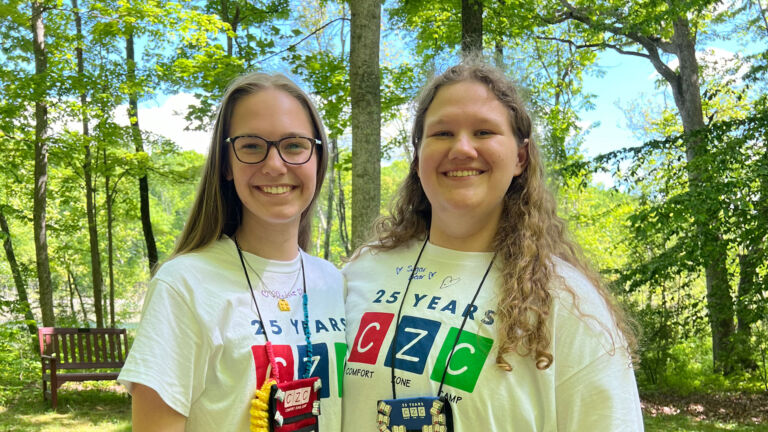
Credit: (Courtesy of Tess Wegner)
In 2016, Tess Wenger lost her older sister, Elena, to suicide. Six years later, Wenger’s mother signed her up for a bereavement camp in Warren County to help her cope with Elena’s death and to meet other kids who have also lost a loved one to suicide.
Nearly a decade later, Wenger still grieves her sister’s death. But she has found a sense of belonging and companionship, she said, through her annual return to the camp, which took place mid-May in Johnsonburg.
“A lot of things would remind me of my sister when she passed and … that’s all I could think about. I was getting flashbacks and I didn’t know how to deal with it,” Wenger, 17, said in a recent interview with NJ Spotlight News. “But after going to Comfort Zone and after being able to have my therapist help me, I’ve been able to find ways to help me with that.”
Wenger, a Northampton, Pa. resident, was among the 180 people who attended the three-day bereavement camp that brought together children, young adults and parents who have lost a loved one to suicide. Comfort Zone Camp, the event’s host, is a nonprofit that’s focused on empowering grieving children who have lost a parent, sibling or primary caregiver and to help those children heal and lead more fulfilling lives. Another partner in the camp is A Little Hope Foundation, a national nonprofit for grieving children, teenagers and families founded in response to the Sept. 11 terror attacks.
The first Comfort Zone camps were held in 1999 for people who lost loved ones for a variety of reasons. They began focusing on suicide loss in 2015 in partnership with A Little Hope Foundation, according to Lynne Hughes, the camp’s founder and CEO.
“We were like a city unto ourselves, which is just interesting that the awareness of the program is growing,” Hughes described this year’s camp in a recent interview with NJ Spotlight News. “Once people find out about it, they want to come back because it works and the connections are so powerful. It’s like their unique place where they can go and be with people who get it,” she said.
Troubling data
Suicide continues to be a leading cause of death across the country, according to the Centers for Disease Control and Prevention. Suicide rates increased approximately 36% between 2000 and 2022, and suicide was responsible for 49,316 deaths in 2023, according to data cited by the CDC.
Last year, 637 people died by suicide in New Jersey, according to provisional data from the state Department of Health. Deaths were down from 2023, when 660 people died by suicide in New Jersey, according to provisional state data.
‘They can see that healing, while a long journey, is possible.’ — Dr. Laura Erickson-Schroth, The Jed Foundation
Breaking down those deaths by age reveals a troubling trend among young people. Last year in New Jersey, 54 people between the ages of 15 and 24 died by suicide, according to provisional Health Department data. In 2023, 79 people in the same age range died by suicide.
Even younger New Jersey residents are impacted. In 2023, five children between the ages of 10 and 14 died by suicide, according to provisional state data. Last year, 11 children in the same age range also died by suicide.
Unique environment
Mental health experts, including Dr. Laura Erickson-Schroth of The Jed Foundation, say that grief camps offer a unique and healing environment for young people, especially for those who are grappling with complex emotions following the loss of a loved one to suicide. Young people can “sometimes find it easier” to open up to others their age who have also lost a loved one to suicide, which creates “strong bonds” that can last long after camp ends, said Erickson-Schroth, the chief medical officer at the nonprofit.
 Credit: (Comfort Zone Camp)
“By connecting with others, sharing stories and learning coping skills, young people can begin to find hope and build resilience,” Erickson-Schroth said in an email. “They can see that healing, while a long journey, is possible.”
This has been the case for Wenger, who said she was “really excited” to see Heather Murphy, a camp volunteer, upon her return to the camp in May. Murphy has served as Wenger’s “Big Buddy” since last year’s camp. The two stayed in touch and checked in on each other over the past year through social media and text messages, according to Wenger.
“When you’re outside of camp, say like struggling or having a rough time, you can go ahead and contact that person you feel comfortable with, like Heather or one of my other ‘Little Buddies’ (fellow campers) … and they know your story,” said Wenger. “So, it’s not like you have to go to a complete stranger.”
‘After camp, I found that grief is like the ocean, it comes in waves. You have ‘high highs’ and ‘low lows’ but you can find things to do or find people to talk to.’ — Tess Wenger, camp attendee
Other people who have attended the camp have also formed lasting relationships that continue long after the camp is over, according to Wenger.
“There’s a lot of little’s (campers) and big’s (mentors) that stay in contact. There’s this group of a big and a little who have been with each other for eight years and they contact each other all the time,” she said.
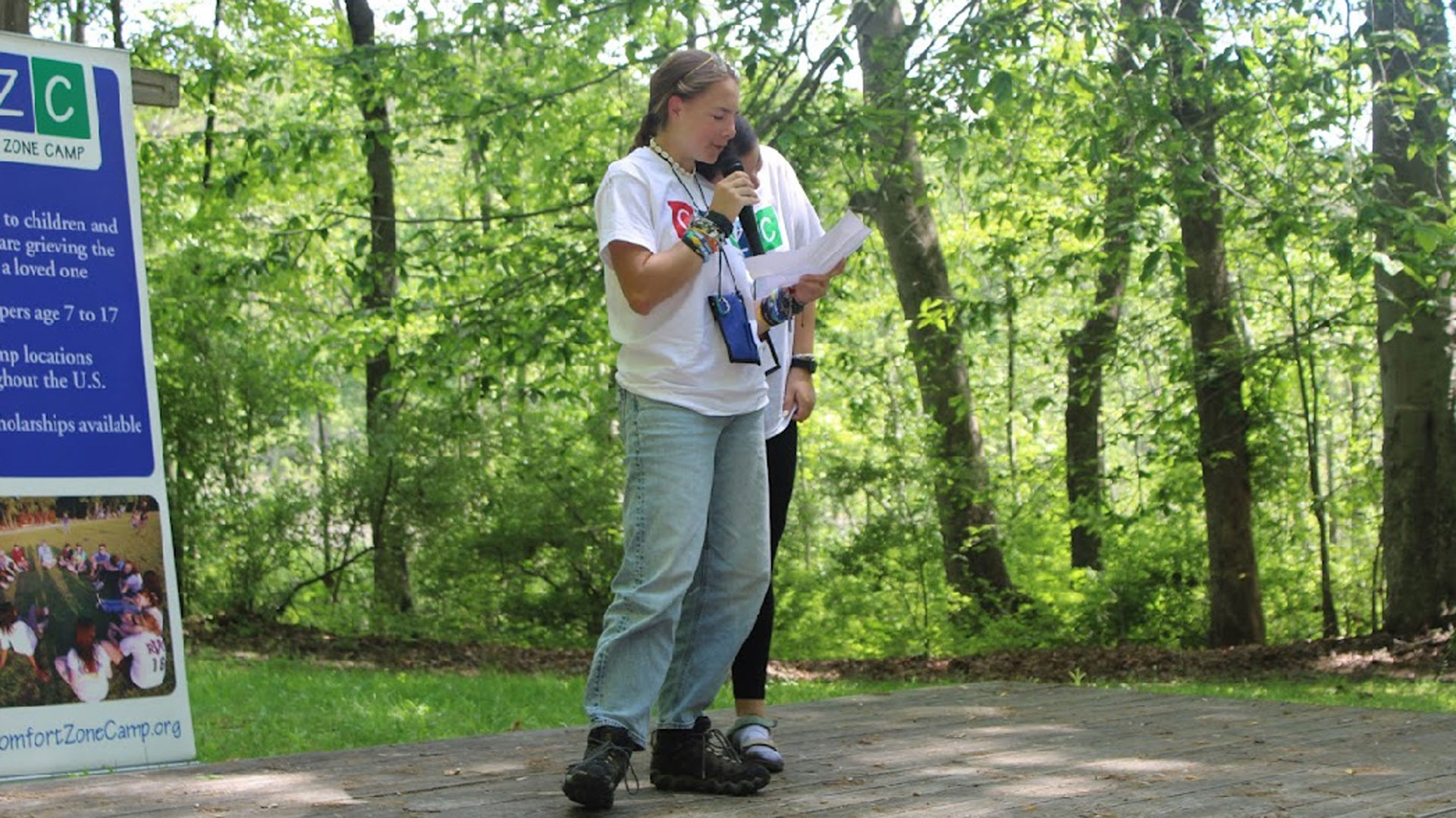 Credit: (Courtesy of Tess Wegner)
When a person has experienced a loss to suicide of a loved one or someone close to them, that person’s own risk level for suicide can increase because of the traumatic experience, said Kalisha Smith, a licensed clinical social worker.
“When camps are specifically targeting young people who have had loss and their family or support systems, it’s really a very specific work of prevention,” said Smith. “I’m so grateful that they have space for folks to come together to connect because we know healthy connection is prevention.”
Activities at the camp included arts and crafts, a bonfire and support groups called “healing circles” where people who have lost a loved one can connect with their peers. This year’s camp also included three support groups for parents who have lost either a spouse or a child to suicide, according to Hughes.
How the camp works
The camp is designed “so that there’s fun time, and then there’s time to go towards the grief and then there’s time to lighten it back up and then there’s time to do work going towards the loss,” Comfort Zone Camp CEO Hughes said. “That’s kind of the tempo of the weekend.”
Erickson-Schroth of JED added that grief, particularly after a suicide, can be “incredibly isolating.”
“Connecting with other campers and counselors can help break down these walls, fostering connection and a sense of belonging with others who have walked a similar path,” Erickson-Schroth said.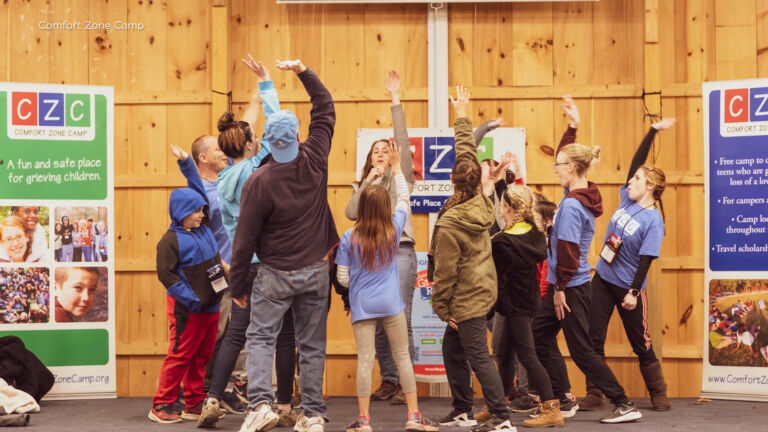
Many people, even if they didn’t receive therapy or go to a camp, would work through their grief, said Maureen Brogan.
“But if you have additional supports, whether it’s trusted adults, whether it’s other people that you can relate to that have also modeled some resiliency, then you’re going to be that far ahead of the game,” said Brogan, the program director of the Traumatic Loss Coalition at Rutgers University Behavioral Health Care.
On the first night of camp this year, Wenger participated in activities with other campers and chatted with old friends from past camps. Before attending Comfort Zone Camp, she was in a lot of “mental pain,” she said, and struggled to navigate the loss of her sister, especially around the time when Wenger was starting high school.
“After camp, I found that grief is like the ocean, it comes in waves,” said Wenger. “You have ‘high highs’ and ‘low lows’ but you can find things to do or find people to talk to.”
If you or a loved one are in crisis, call the 988 Suicide & Crisis Lifeline at 988 or contact the Crisis Text Line by texting HOME to 741741.
For more information on Comfort Zone Camp, visit comfortzonecamp.org.