Credit: (HCCC)
 For a growing number of low-income college students, summer does not necessarily mean time off from school. The expansion of the Tuition Aid Grant program to include summer classes has allowed students to continue toward their degree at a lower cost — but this could be the last summer the financial aid is available.
Gov. Phil Murphy’s proposed budget does not include funding for Summer TAG, which has helped around 24,000 students in its first two years. At budget hearings, college presidents called for the Legislature to add $30 million for summer tuition aid to the budget for next year so the program can continue in summer 2026. This is one of several requests from higher education leaders, who are raising alarm about potential cuts at the state and federal levels.
“It’s a perfect storm of disinvestment,” said Eric Friedman, president of Bergen Community College.
Lawmakers have until the end of June to pass a budget for the fiscal year starting on July 1, a budget that likely will look different from the $58.3 billion plan Murphy proposed. The administration is calling it a “tight budget year,” which means cuts to programs like Summer TAG that the governor has promoted throughout his time in office. Murphy is calling for record-high state spending and over $1 billion in new taxes and fees to support that spending.
Full funding for Summer TAG in 2026 would cost about $36 million, according to Margo Chaly, executive director of the Higher Education Student Assistance Authority.
Summer TAG was only introduced in 2023
Participation in the program has grown since its introduction in 2023. To participate, students must be enrolled in at least six credit hours over the summer and have received a TAG award during the previous school year.
At the state’s 18 community colleges, Summer TAG is seen as key to keeping students engaged with school and helping their return in the fall.
Matthew Fessler, dean of enrollment at Hudson County Community College, said students who take summer classes after their first year are 68% more likely to return for their second year. The school has been pushing students to take summer classes to improve retention, offering up to seven free credits over the summer by paying a student’s remaining tuition balance after accounting for financial aid and scholarships. This year, nearly 50% more students are enrolled in summer classes than last year, Fessler said.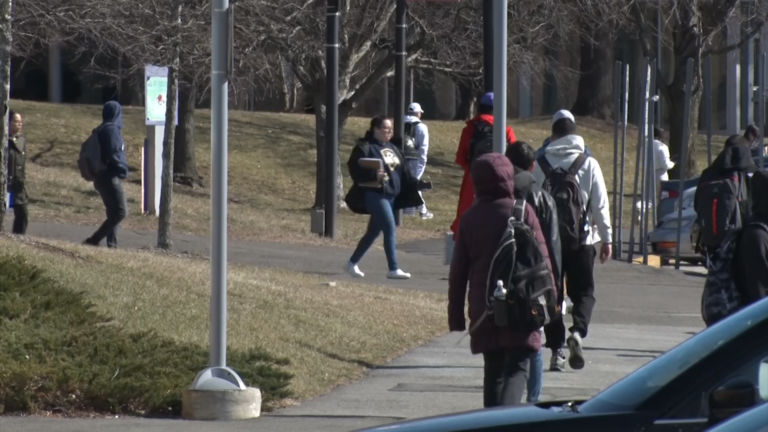
Darali Garacia, a first-year student studying to be a social worker, said Summer TAG keeps her on track and engaged.
“If I weren’t to receive it, I think I would be sidetracked, and I won’t be as motivated to continue studying,” Garacia said.
Who stands to lose most?
Eric Friedman, president of Bergen Community College, said keeping students engaged over the summer helps limit the number of students who drop out, which is an important goal of the state’s community colleges.
“We can keep students going year-long, moving them towards their goals, their dreams, their degrees without this long valley of the summer where they can’t afford to take classes,” Friedman said. “We don’t want them off from May until Labor Day. That’s a long period of time to get disconnected and to lose interest.”
Removing Summer TAG funding would impact the most vulnerable students by delaying their degree completion and increasing the cost of their college education, Friedman said. Many community college students are balancing work, child care, elder care or other responsibilities with their course work, he said.
’We really are undermining New Jersey’s stated goals of open access to higher education and college completion’ if Summer TAG is ended. — Eric Friedman, president, Bergen Community College
Summer enrollment at Bergen Community College is usually about 7,000 students, which is half of enrollment during the typical school year. This summer, about 500 students are receiving more than $500,000 in summer TAG awards.
Chris Reber, president of Hudson County Community College, said about 90% of his students rely on financial aid and more than two-thirds have suffered from housing insecurity, food insecurity and homelessness. This means finishing school quickly and at a low cost is important, he said.
What students say
“Without taking these classes this summer, I would not be graduating on time,” said Roah Moustafa, a second-year student and Summer TAG recipient at Hudson County Community College.
Malaya Allen, a recent graduate of Hudson County Community College, said taking summer classes last year without a Summer TAG award would have put a financial burden on her entire family. Allen would have tried to take the additional classes in the fall and spring semesters instead, which would have been “overwhelming,” she said.
This summer, 650 Hudson County Community College students are eligible for Summer TAG, an increase of 115% from 2023. Sylvia Mendoza, dean of financial aid, said she expects the number would grow next summer if Summer TAG were available then.
The higher summer enrollment is, the more summer courses that can be offered to all students, not just those receiving TAG awards. By allowing more students to make progress toward graduation over the summer, it helps the local economy by filling openings in education, health care and other high-need fields earlier, Friedman said.
If Summer TAG grants are ended, he said, “We really are undermining New Jersey’s stated goals of open access to higher education and college completion.”
This story is made possible in part by the Corporation for Public Broadcasting, a private corporation funded by the American people.