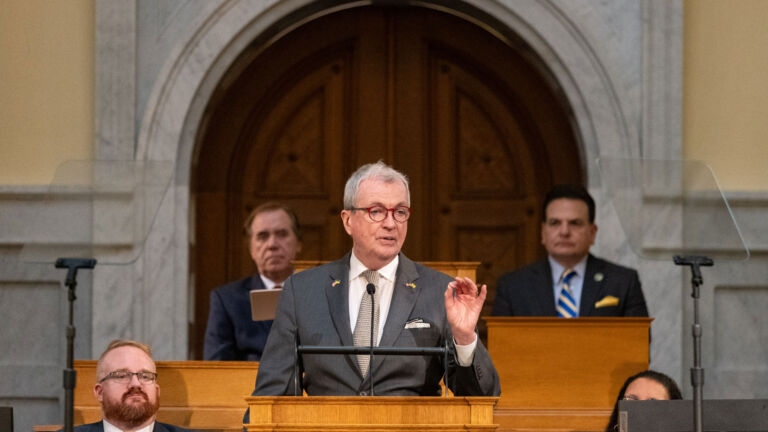
Credit: (AP Photo/Gerald Herbert)
Gov. Phil Murphy is seeking more than $1 billion in tax hikes, and as a new state budget takes shape this week, it looks like at least some increases will win approval from lawmakers in this election year.
Among numerous pieces of legislation introduced in Trenton in recent days are measures that would hike state taxes currently levied on cigarettes and liquid nicotine commonly used with vaping devices.
Murphy, a second-term Democrat, first proposed increasing these taxes and several others in February as he put forward a record-high spending plan of more than $58 billion for the fiscal year that begins July 1.
But not all of Murphy’s tax proposals have been embraced by lawmakers, including members of his own party, during a year that will see all 80 seats in the Assembly up for grabs in the fall. It’s an election that once again will likely see voters ranking affordability and cost of living as their top issues.
Likely tax hikes
These tax increases include Murphy’s push to expand the state sales tax base to cover admission to participatory sports venues like batting cages and bowling alleys, a proposal Republicans labeled a “fun tax.”
However, the proposed tax increases on cigarettes and liquid nicotine are now being formally sponsored in the Senate by two leading Democrats.
Senate Budget and Appropriations Committee Chair Paul Sarlo (D-Bergen) is sponsoring the proposed increase in the state tax levied on packs of cigarettes sold in New Jersey.
Sarlo’s bill calls for hiking this tax, from $2.70 to $3. According to the Murphy administration’s estimates, the proposed tax-policy change would raise $41 million annually in new revenue.
“The Governor’s Fiscal Year 2026 Budget recommendations include the enactment of legislation to increase the cigarette tax rate by $0.30 per pack of 20 cigarettes. This bill is intended to implement this recommendation,” according to the bill.
Senate Health, Human Services and Senior Citizens Committee Chair Joe Vitale (D-Middlesex) is sponsoring the measure seeking to hike the state’s liquid nicotine tax.
Vitale’s bill calls for increasing the state’s container e-liquid tax rate, from 10 cents per fluid milliliter to 30 cents per fluid milliliter. According to the administration’s estimates, the proposed change would raise another $10 million in new revenue annually.
“The Governor’s Fiscal Year 2026 Budget recommendations include the enactment of legislation to increase the tax rate on liquid nicotine and container e-liquid. This bill is intended to implement this recommendation,” according to the bill.
Where uncertainty lies
However, it remains to be seen whether these and the other tax hikes backed by Murphy — including higher levies on alcohol, marijuana, online gambling and sports betting, as well as high-dollar property sales — will make it into the final draft of an annual spending bill that must be adopted by the July 1 start of the next fiscal year.
Meanwhile, Senate Majority Leader Teresa Ruiz (D-Essex) has also introduced legislation that would establish a sales tax exemption for certain baby products in New Jersey, including cribs, baby shampoos and sunscreen, among other items.
If enacted, this measure would codify another tax proposal Murphy first put forward in late February as part of his budget message to lawmakers.
Budget timetable
Under the New Jersey Constitution, state government is required to shut down if an annual spending bill is not introduced, approved in both the Senate and Assembly and signed into law by the governor, all by July 1.
Murphy suggested during an interview with News 12 New Jersey Tuesday that he and legislative leaders already have an agreement on the framework of the budget.
While Murphy didn’t share any specific details, he said this puts policymakers on pace to pass a spending bill through legislative committees and both full houses before the constitutional deadline.
“I’m confident all of that will happen,” Murphy said during the interview.