
 Credit: (John Mooney/NJ Spotlight News)
Democrats who control the Legislature are advancing bills to hike taxes on online gambling and online sports betting to help raise more revenue to sustain New Jersey’s growing annual budget.
Legislation that cleared the Senate Budget and Appropriations Committee on Thursday calls for raising the state tax rates levied on both online gambling and online sports betting to nearly 20%.
Those tax rates are currently set at 15% and 13%, respectively.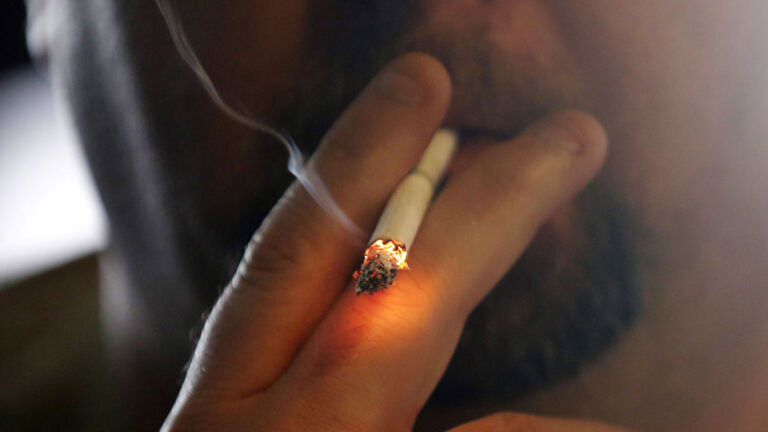
Meanwhile, a separate bill that also won approval from the same committee during a long day of voting inside the State House will hike fees levied on high-dollar real-estate sales in New Jersey.
Consideration of these two tax-hike measures, and others, came as majority Democrats are racing to pass a new state budget by the start of the fiscal year that begins Tuesday. These tax increases are expected to raise several hundred millions in new revenue although final estimates are not yet available.
A final spending bill had not been formally introduced by late Thursday, but legislative officials signaled that step in a budget-approval process that began in late February would come by Friday night.
Under the New Jersey Constitution, state government is required to shut down if an annual spending bill is not introduced, approved in both the Senate and Assembly and signed into law by the governor, all by July 1.
 Credit: (John Mooney/NJ Spotlight News)
Despite voter concerns about affordability that threaten to dominate Assembly elections looming in the fall, Gov. Phil Murphy – a term-limited Democrat due to leave office early next year — proposed more than $1 billion in new tax increases as part of a more than $58 billion annual budget plan he put forward in late February.
This new batch of tax hikes followed more than $1 billion in increased levies that Murphy and fellow Democratic lawmakers approved last year which they said were needed to fund what was then a record-high annual budget.
Last year, majority Democrats also approved legislation that paved the way for the gas tax increase that went into effect earlier this year.
Highway tolls and fares at New Jersey Transit have also been on the rise as many public agencies in New Jersey have attempted to keep up with rising inflation and rapidly increasing employee health care costs, among other financial pressures.
On the spending side of his latest budget proposal, Murphy has called for increased allocations for mass transit, public-worker pensions, direct property-tax relief and K-12 public school aid, among other areas.
Altogether this proposed budget called for spending more than $1 billion more than the state was projected to collect from taxes during the 2026 fiscal year, meaning a structural gap between annual revenues and expenditures would once again need to be filled by drawing down budget reserves.
Included in the tax proposals Murphy put forward earlier this year were higher levies on alcohol, cigarettes and marijuana, as well as online gambling and online sports betting.
And among his proposed tax hikes was an increasing of New Jersey’s “mansion tax” levied on real-estate sales over $1 million and an expansion of the sales tax base, including a call to apply the state’s 6.625% sales tax rate to admission into participatory sports venues, such as batting cages and bowling alleys.
Republicans lampooned the latter proposal as Murphy’s “fun tax,” and it was not among the tax proposals that had enough support from Democrats on Thursday to make it onto the agendas of the legislative budget committees in Assembly and Senate.
However, majority Democrats did advance legislation needed to codify some of the other tax-policy changes Murphy first proposed in his late February budget message.
Among them is the measure that would hike the per-pack tax on cigarettes sold in New Jersey, from $2.70 to $3, and the tax levied on liquid nicotine commonly used with vaping devices, from 10 cents per fluid milliliter to 30 cents per fluid milliliter.
Meanwhile, the mansion tax measure that advanced Thursday will hike the fee levied on property sales worth more than $2 million by varying degrees. It also leaves in place a current tax on sales of properties over $1 million, but shifts the burden of paying this fee and the new rates for sales involving properties over $2 million, from buyers to sellers, according to a copy of the bill.
Under Murphy’s original proposal, the tax on property sales worth more than $1 million would have been increased along with the establishment of a new rate for sales worth more than $2 million.
Also changing from Murphy’s original proposal is the measure advancing on Thursday that calls for hiking the state tax rates levied on online gambling and online sports betting taking place in New Jersey.
Under the bill, the current tax rates levied on online gambling and online sports betting in New Jersey would go up to 19.75%. But those new rates are lower than the flat 25% rate what Murphy was seeking in his proposed budget.
Senate Budget and Appropriations Committee Chair Paul Sarlo (D-Bergen) discussed the tax-hike measures as they came up for consideration on Thursday, saying it was part of the natural “give and take” with the governor when it comes to adopting a new budget.
 Credit: (John Mooney/NJ Spotlight News)
Sarlo also stressed that the additional revenue would help narrow the state’s structural budget gap, while also helping to maintain a robust surplus.
A revised draft of the annual budget Murphy submitted to lawmakers last month called for leaving more than $6.5 billion in surplus to serve as a hedge against any unforeseen revenue losses or expenditure needs that emerge after the new fiscal year begins on July 1.
That surplus is being viewed this year with increased importance amid a series of major spending cuts that are currently up for consideration in the Republican-controlled U.S. Congress.
Among them are significant changes to social safety-net programs like Medicaid that experts say could result in the shifting billions of dollars in costs onto state governments.
While the final figures were still not available late Thursday, Sarlo told reporters the final fiscal year 2026 closing surplus would not fall below $6 billion.
