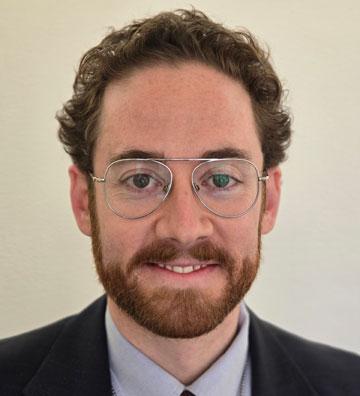
Credit: (AP Photo/Mariam Zuhaib)
WASHINGTON — People jockey and scrap to get seats on the Energy and Commerce Committee, one of the most prestigious panels in Congress.
“I am honored to be selected to serve on the Energy and Commerce Committee, where I look forward to working with my colleagues to address the critical issues facing our nation’s energy future, research and development, and economy,” Rep. Tom Kean (R-7th) said in December, after he was named to the committee.
Now that Kean has a seat on the sought-after panel, it could become politically toxic. Republicans on Capitol Hill are assembling a massive bill to cut taxes primarily for high-income earners and corporations while slashing spending on federal programs for the public, notably to a broad array of social safety net services.
Kean is one of 30 Republicans on the committee that will begin debate Tuesday and potentially pass legislation that could take away health coverage through Medicaid, the 60-year-old health insurance program for the poor now covering about 82 million people.
The legislation teed up for debate would remove about 8.6 million people from Medicaid enrollment, according to a preliminary estimate from the Congressional Budget Office, a nonpartisan agency that advises Congress on economic policy.
Beyond the possible broad social implications, Kean’s vote will likely provide political fodder for Democrats looking to flip his district in the 2026 midterm elections, when the political party in power typically struggles.
Within New Jersey, that would mean 200,000 people would be removed from Medicaid, if cuts are distributed evenly across the U.S., according to New Jersey Policy Perspective, a left-leaning think tank. The group made that projection based on the CBO report, a representative said.
Kean’s office did not respond to a request for comment about how he plans to vote or if he would try to amend the bill
About 73,000 people in his district are enrolled in Medicaid, according to data from KFF, a health policy research group, the lowest enrollment number of New Jersey’s 12 congressional districts.
Roughly 2 million people across New Jersey, including children and the physically disabled, receive Medicaid coverage.
The committee is scheduled to begin a meeting Tuesday at 2 p.m. to write and vote on its portion of the broader mammoth bill.
Energy and Commerce, which also counts New Jersey Democrats Frank Pallone (D-6th) and Rob Menendez (D-8th) as members, is one of 11 House committees that are writing or have already passed portions of the larger bill.
Republicans also scheduled two other hotly debated portions of the larger bill — the food program called the Supplemental Nutrition Assistance Program, or SNAP, and the tax section that includes trillions of dollars’ worth of changes to federal law — during overlapping sessions on Tuesday.
Down to a member, Democrats oppose the broader bill, which would cut domestic food, health, education and social programs as well as a suite of federal taxes.
Because members of a particular committee are the only people who can vote on the underlying legislation that comes before them, what happens at the committee level has a broader effect on Congress and in turn the public.
One of the House’s most powerful committees, Energy and Commerce has sweeping jurisdiction over topics that range from telecommunications and interstate commerce, to drug prices, cosmetics and food additives, to toxic chemicals, air pollution and automobiles.
By a rough estimate, it has jurisdiction over about 40% of topics that come before Congress. That broad scope is a big part of its appeal.
If Congress does not extend subsidies for the 2010 healthcare law known as the Affordable Care Act and the Medicaid cuts happen as written, 13.7 million people will no longer have health coverage next year, Pallone, the top-ranking Democrat on the committee, said Monday.
Kentucky Congressman Brett Guthrie, the committee chairman, said Monday that Democrats were “fear mongering” about his committee’s portion of the bill.

“It is reckless that my colleagues on the other side of the aisle claimed an artificially high number in alleged coverage loss just so they can fear monger and score political points,” Guthrie said.
Republicans including Rep. Jeff Van Drew (R-2nd) have said this year that the hundreds of billions of dollars that go to Medicaid could be saved through a combination of more stringent work requirements were implemented, fraud were reduced and undocumented immigrants were removed.
State monitors in New Jersey have identified about $1 billion in fraud or incorrect payments in the Medicaid program over the last decade.
Kean’s seat is one of 35 seats in the House Democrats are trying to flip in the 2026 midterms — and they’re closely watching his vote, like other vulnerable Republicans, on Medicaid.
“The latest bill makes it crystal clear: these extremists are targeting Medicaid, threatening essential health care and plotting to hike costs—all to bankroll massive tax handouts for billionaire donors like Elon Musk at the expense of middle-class families,” Justin Chermol, a spokesman for the Democratic Congressional Campaign Committee, which raises money to elect Democrats to Congress, said in a statement Monday. “The only question now is—will Kean Jr. cave to the extremists and sell out his constituents yet again?”
Within New Jersey, Kean is the most likely Republican Democrats could defeat in 2026, while Rep. Nellie Pou (D-9th) is one of 26 Democrats in Congress Republicans aim to oust.
Maureen O’Toole, spokeswoman for the National Republican Congressional Committee, which works to send Republicans to Congress, said the GOP is trying to protect Medicaid.
“Medicaid is an essential lifeline for the most vulnerable Americans and Republicans are strengthening the program to secure it for those who deserve it most,” O’Toole said in a statement to NJ Spotlight News. “On the flipside, Democrats are standing up for illegal immigrants and able-bodied adults who refuse to work – draining taxpayer dollars away from those who truly depend on this program. The contrast couldn’t be more clear: Republicans are protecting Medicaid. Democrats are exploiting it.”
Undocumented immigrants are not eligible for Medicaid or to receive coverage through the 2010 health law marketplaces.
Immigrants in the nation lawfully may receive coverage under Medicaid in some circumstances after a five-year waiting period, according to KFF.
To shepherd the sprawling bill through Congress and to Trump for his signature, Republicans, in particular Speaker Mike Johnson, who sets the agenda in the House, must reconcile the hard-right wing of their party that wants deep cuts with the more moderate bloc.
“There’s going to clearly be some ‘post-markup’ work,” Rep. Chip Roy, an influential Texas Republican who wants deeper cuts than many of his peers, said Thursday, using a term for when lawmakers debate and vote on bills.
“I think it would be highly unlikely that if you take all of the packages that have come out of all of the committees, including ones that have already passed, that you can move them all without some changes,” Roy said. “This is a negotiation. So do you get everything you want? No, but it needs to be transformative.”
On the other flank of House Republicans is Van Drew, who has positioned himself as a leader of a more moderate faction of his party.
“They are folks on the other side of this who want to hurt people. Who want to cut to the bone,” Van Drew told reporters recently. He said of his more moderate group: “We’re nice guys. By and large, we always roll over. That’s not going to continue to happen.”
Before the House passed the Republican budget plan that laid the foundation for the large bill pending in Congress, Van Drew warned the more moderate group could vote against the legislation.
“We’re saying ‘Don’t screw us in the reconciliation. Because if we get screwed, we are not voting for it,’” he said.
Van Drew, who spent decades in state and local government as a Democrat, said he was confident he would win reelection in 2026. But party leaders need to consider the national political map, he said.
“We have to be thoughtful and mindful that we’re also going to have an election in a year and a half. Now that doesn’t guide us for everything. But it’s important.”
“I’m going to be okay. I’ll make it in my district. It might not be pretty, but I’ll make it,” Van Drew added. “There’s people, if we do the wrong things, who are not going to make it. We have to be mindful of them.”
Roughly 182,000 people in his district are in a Medicaid program.
“You have to care about other people whether it’s Medicaid recipients or it’s your
colleagues on the floor,” he said.
Leslie Dach, founder and chair of the advocacy group Protect Our Care who also served in the Obama administration, said supporting the Medicaid bill up for debate Tuesday would cost Republicans politically.
“They will pay a price,” Dach said, “if they don’t change these policies.”