Credit: (Mihai_Andritoiu via Shutterstock)
Despite concerns about a potential recession and the impact of drastic policy changes up for consideration in Washington, D.C., state government revenue forecasters in New Jersey are saying tax collections are going to grow more than they first thought.
For starters, upgraded economic projections released last week for the remaining months of state government’s July-to-June fiscal year added more than $360 million to the expected bottom line in the near term, pushing the grand total for annual revenue collections to $54.9 billion.
Leading the way was the income tax, which is now projected to generate more than $20 billion by the time this fiscal year closes at the end of June, according to updated budget documents released by Gov. Phil Murphy’s administration.
If the state’s revised income-tax forecast holds through the always crucial April tax season, that would represent a more than 7% improvement over the final income-tax totals from the fiscal year that ended in June 2024.

Looking ahead
Meanwhile, the overall tax-collection forecast for the fiscal year that begins July 1 foresees additional annual revenue growth of nearly $2 billion through June 30, 2026, according to the updated budget documents.
Some of that projected revenue growth would be generated by a host of tax and fee hikes proposed by Murphy, a second-term Democrat, that still require approval from the majority-Democratic Legislature. And that’s not a given in a year that will see control of the 80-member state Assembly up for grabs in the fall.
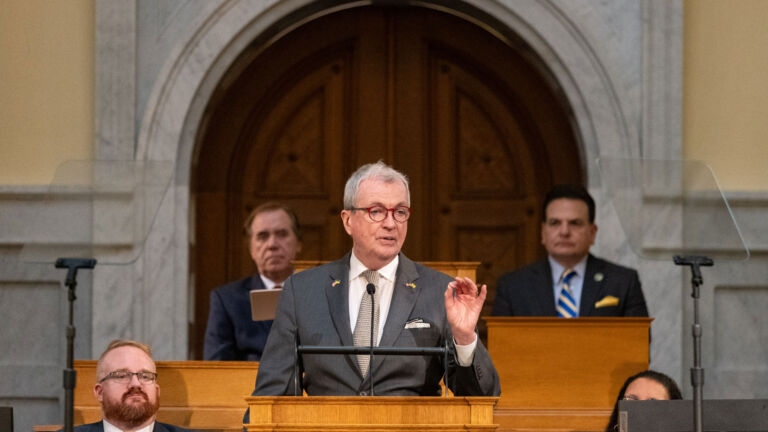
Such fine-tuning of the state’s revenue forecasts occurs routinely each year, but the revisions are often overshadowed by new proposals detailed in the annual budget message delivered by New Jersey’s governor at the end of February.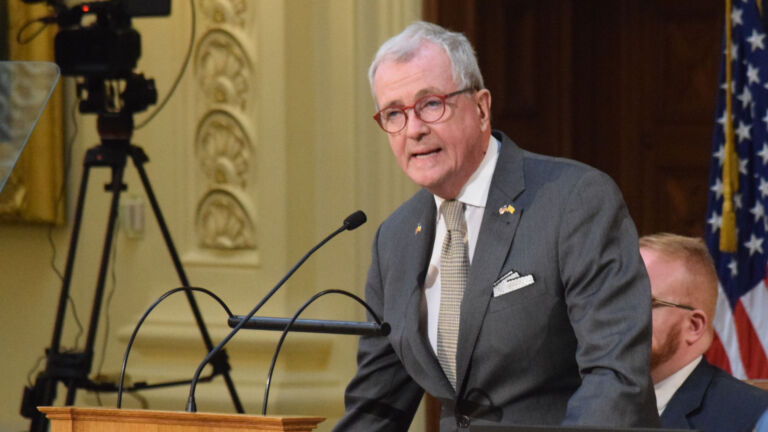
This year, the latest state budget revisions also come amid a period of general uncertainty brought on by Republican President Donald Trump’s pursuit of major federal policy changes, including drastic federal spending cuts, deep tax cuts and the implementation of steep new tariffs on imported goods.
Economists have been warning these and other new policies backed by Trump and the Republican Congress, including the mass deportation of immigrants, could slow economic growth, undermine efforts to curtail inflation and even trigger a recession.
Anticipating turmoil
Some key indicators are already pointing to signs of economic trouble.
These include a closely watched national consumer confidence index that recently recorded its largest monthly decline since 2021, as well as a survey of U.S. small business “uncertainty” that just posted its third-worst reading in the last 50 years.
The state’s updated budget documents indicate the Murphy administration is planning to carry out more than $1.4 billion in ‘supplemental’ spending before the end of June.
Meanwhile, closely monitored U.S. Treasury note yields are also suggesting a recession may be looming due to the presence last week of what’s known as an “inverted yield curve” between 10-year and three-month notes.
In the “economic performance and outlook” section of the Budget-in-Brief prepared by the Murphy administration for the upcoming fiscal year, state forecasters acknowledged there are “uncertainties for both New Jersey and the United States.”
“International trade may face a round of tariff increases, and federal tax and fiscal policy may see significant reforms in the coming year,” the Budget-in-Brief warns.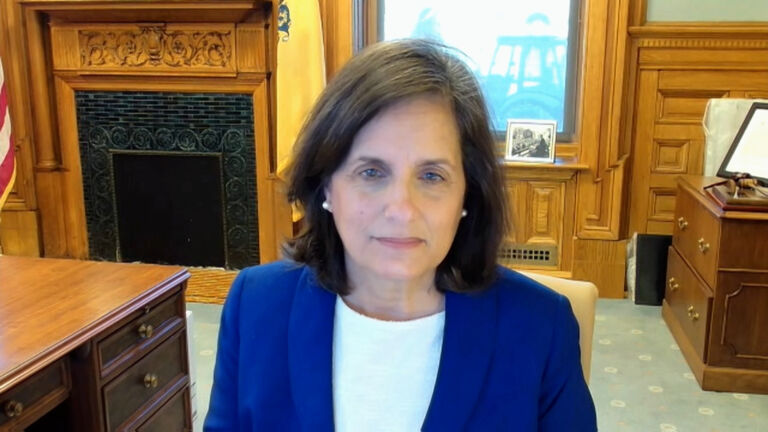
However, the same budget document goes on to assume a consensus forecast of “moderate economic growth with somewhat lower price inflation and declining interest rates” is expected to hold for both 2025 and 2026.
“Having achieved the ‘soft landing’ that national economic forecasters had expected for 2024, stable economic growth is the consensus anticipation for 2025 and 2026,” the budget document says.
More spending
Backed by these projections, as well as the proposed tax hikes, Murphy is planning to increase state spending in the new fiscal year by more than 2% compared to the appropriations act he signed into law last June for the 2025 fiscal year, which runs through June 30.
At the same time, the state’s updated budget documents indicate the Murphy administration is planning to carry out more than $1.4 billion in “supplemental” spending before the end of June, on top of the $56.7 billion in appropriations authorized by state lawmakers in June 2024.
‘Our hope is those cuts aren’t implemented.’ — state Treasurer Elizabeth Maher Muoio
That would push up total spending during the 2025 fiscal year to a record-high, $58.1 billion, according to the updated budget documents.
The administration has not released a full list of the proposed fiscal year 2025 supplemental spending, and administration officials declined to detail this planned new spending when asked about it during a background briefing with reporters that was held last week in advance of the governor’s budget message.
The updated budget documents indicate there are also a series of routine spending adjustments known as “lapses” in the offing this fiscal year. These planned adjustments total a combined $1.62 billion, according to the documents, but the full details of these changes have also not been disclosed by administration officials.
Washington: The unknown
In last week’s budget message before lawmakers, Murphy alluded to the potential for a rough ride triggered by significant policy changes that are still being rolled out at the federal level.
“While I sincerely hope that the situation in Washington settles down, and that we — in turn — have a normal, healthy budget season over the next few months, that is by no means a guarantee,” Murphy said.
During a recent interview with NJ Spotlight News, state Treasurer Elizabeth Maher Muoio also discussed the potential for massive fiscal upheaval that could be triggered by federal spending cuts up for consideration in Congress.
She said major cuts, including to programs like Medicaid, could have a “drastic effect” in New Jersey. And while the Murphy administration is planning to close the next fiscal year with a more than $6 billion surplus, Muoio warned those budget reserves can only “go so far.”
“Our hope is those cuts aren’t implemented,” Muoio said during the interview.
— Chart by Genesis Obando