Credit: (AP Photo/Rod Lamkey, Jr.)
WASHINGTON — Key Republican senators who will determine whether the Senate confirms an attorney who has spread public health misinformation for decades were skeptical about his answers on vaccine efficacy, measles and the COVID-19 pandemic.
Before the Senate Health, Education, Labor and Pensions Committee, Robert F. Kennedy Jr., a member of one of America’s dynastic political families, repeatedly hesitated to say vaccines are widely safe for public use, a commonly accepted medical and scientific fact.
“I have some reservations about your past positions on vaccines and a couple other issues,” said Sen. Bill Cassidy, a Republican from Louisiana, the committee chairman and a vote Kennedy likely needs to be confirmed.
Republican senators Lisa Murkowski of Alaska and Susan Collins of Maine also voiced concerns at the hearing about Kennedy’s opposition toward some vaccines.
Thursday’s hearing followed a fiery Wednesday hearing for Kennedy, picked by President Donald Trump to lead the Department of Health and Human Services, a vast agency that manages federal health programs like Medicare and Medicaid, and houses significant agencies including the U.S. Food and Drug Administration and the Centers for Disease Control and Prevention.
Republicans, who hold a 53-47 majority in the Senate, scheduled Kennedy’s confirmation hearing to overlap with the hearings for two other nominees who have openly flirted with, or outright endorsed, conspiracy theories.
More on Kennedy confirmation hearings
Other controversial nominees
At the Senate Judiciary Committee, Kash Patel, a staunch backer of Trump who wrote a trilogy of children’s books predicated upon Trump as a king, sparred with Sen. Cory Booker (D-NJ), who asked about Trump targeting his critics through the FBI.
And at the same time in the Senate Intelligence Committee, former Hawaii Rep. Tulsi Gabbard, Trump’s choice for a high-level intelligence role who has dabbled in Russian-government conspiracy theories, was fielding questions in her own hearing.
Democrats in the Senate believe they may be able to draw support from a small group of Republicans to thwart these picks.
Kennedy placed much of his blame for health woes in the U.S. on entrenched pharmaceutical industry interests, highly processed food and an ineffective federal government.
At Kennedy’s hearing, Sen. Andy Kim (D-NJ) asked him if Wi-Fi signals are linked to cancer. They are, Kennedy said. There is no proof of this.
When Kim asked if he supports expanding CDC research about gun deaths, Kennedy replied, “We need to study the causes of mass shootings.”
During the hearing, Kennedy, who is not a medical doctor or scientist, repeatedly sought to link himself with the legacies of his famous father and uncle — former attorney general and New York senator Bobby Kennedy and President John F. Kennedy.
He alone is best suited to the job of America’s top health official, Kennedy said.
“I am in a unique position to be able to stop this epidemic,” Kennedy said of chronic diseases. “We need to refocus if we’re going to save our country.”
Medicare, Medicaid
The department Kennedy would oversee includes the Centers for Medicare and Medicaid Services, which runs the nation’s two publicly funded health insurance programs that cover more than 150 million Americans, including 1.3 million seniors and more than 2 million low-income residents in New Jersey.
The department anticipates spending more than $1.8 trillion this fiscal year, according to budget documents, more than half of which funds Medicare. Nearly one-third of the department’s dollars go to Medicaid, which is also supported by state funds. Nearly $30 billion is dedicated to emergency preparedness, based on a plan crafted in the wake of the COVID-19 pandemic.
For people in New Jersey, Kennedy’s decisions as secretary could limit their access to new medications or mental health treatments, especially if they have little income.
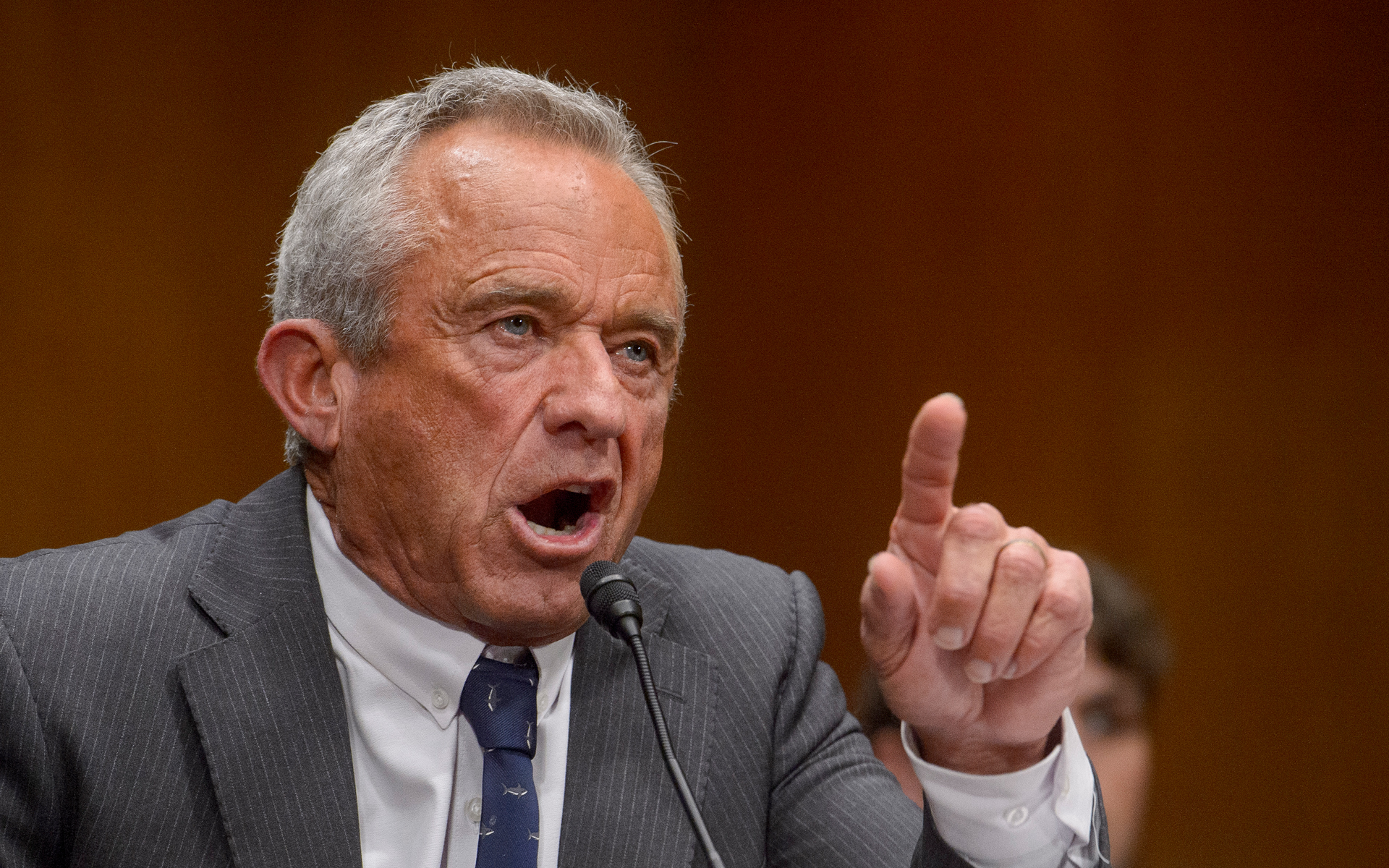 Credit: (AP Photo/Rod Lamkey, Jr.)
While decisions about vaccine requirements are largely within the hands of the state, funding for free-vaccine clinics — an important option for uninsured families — flows through HHS, as does money for maternal health programs, a priority in New Jersey given the high death rates and significant racial disparities.
Trump has pledged to protect Medicare, but it is less clear what his administration intends for Medicaid, with Kennedy insisting his mission is to improve the 57-year-old program, not dismantle it.
Kennedy errors
During both hearings this week, Kennedy in his answers bungled central facts abouts the programs he seeks to manage.
Asked Thursday what three different Medicare programs do, Kennedy was wrong each time.
“It appears that you don’t know the basics,” said Sen. Maggie Hassan (D-NH).
“You didn’t correct me,” Kennedy said.
‘My responsibility is to learn, try and determine if you can be trusted to support the best public health. You may be hearing from me over the weekend.’ — Sen. Bill Cassidy, La.
Kennedy placed much of his blame for health woes in the U.S. on entrenched pharmaceutical industry interests, highly processed food and an ineffective federal government.
Asked about the use and approval of mifepristone, a drug that can be used to end a pregnancy, Kennedy said he would listen to Trump. “With mifepristone, President Trump has not chosen a policy and I will implement his policy.”
To Sen. Tim Scott, a South Carolina Republican, Kennedy said he would hire anti-abortion “deputies” to work at HHS. “I share President Trump’s view that every abortion is a tragedy.”
Inflammatory statements
Kennedy has a lengthy history of spreading and indulging in conspiracy theories.
He has said the COVID-19 virus was designed to spare Ashkenazi Jews and Chinese people.
Other conspiratorial and inflammatory statements he has made include comments linking vaccines to autism and comparing the vaccination of children to sexual abuse cover-ups within the Catholic Church.
Asked Thursday if he wanted to recant that comparison, Kennedy said he did not. “Show me a single statement I’ve made on science that is erroneous.”
Much of the hearing Thursday centered around vaccine use.
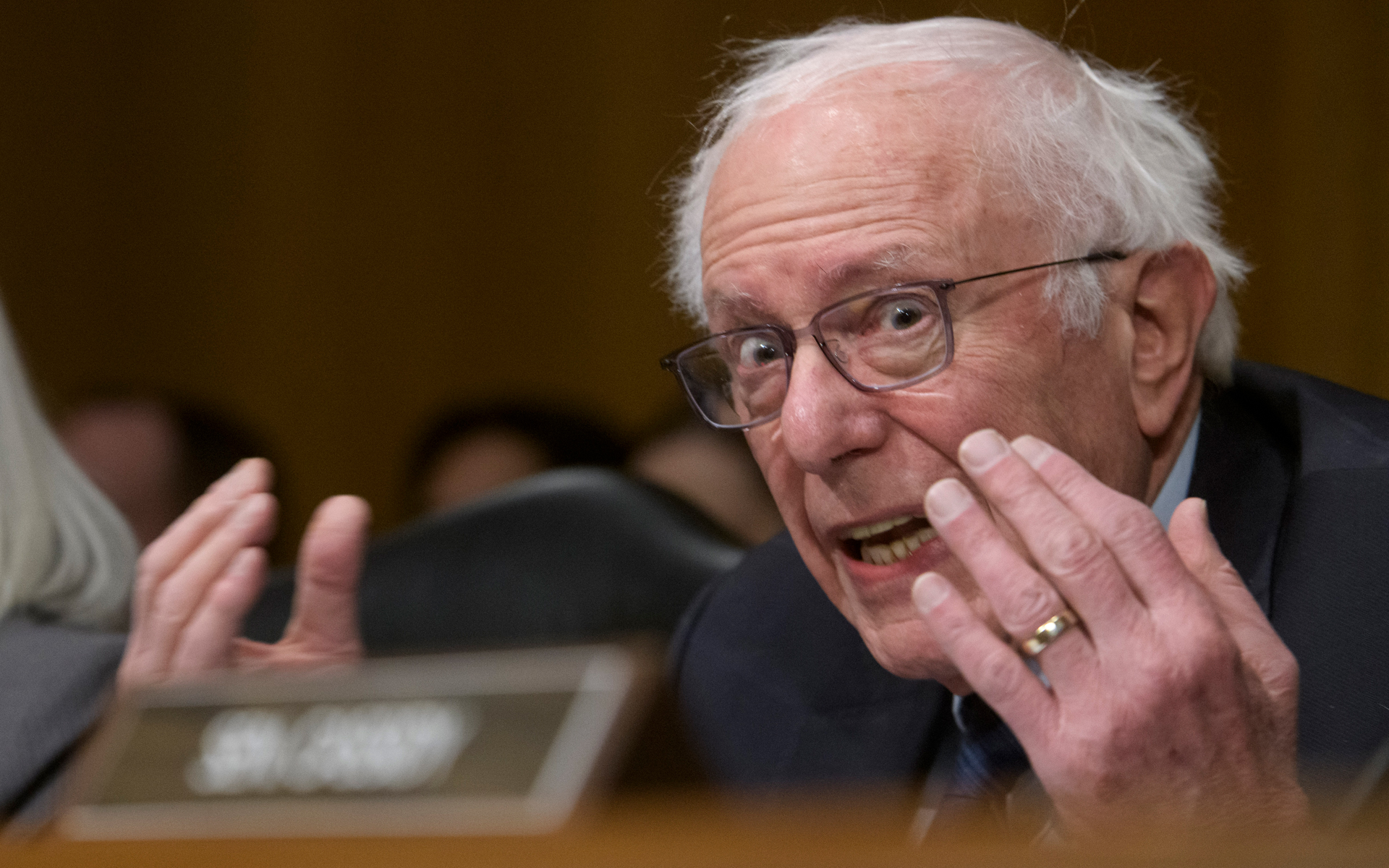 Credit: (AP Photo/Rod Lamkey, Jr.)
“Was the COVID vaccine successful in saving millions of lives?” asked Sen. Bernie Sanders, the Vermont Independent.
“I don’t think anybody can say that,” Kennedy answered.
Murkowski pressed Kennedy on vaccine safety and science, too.
“Villages were shut down entirely, entirely during COVID,” Murkowski said of rural Alaska. “We can’t be going backwards with our vaccinations.”
Before coming to Congress, Cassidy, the committee chairman, was a medical doctor who specialized in liver disease and helped establish a community health clinic in Baton Rouge, Louisiana.
Cassidy gave Kennedy multiple chances to walk back his vaccine denial during the hearing.
“Will you reassure mothers, unequivocally and without qualification, that the measles and hepatitis B vaccines do not cause autism?” Cassidy asked to start the hearing.
Kennedy equivocated.
“That really is a yes or no,” Cassidy said.
Kennedy: “If the data is there, I will absolutely do that.”
At the end of the hearing, Cassidy remained hesitant.
“My responsibility is to learn, try and determine if you can be trusted to support the best public health,” said Cassidy. “You may be hearing from me over the weekend.”
— Lilo H. Stainton contributed reporting.