Credit: (AP Photo/LM Otero)
New Jersey education officials shared steps schools can take to remain a safe place for immigrant students and families despite changes to immigration policy designed to aid President Donald Trump’s goal of mass deportations.
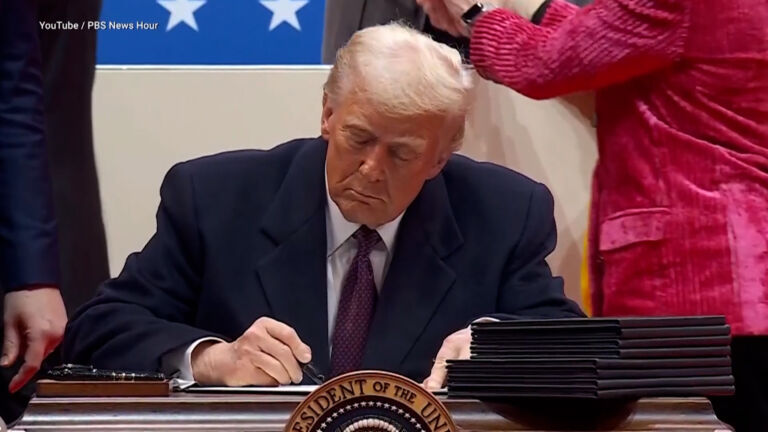
The Trump administration on Tuesday announced the end of a policy that prevented immigration enforcement agents from making arrests in or near schools. The New Jersey Department of Education is directing schools to do their best to keep immigrant students safe while complying with federal law.
The department shared guidance with public school and district leaders preparing for immigration enforcement activities in schools, plus resources for students and families experiencing deportation-related trauma on Wednesday. The guidance is not binding since it’s not written into law, so districts can make individual decisions about how to treat immigrant students and families as long as they comply with state and federal law.
“The New Jersey Department of Education (NJDOE) is unwavering in its commitment to ensuring that every student, regardless of immigration status, national origin, or religion, can attend public school safely,” the guidance document reads.
The Department of Education added a new page to its website focused on protecting the rights of immigrant students and families. It includes instructions for school staff to follow if federal immigration agents show up on school premises or request access to school records. The webpage also details what rights immigrant students have and shares considerations for school communities to improve security, communication and well-being.
More than 40% of New Jersey students live with an immigrant, the second-highest rate after California. More than 10% live with someone undocumented.
“Every single one of those students has fear, whether they are living with an undocumented person or not because the threats that have come from this administration and the advisers of this administration go beyond undocumented kids and their families. They want to cause harm to lots of immigrants and their families and it is going to impact every student you work with,” attorney Alexander Shalom told a group of school and elected officials at a “Know Your Rights” session in Montclair last week.
This session, organized by Assemblywoman Alixon Collazos-Gill (D-Essex) is one of many organized since Trump won the election and prompted by increasing concerns about the safety of immigrant students and families. Jessica Taube, services director at Make the Road New Jersey, and Elyla Huertas, senior staff attorney at the American Civil Liberties Union of New Jersey, both said their organizations have been getting a lot of requests for Know Your Rights presentations in recent weeks.
Trump acts on his promises
During the campaign, Trump promised sweeping changes to immigration policy, and just days into his presidency, he has acted on several fronts.
The Department of Homeland Security is preparing to raid cities with high populations of undocumented immigrants. And the Justice Department ordered U.S. attorneys around the country to investigate and prosecute law enforcement officials in cities and states that do not enforce the new immigration directives, according to reporting from The New York Times.
If ICE agents show up at a New Jersey school, the state urges school staff members to notify the district superintendent immediately.
Among the most notable changes for schools is the end of a 2011 policy that prevented Immigration and Customs Enforcement agents from making arrests in or near sensitive areas, including churches and schools.
“Criminals will no longer be able to hide in America’s schools and churches to avoid arrest. The Trump Administration will not tie the hands of our brave law enforcement, and instead trusts them to use common sense,” Acting Homeland Security Secretary Benjamine Huffman said in a statement.
Need for a warrant
If ICE agents show up at a New Jersey school, the state urges school staff members to notify the district superintendent immediately. School staff should also request information about the agents’ credentials, the purpose of the visit and any documentation that authorizes school access, according to the state.
ICE isn’t allowed to enter a school without a warrant or a recognized exception to a warrant. State guidance recommends a school district’s legal counsel review a warrant before acting since it can be hard for untrained people to determine if a warrant is valid.
To be legitimate, search warrants must be signed by a judge and have the correct date and location. An administrative immigration warrant is not enough for ICE agents to enter the building since it is not authorized by a judge, according to the state guidance.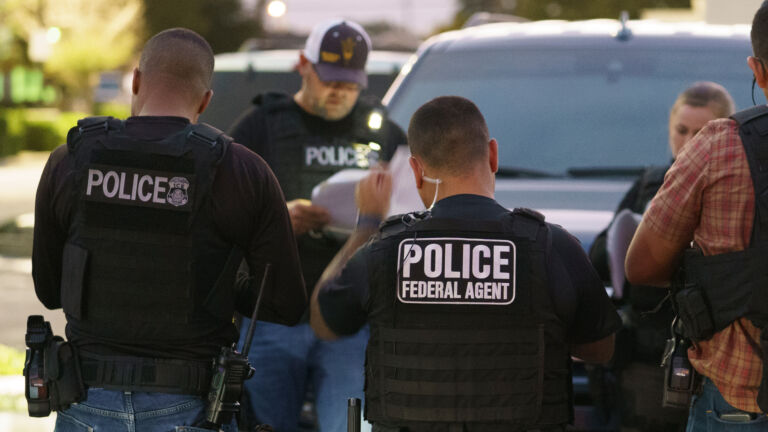
Speakers at the Know Your Rights session in Montclair distributed papers with examples of both types of warrants so attendees could see the difference and explain it to others.
“We’re not trying to make it super easy, right? You want to make sure they are actually dotting their Is and crossing their Ts,” Shalom, an attorney at the Lowenstein Center for the Public Interest, said at the event last week.
The most common exception to the warrant requirement is consent, which means if the receptionist says, “Come in,” the agents are allowed to go in, Shalom said. Instead, whoever oversees buzzing people into the school buildings could say they need to check with the superintendent before letting federal agents inside.
The new Department of Education guidance is not binding since it’s not written into law, so districts can make individual decisions about how to treat immigrant students and families as long as they comply with state and federal law.
Another exception is exigent circumstances or emergencies. State guidance directs school staff to comply with a request for immediate access due to exigent circumstances and immediately notify the school superintendent.
The guidance notes that schools are not required to share information about students’ attendance or location or to immediately make students available to agents.
Staff have the right to remain silent, but they shouldn’t lie, Shalom said. At the Montclair session, he told people to make a record of what ICE does in the building either by taking a video or notes.
Protecting students’ private information
Student data is mainly protected by the Family Educational Rights and Privacy Act, better known as FERPA. It protects the privacy of student records in schools nationwide.
Under the privacy act, schools are allowed to share “directory information,” such as name, address, email or phone number, without consent. Shalom said it’s up to districts to decide what information is considered “directory information.” He also advised districts to have a clear and easy opt-out process for families that do not want any directory information shared.
State guidance advises school staff to consult with the superintendent or another designated person before providing any identifying information to ensure compliance with state and federal laws. Under FERPA, schools must make a “reasonable effort” to notify parents before disclosing student records so the parent “may seek protective action.”
Schools should not ask students or families about their immigration status for any reason, Shalom said. It’s not required during the school registration process and any written record containing a student or family’s immigration status could be accessed under a warrant or subpoena.
The registration process should not require Social Security numbers, since the two main criteria for registration are a student’s age and whether they live in the district, Shalom said.
The U.S. Supreme Court ruled in a landmark case that excluding people from school based on their immigration status would violate equal protection, making it a constitutional right to attend school where you live.
”Every student in the United States has the right to education,” said Huertas of the ACLU.
Taube from Make the Road New Jersey said school staff should be careful not to document the citizenship status of students or families. If school counselors are advising students about which college financial aid form to complete or helping students cope with fears about deportation, they should not write anything down, Taube said.
Local law enforcement
New Jersey’s Immigrant Trust Directive distinguishes the role of local law enforcement officers and federal immigration authorities, preventing New Jersey police officers from aiding in federal immigration enforcement. The directive is a statewide policy the attorney general issued in 2018 to improve trust between immigrant communities and police officers.
If the Montclair Police Department shows up at a school, staff should assume they are doing law enforcement work, but if ICE shows up, staff should assume they plan to enforce immigration policy, Shalom told the crowd in Montclair.
Lt. Tyrone Williams, who runs community policing in Montclair and attended the Know Your Rights session, said if ICE were to come to Montclair police, he would work with school officials to maintain safety at the schools.
Montclair Superintendent Damen Cooper, who also attended the session, said the district will move quickly to update its policies to make sure students are protected during the registration process and while at school.
He said changes to immigration policy are top of mind for many superintendents. School leaders are consulting their board attorneys, who said they have gotten an influx of calls about what Trump’s changes could mean for students.
Taube said it’s important for all school staff to understand district policies and for school boards to consider revising any policies that could put students in harm’s way. Schools should also proactively communicate with families in whatever language they speak, she said.