Credit: (AP Photo/Jae C. Hong)
Many low-wage workers in New Jersey will be getting an automatic raise on Jan. 1, thanks to language in the state Constitution that requires annual cost-of-living adjustments to ensure the minimum wage keeps pace with inflation.
The latest automatic wage increase has been hailed by state labor officials as a way to promote equity and affordability in a state with wide gaps between the very rich and those earning more modest wages.
However, not all hourly workers in New Jersey will get a pay increase to the new rate of $15.49.
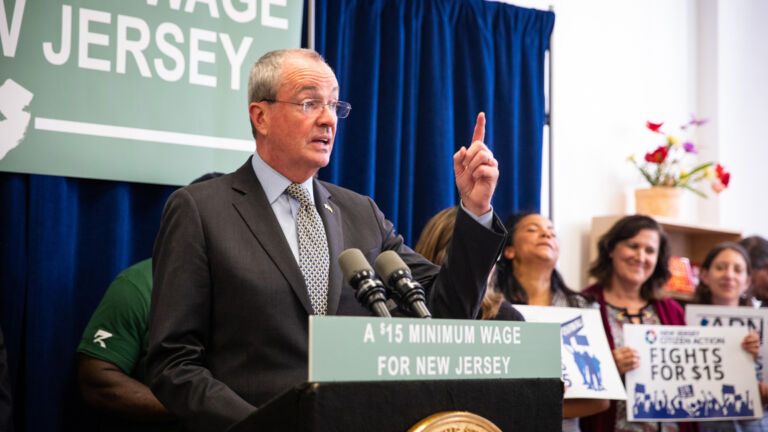
The state law championed by Gov. Phil Murphy that required the state’s minimum hourly wage to reach $15 by 2024 included exceptions for several groups of workers that put them on a slower ramp-up to the $15 threshold. Among them are people employed by seasonal and small businesses, as well as farmworkers.
A different set of rules is also in place for service workers who earn a “tipped” wage, such as bartenders and waiters.
The push for $20 minimum wage
Earlier this month, a prominent, left-leaning New Jersey think tank issued a report that calls for eliminating all the exceptions and increasing the hourly minimum wage to $20 in New Jersey.
“Increasing the minimum wage and ending these exemptions would reduce income inequality and improve the quality of life for New Jersey’s families,” the Trenton-based New Jersey Policy Perspective think tank said in its “Blueprint for a Strong and Resilient New Jersey.”
For years, New Jersey’s minimum wage was reset using the language that’s written into the state Constitution that requires annual adjustments based on changes in the rate of inflation.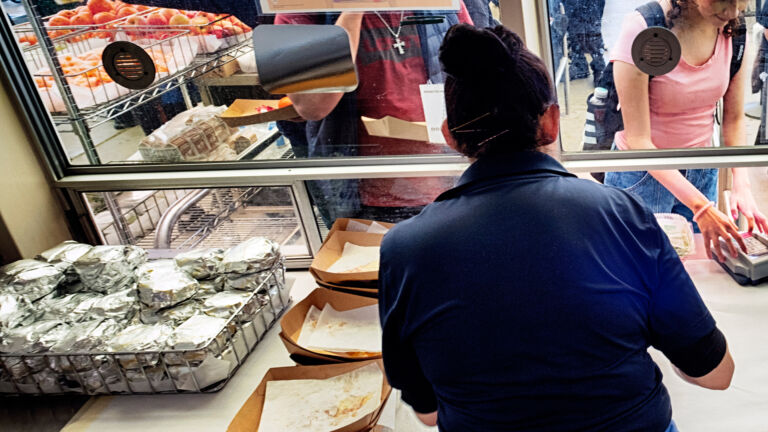
The rate of the annual adjustment is based on an analysis of any changes to the federal government’s consumer price index.
Murphy, who took office in early 2018, worked with fellow Democrats who control the Legislature to pass a law that required the state to have a $15 minimum hourly wage by 2024.
To do so, Murphy and lawmakers enacted legislation in 2019 that immediately increased the minimum wage, from $8.85 to $10. The same law also required a series of automatic annual increases of at least $1 through 2024.
Effects of inflation
However, a significant increase in the annual rate of inflation in 2022 pushed the size of the annual increase for 2023 above $1 because the language in the state Constitution remained in effect.
As a result, the minimum wage for many hourly workers increased to $14.13 in New Jersey on Jan. 1, 2023. From there, the final $1 annual increase required under Murphy’s wage law pushed the rate to $15.13 at the start of this year.
‘The minimum wage’s purchasing power still lags because $15 in April 2018 would be worth nearly $19 today.’ — New Jersey Policy Perspective report
As the state now reverts to just the constitutional language to determine annual wage adjustments for many hourly workers, the latest increase required due to annual inflation will hike the general minimum hourly rate to $15.49 on Jan. 1.
But whether that is enough for even the group of workers not subject to the slower ramp-ups previously established by Murphy and lawmakers remains an open question.
To be sure, more than a dozen states, including neighboring Pennsylvania, still use the federal minimum wage, a $7.25 hourly rate that hasn’t been increased since 2009, according to the National Conference of State Legislatures.
Where the minimum wage is higher
However, many places have also moved well beyond the $15 threshold that was originally laid out by Murphy and lawmakers as a goal for New Jersey’s low-wage workers in 2018.
These includes Washington, D.C., where the current minimum wage is $17.50, and California and New York City, where the current minimum wage is $16, according to the U.S. Department of Labor.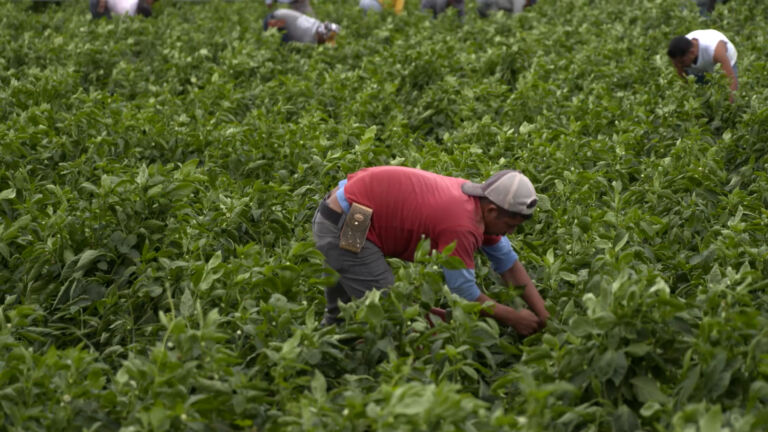
Meanwhile, the minimum hourly wage for airport workers at facilities administered by the Port Authority of New York and New Jersey, included Newark Liberty International Airport, will rise to $19.75 on Jan. 1, as part of a series of increases approved by the bistate agency’s board earlier this month.
“Consistent and planned wage increases for airport workers improve morale and productivity as well as the quality of service for the millions of passengers who use our airports every year,” Port Authority chairman Kevin O’Toole said in a statement issued in November, when the increase was proposed.
In the report issued by New Jersey Policy Perspective that argues for a higher minimum rate for all of New Jersey’s low-wage workers, the organization pointed to significant inflation that’s occurred since Murphy and lawmakers established $15 as a goal.
“The minimum wage’s purchasing power still lags because $15 in April 2018 would be worth nearly $19 today,” the report said.