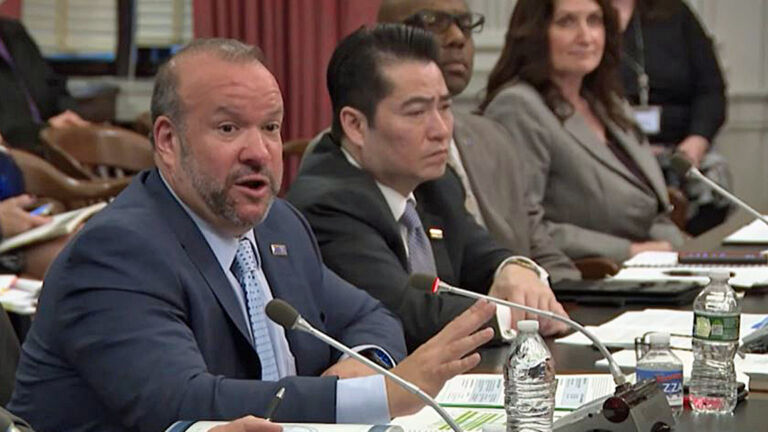
Credit: (AP Photo/Richard Vogel)
Many hourly workers earning New Jersey’s minimum wage will see their pay automatically increased to $15.49 on Jan. 1 under the latest cost-of-living adjustment required by the state Constitution.
A 36-cents-an-hour increase announced by the state’s Department of Labor and Workforce Development on Tuesday comes after a multiyear ramp-up to a $15 minimum wage that concluded earlier this year.
But even as that ramp-up championed by Gov. Phil Murphy has ended, language in the state Constitution still requires annual cost-of-living adjustments to make sure the minimum wage keeps pace with the rate of inflation.
“Aligning the state minimum wage with any increases in the cost of living is a critical step towards economic fairness and security for all New Jersey workers,” said Labor Commissioner Robert Asaro-Angelo in the announcement.
“This adjustment fosters a more equitable economy and ensures our workforce can continue to thrive,” he said.
Not for all low-wage workers
However, not every low-wage worker in New Jersey will be paid the $15.49 hourly wage beginning Jan. 1.
New Jersey’s wage laws allow for exceptions to the general minimum pay for several groups of workers. Among them are people employed by seasonal and small businesses, as well as farmworkers.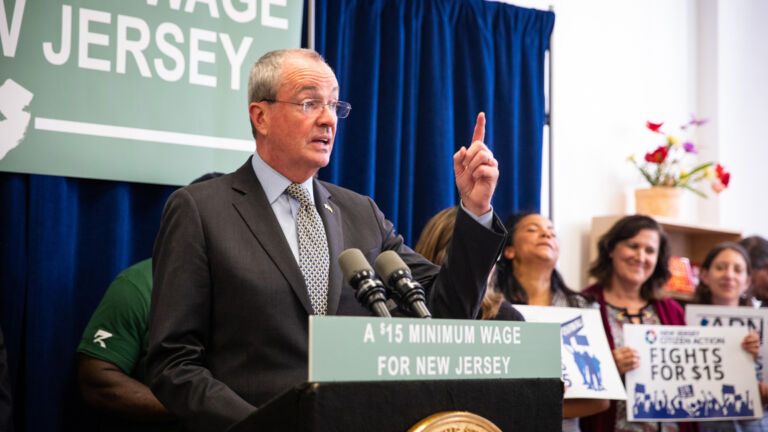
A different set of rules is also in place for service workers who earn a “tipped” wage, such as bartenders and waiters.
For years, New Jersey’s minimum wage was reset using language that’s written into the state Constitution that requires annual adjustments based on changes in the rate of inflation.
The rate of the annual adjustment is based on an analysis of any changes to the federal government’s consumer price index.
The $15 target
But Murphy, who took office in early 2018, worked with fellow Democrats who control the Legislature to pass a law that required the state to have a $15 minimum hourly wage by 2024.
To do so, Murphy and lawmakers enacted legislation in 2019 that immediately increased the minimum wage, from $8.85 to $10. The same law also required a series of automatic annual increases of at least $1 through 2024.
However, a significant increase in the annual rate of inflation in 2022 pushed the size of the annual increase for 2023 above $1 because the language in the state Constitution remained in effect.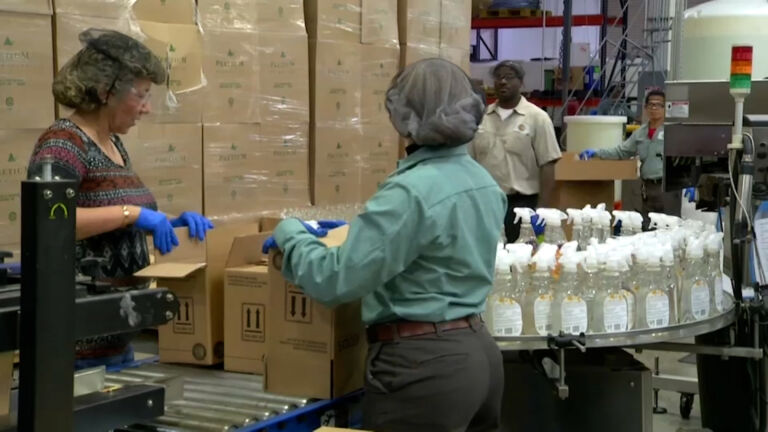
As a result, the minimum wage for many hourly workers increased to $14.13 in New Jersey on Jan. 1, 2023. From there, the final $1 annual increase required under Murphy’s wage law pushed the rate up to $15.13 on Jan. 1.
According to Department of Labor and Workforce Development officials, the ramp-up law will continue to shape minimum hourly wages for the employees of seasonal and small businesses. Their minimum hourly wage will increase to $14.53 on Jan. 1, up from $13.73.
Future increases
The 2019 law will continue to shape wages for this category of workers through 2028, the officials said.
For agricultural workers, employees who work on a farm for an hourly or piece-rate wage will see their minimum hourly wage increase to $13.40 on Jan. 1, up from $12.81, the officials said. The ramp-up for this category of workers will continue through 2030, the officials said.
Meanwhile, direct care staff at long-term care facilities will see their minimum hourly wage rise by $0.36 on Jan. 1, to $18.49, the officials said.
The minimum cash wage rate for tipped workers will rise to $5.62 per hour from $5.26 on Jan. 1.
For this group of workers, if the minimum cash wage plus an employee’s tips do not equal at least the state minimum wage, then the employer must pay the employee the difference.