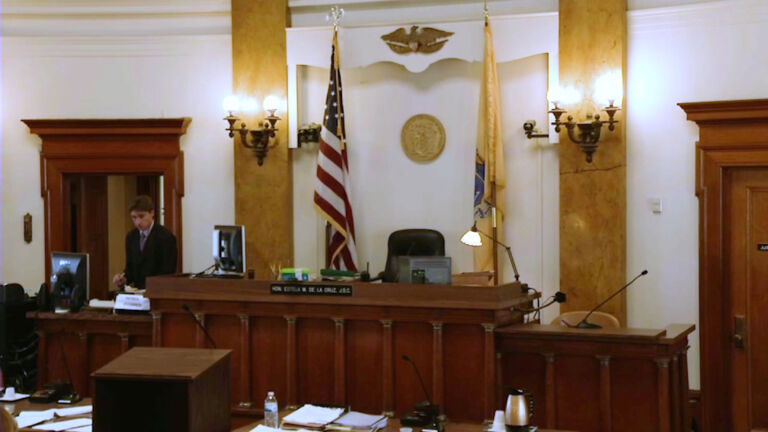
Credit: (AP Photo/POOL, Steve Helber)
WASHINGTON — New Jersey Democrats in the House of Representatives turned against a bipartisan bill to expand the federal judiciary after President Joe Biden threatened to veto the legislation.
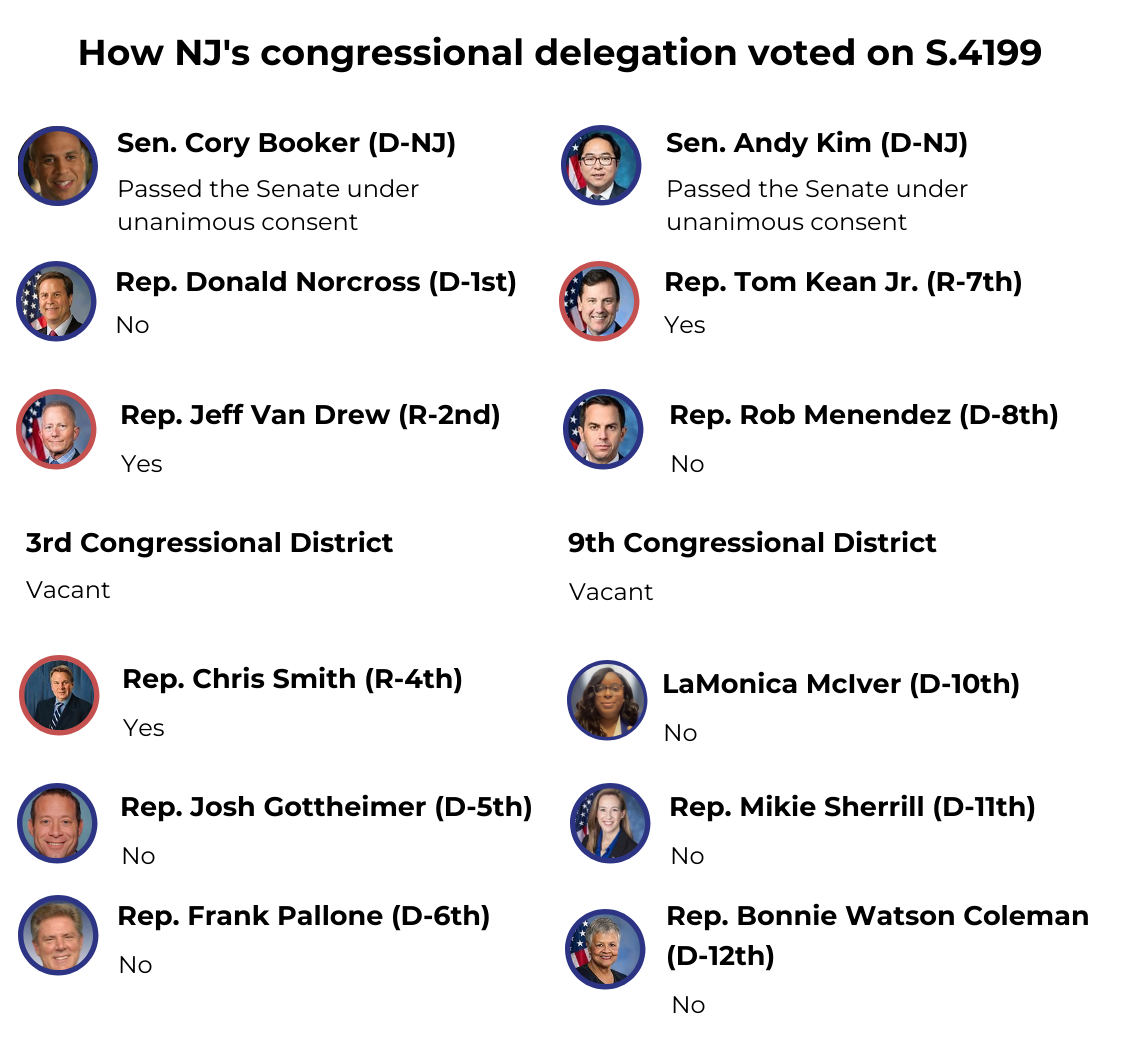
The legislation zipped through the Senate without a vote, passing when no member objected, and cleared the House last week by a vote of 236-173, far from enough support to override a veto.
The bill would create 66 new positions for district courts nationwide over the next three presidential terms, three of them in New Jersey at a staggered pace until 2035.
The bill (S.4199), which includes U.S. Sen. Cory Booker (D-NJ) as a sponsor, cleared the Senate Judiciary Committee and the full Senate in August (in a voice vote) with support from liberals, hard-line conservatives and moderates.
But the House, where Republicans hold the majority, did not take up the bill for months, prompting Democrats to accuse Republicans of holding off to see if then-candidate Donald Trump would win the White House.
Voting, vetoing
When the House finally voted on the legislation on Dec. 12, Democrats said they didn’t want to hand Trump the opportunity to nominate more judges to the federal bench on top of the judicial vacancies that already exist. There are 36 vacant judge slots across federal district and appeals courts.
In his veto threat, Biden said Congress had not “fully explored how the work of senior status judges and magistrate judges affects the need for new judgeships.”
‘The agreement we had was that the bill would be brought up before the election, when nobody knew who would be president, so partisanship could be put aside. Republicans went back on their word and made this a partisan issue.’ — Rep. Bonnie Watson Coleman (D-12th)
“Further, the Senate passed this bill in August, but the House refused to take it up until after the election,” Biden said. “Hastily adding judges with just a few weeks left in the 118th Congress would fail to resolve key questions in the legislation, especially regarding how the judges are allocated.”
During the Biden administration, Senate Democrats have pushed to match Trump’s total of confirmed judges from his first term — 234 — and last week confirmed the 233rd nominee of Biden’s term. But that accomplishment is likely to be short-lived as Trump regains office and the Senate, which will soon be in the hands of a Republican majority, will be poised to confirm Trump’s second round of judges.
The road to no
In a statement to NJ Spotlight News, Rep. Rob Menendez (D-8th) said Republicans broke an agreement to pass the bill before the election.
“This bill was predicated on the fact that it would be implemented before the results of the election were known. That was the agreement. That was the deal. The Senate did their job and passed it in August. House Republicans, on the other hand, waited until after Trump won the election,” Menendez said. “I voted no because of this.”
Rep. Bonnie Watson Coleman (D-12th) said she voted against the bill for the same reason as Menendez.
“The agreement we had was that the bill would be brought up before the election, when nobody knew who would be president, so partisanship could be put aside,” she said in an emailed statement to NJ Spotlight News. “Republicans went back on their word and made this a partisan issue.”
All New Jersey Democrats voted no.
The three New Jersey Republicans in the House — Reps. Jeff Van Drew (R-2nd), Chris Smith (R-4th) and Tom Kean (7th) — voted for the legislation. None of them responded to requests for comment about their votes.
Big caseloads and backlogs
More than 670 district court judges represent the first points of contact for most federal cases.
The federal courts’ caseload has grown more than 30% in the last three decades while the number of district court judges has held the same, legal experts said.
The lack of new judgeships “has contributed to profound delays in the resolution of cases and serious access to justice concerns,” the Federal Judges Association and the Federal Bar Association said in a joint statement before the House vote. “It is the litigants and residents of the nation who suffer when there is a delay in deciding cases.”
The total of civil and criminal cases filed in district court in 2023 hit 353,170, a roughly 7% drop from the previous year, according to data from the Administrative Office of the United States Courts.
“Over the past 20 years, the number of civil cases pending more than three years rose 346 percent, from 18,280 on March 31, 2004 to 81,617 on March 31, 2024,” the office said in a statement endorsing the legislation.
“Our current caseload is crushing,” said Chief Judge Randy Crane, of the Southern District of Texas, a nominee of former President George W. Bush.
Mangi’s blocked confirmation
On a separate judiciary matter, Booker on Wednesday night criticized the blocked confirmation of Adeel Mangi, who would have been the first Muslim American to be a federal appeals judge. Biden picked Mangi for a court that oversees New Jersey.
In a floor speech directed toward Mangi’s two sons, Booker, conceded Mangi would not be confirmed.
“Your father was professionally attacked. For months and months and months, he was trolled on the internet,” Booker said. “This great body failed your father. It failed the American people. It is one of the most painful chapters I have had in public life.”
— Graphic by Genesis Obando