
 Credit: (AP Photo/POOL, Steve Helber)
In a rare moment of agreement by the two New Jersey major-party candidates for U.S. Senate, both say they could support boosting the ranks of federal judges, who are reeling from case backlogs. Each candidate, too, has a warning: An abrupt wave of partisan appointees on the bench may cause more damage than the staffing shortage.
Not since 1990 has Congress made a significant increase in judge positions. As of Oct. 30, federal courts had 45 vacancies with 16 nominations pending, records show. That’s atop a gap identified in 2019 by the policymaking Judicial Conference of the United States, which recommended the creation of 78 permanent and temporary bench posts.
As with the U.S. Supreme Court, every potential judge for federal district, appeals or international trade court must be nominated by the president and confirmed by the Senate. Former President Donald Trump, with the help of fellow Republicans, changed the balance of the nation’s highest court with the installment of three conservatives who helped to overturn the nation’s access to abortion.
“Qualifications now are almost less important than litmus tests,” Curtis Bashaw, the New Jersey Republican Senate candidate and Trump supporter who disagrees with the ex-president’s judicial practices, said in an interview. “That’s a trend we need to reverse to go for 250 more years.”
Kim worries about ‘extremism’
Andy Kim, the three-term Democratic congressman seeking the Senate seat, said he had deep worry over the appointment of “extreme justices and judges.”
 Credit: Kim campaign
“If I’m in the U.S. Senate, I’ll do everything I can to stop that type of weaponization and extremism within our judiciary,” Kim said in an interview.
Trump appointed 234 federal judges nationally, according to a CNN analysis, and 54 of them helped shift appeals courts to lean more conservative. As of July, Trump was responsible for placing more than 25% of federal judges overall, and elevated the fewest non-white judges to the positions since George H.W. Bush’s administration, the Pew Research Center found.
Federal judges have no mandatory retirement age and often stay on the bench for decades beyond the administration that nominated them. Running for reelection, Trump promises to continue making conservative judicial appointments, with the potential to end same-sex marriage, revoke LGBTQ+ protections, further limit reproductive choice, curtail immigrants’ rights, dismantle universal health care and more.
‘If I have a chance to be a senator and to vote on nominations, I will want to make sure these are people who share my beliefs about the Constitution.’ — Rep. Andy Kim (D-3rd)
In March, former appeals Judge J. Michael Luttig, a conservative, took to X, formerly Twitter, to decry “the systematic dismantling of its system of justice and Rule of Law by a single man — the former President of the United States.”
Trump, the first former U.S. president convicted of felonies, in a hush-money case in May, has made the judiciary a routine target of his vitriol. Beyond that verdict, he faces criminal charges in three other matters, involving Georgia and federal elections and classified documents, and a civil fraud lawsuit in which he was ordered to pay $454 million.
In the documents case, Trump nominee Aileen Cannon, a U.S. district judge for the Southern District of Florida, has repeatedly postponed the proceedings.
A long-term emergency
Elsewhere, the pressing concern is not about judges’ possible loyalties but their workload.
In a 2023 Duke Law School interview, Kimberly J. Mueller, chief judge of the U.S. District Court for the Eastern District of California, said she and her colleagues were in crisis as a result of her state’s population boom.
“For more than 20 years we have been in emergency status and are at all times, and will be unless or until Congress authorizes additional judgeships for our district,” Mueller said. “That is because we have the same number of judgeships as we did 40 years ago — six — and our population has gone from 2.5 million to 8.5 million, with correspondingly higher and higher caseloads per judgeship.”
 Credit: (AP Photo/Mike Catalini)
The Senate in August approved bipartisan legislation to add 66 federal judge positions.
Kim said he’s in favor of reducing caseloads, but warned about the danger of one party’s potentially controlling a wave of judicial appointments. “If I have a chance to be a senator and to vote on nominations, I will want to make sure these are people who share my beliefs about the Constitution,” Kim said.
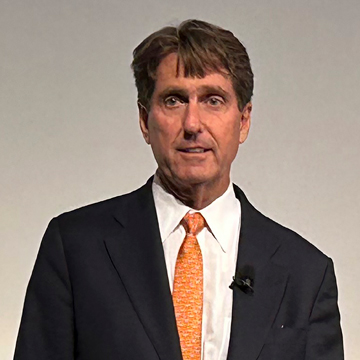
Bashaw, who owns hotels and restaurants in Cape May and on Long Island, New York’s East end, said he approached the shortage of judges from a business perspective.
“There are only so many tables I can give a server before they become inefficient, so many rooms a housekeeper can make up,” he said. “That’s the way I look at that question.”