
 Credit: (AP Photo/Seth Wenig, File)
E. coli outbreaks. Toxic chemicals in household products. The COVID-19 pandemic. A presidential election.
These recent events, compounded by social media chatter and news reports about them, have caused concern and fear among many in New Jersey and across the country. These sources of daily stress over external events, which often feel like they are out of a person’s control, can become a significant source of anxiety in a person’s life, experts say.
“Sometimes those collective stressors, like not knowing what’s safe and not knowing what to do about it can actually create collective trauma,” Dr. Stephanie Marcello, the chief psychologist of Rutgers Health University Behavioral Health Care, said in a recent interview with NJ Spotlight News. Marcello cited the COVID-19 pandemic as a collective trauma people across the country are enduring.
Now, mental health professionals are calling attention to the cumulative impact of this stress at a time when many adults are feeling increasingly anxious. In 2024, 43% of adults said they feel more anxious than they did the previous year, up from 37% in 2023 and 32% in 2022, according to the American Psychiatric Association. Additionally, over a quarter of Americans said they are more stressed this holiday season than in 2023, mostly citing financial and family concerns, according to a monthly poll recently released by the association.
Stress is what people experience when they are under mental, physical or emotional pressure, according to the National Cancer Institute. Stressors, or those factors that can cause stress, can arise from people’s daily responsibilities and routines, including work, family and finances. Other stressors can include external factors such as early life adversity, exposure to certain environmental conditions, and poverty and discrimination.
A person’s body responds to external stressors by releasing stress hormones, such as adrenaline and norepinephrine, which increase blood pressure, heart rates and blood sugar levels, according to the institute. This response, often referred to as “fight-or-flight,” helps a person act with greater strength and speed to escape a perceived threat. Although the flight-or-fight response helps a person to manage momentary stress, when this response is caused by long-term or chronic stress, it can be harmful. Research has shown that people who experience chronic stress can have digestive problems, heart disease, high blood pressure and a weakened immune system, according to the institute.
Physical effects of chronic stress
Health care professionals, including Dr. Eric Jarmon of Rutgers New Jersey Medical School, say that while stress and anxiety are not necessarily bad, they become problematic when they interfere with a person’s day-to-day functioning.
“It’s important for people to take a step back and realize everyone is dealing with their own issues,” said Jarmon, a doctor of osteopathic medicine and an assistant professor of psychiatry at the medical school. “You look on television [and] media [and] this is supposed to be a joyous time, but for many people it isn’t.”
“Anxiety and depression absolutely have a ripple effect, and they can impact the ones we love,” added Jarmon.
‘People need to keep in mind that you’re never going to eliminate all the stressors in life.’ — Dr. Gary Small, Hackensack University Medical Center
People who experience chronic stress are also more prone to having headaches, trouble sleeping, difficulty concentrating, depression, anxiety and to getting viral infections, including SARS-CoV-2, the virus that causes COVID-19, according to a study cited by the National Cancer Institute.
While anxiety has been increasing nationally among adults, most who were surveyed in this year’s American Psychiatric Association annual poll have not sought professional mental health support. In 2024, just under a quarter of adults said they talked with a mental health care professional in the past year, according to the poll. Notably, younger adults are more than twice as likely as older adults to have done so.
How to cope
Marcello of Rutgers says there are “definite cues” if stress is becoming chronic and impacting a person’s ability to function, with a lack of sleep or too much sleep being a “big indicator.”
“Often it’s a change in behavior and the way that we normally are, where we can see that maybe we’re carrying the weight of so many things and so many worries,” said Marcello.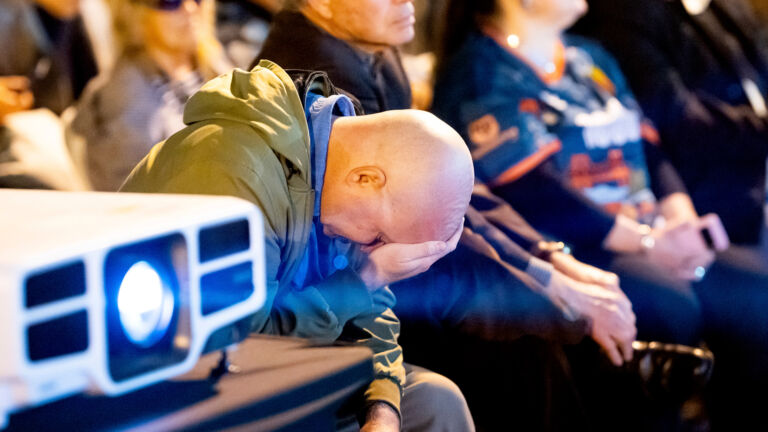
“Building our ability to manage these stressors is really the key, and that is within our control. That can be very empowering for people,” she said.
Other mental health professionals, including Dr. Gary Small of Hackensack University Medical Center, say that meditation, exercise and spending time with empathic people who care about a person’s well-being are ways in which people can lessen stress in their daily lives.
“People need to keep in mind that you’re never going to eliminate all the stressors in life,” said Small, the chair of psychiatry at the medical center.
“Life has ups and downs, and you’re going to have good and bad feelings, and that’s normal. It’s important to learn ways to cope with that. On the other hand, if you find that you’re not coping — that you’re having difficulties — that’s a time to get some professional help.”

