 Credit: (AP Photo/Jeenah Moon, File)
Grief for lost loved ones. Worries about affording groceries and rent. Tense family dynamics. Or just loneliness.
These are just some of the emotions that go into holiday stress and can bring added anxiety to an already anxious time. According to a monthly poll recently released by the American Psychiatric Association, over a quarter of Americans say they are more stressed this holiday season than in 2023, mostly citing financial and family concerns.
In New Jersey, that stress has been keenly felt especially in the aftermath of the national election, according to health experts and practitioners.
Across the state, a majority of voters expressed some kind of dread when asked about how they felt in the lead-up to the 2024 presidential election, according to a poll released in late October by the Eagleton Institute of Politics at Rutgers University.
But it isn’t just politics that’s on people’s minds.
“A lot of Americans are surviving and have really full plates, and you add additional elements, such as a holiday — and a holiday especially that has a lot of ‘shoulds’ and ‘coulds’ and ‘musts’ tied to [it] — this is essentially what you get,” Dr. Stephanie Marcello, the chief psychologist of Rutgers Health University Behavioral Health Care, said of the report.
Finding solutions
Dr. Petros Levounis of Rutgers New Jersey Medical School said people need to be encouraged to find “creative solutions” to decrease the stress and anxiety that they may be feeling.
“Don’t feel that you have to buy gifts for everyone,” said Levounis, who is also the immediate past president of the American Psychiatric Association. “At the end of the day, this is not a competition about the most expensive, the most lavish, the most extravagant gift. It’s just more of a rite of passage that we go through every year.”
More on the stress factors
When it comes to politics, the national poll showed that younger adults are significantly more likely than older adults to worry about discussing politics with loved ones and challenging family dynamics. Additionally, many young people said they are worried about their personal safety and the safety of their loved ones across the country and in New Jersey, according to health care experts.
Especially worrisome for many has been President-elect Donald Trump’s pledge to use the military to help deport millions of undocumented immigrants.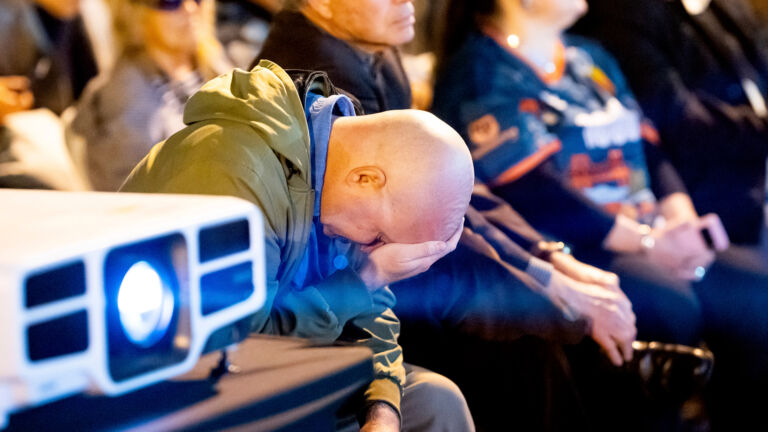
“My patients are dealing with stress of being immigrants or children of immigrants in their family and being unclear about their safety in this country,” said Dr. Jennifer Chuang, the section chief of adolescent medicine at St. Joseph’s University Medical Center in Paterson. “That is definitely weighing on the shoulders of these young adults and youth.”
The holidays are also stressful for young people who are struggling with body image and eating disorders, according to Chuang.
Eating disorders
While small in number overall, eating disorders among New Jersey teens increased substantially during the pandemic, according to a 2022 study from the New Jersey Hospital Association’s Center for Health Analytics, Research and Transformation (CHART). The report said the number of teens hospitalized with an eating disorder more than doubled from 2019 to 2021, to nearly 600 cases overall.
“Large family gatherings are kind of a mixed bag, not always the joyous occasion that [they’re] meant to be,” said Chuang. “But the person who’s struggling can feel like everybody’s watching them [and] watching what they eat, sometimes hearing comments regarding body size or the choice of food that they’re eating, which can be detrimental for someone who’s struggling with an eating disorder.”
As for what coping strategies young adults, especially those who are LGBTQ+, could employ during the holiday season, mental health professionals recommend that people surround themselves with others they feel safe with.
“Who are the friends and family members that you can call or text when you’re feeling alone, when you’re feeling scared, when you’re feeling uncertain?” said Marcello of Rutgers Health University Behavioral Health Care.
“There’s a lot of uncertainty, although the truth is there’s always a lot of uncertainty. It’s just very amplified right now.”