
 Credit: (StockCake)
 Municipal officials in New Jersey are preparing to comply with the state’s new affordable housing laws that begin to impact them in 2025.
In early 2024, Gov. Phil Murphy signed a law returning the oversight of municipal affordable housing obligations to the state. It had been with the courts for the last decade following failures by the former state council in charge of the process.
The state Department of Community Affairs fulfilled its mandate this fall by calculating its estimate of the number of units affordable to those of low or moderate income that each municipality needs to allow within its borders. Statewide, DCA calculated a need for about 85,000 new affordable homes and 65,000 needing rehabilitation over the next decade, known as the fourth round.
Those numbers are lower than the more than 200,000 units that the National Low Income Housing Coalition says New Jersey needs. In arguing for additional home construction, several legislators have taken to replacing the term “affordable housing” with “workforce housing,” because there are a host of workers from teachers to tradespeople whose income makes it hard to afford an apartment, with market rates starting around $2,000 a month, according to several rental websites.
More than two dozen municipalities are seeking a postponement of the law’s implementation and also challenging its constitutionality.
Every municipality has at least some affordable housing obligation, however small. Of those communities with a prospective need for new construction over the next 10 years, Corbin City in Atlantic County was the smallest, at six. Prospective need was capped at 1,000, and three municipalities — Paramus, Secaucus and Wayne — were assessed that number. Urban areas tend to have no future need under the state calculations but do have a high present need, meaning a requirement to renovate and upgrade existing homes. Newark’s is the highest, at 4,630 units in need of improvement.
Different numbers
But these numbers are guidelines and municipalities can propose other numbers they believe to be more accurate than the state’s estimates. Municipal officials who want to ensure their communities are exempt from potential lawsuits from builders that could require denser development must submit their own housing obligation numbers to the state by Jan. 31.
It’s likely that at least some of the obligations submitted by municipalities will differ from those calculated by the state. More than two dozen municipalities filed a lawsuit challenging the new law and several officials have complained that the state estimates are too high. They are seeking a postponement of the law’s implementation and also challenge its constitutionality. If a Superior Court judge grants the injunction against the law, that likely would delay the implementation of the rest of the law, including the eventual construction of new low-cost homes.
The Fair Share Housing Center will be looking at all municipalities’ submissions and will be prepared to challenge any that seem to be trying to ignore the law, Adam Gordon, the center’s executive director said.
There also appear to be issues over the amount of open land that may have overstated the ability of some communities to accommodate low-cost housing. Having open land on which to build was one part of the calculation the state used in estimating towns’ obligations. But there is evidence that DCA improperly included some lands not eligible for development, such as watershed property, farmland and even parts of the PNC Bank Arts Center complex, in making its determinations. Excluding such land could reduce municipal housing needs.
Lisa Ryan, a DCA spokeswoman, said there were “significant limitations” in the datasets the state used to make its calculations. Workers compared aerial imagery of vacant land against tax records in an attempt to remove vacant land not eligible for development but those records are created and maintained by individual tax assessors and did not always include all the information needed to exempt some properties, she said.
“DCA’s calculations relied on the accuracy of the property tax records,” Ryan said. “The law also permits municipalities to conduct the vacant land analysis portion of the methodology which gives them an opportunity to ensure all characteristics of vacant land are accounted for in determining a municipality’s present and prospective need … The ultimate determination of a municipality’s present and prospective housing need shall be made by the municipality with consideration of the calculations made by DCA.”
The process, the deadlines
Adam Gordon, executive director of the Cherry Hill-based Fair Share Housing Center that has been a leading advocate on this issue since the state Supreme Court issued its first Mount Laurel ruling that all municipalities must provide their fair share of low-cost housing, said he hopes most communities will adopt the state’s estimates so the process can proceed more quickly.
“I’ve heard towns already saying, ‘We’re just going with the numbers,” Gordon said, adding that Fair Share will be looking at all municipalities’ submissions and will be prepared to challenge any that seem to be trying to ignore the law.
Municipal filings of housing obligations will trigger a series of other actions that will ultimately lead to the adoption of local housing plans.
Municipalities could minimize the number of new units by working with a nonprofit developer to build 100% affordable projects.
Anyone can challenge the obligation established by a municipality by Feb. 28. Those challenges will be considered under a newly established dispute resolution program, with all cases supposed to be resolve by the end of March.
Those who file a challenge must do so based on the law, which spells out the formulas for determining local obligations. Challenges could center on whether a community has enough buildable vacant land to accommodate the number of homes a town has agreed to include in its zoning.
Towns then have until June 30 to complete and file with the state a housing plan that includes areas zoned for affordable units. These can be challenged through the end of August. Any disputes not settled by the end of the year will go to a judge to resolve early in 2026.
March 15, 2026, is the deadline for the completion of all housing plans and adoption of any ordinances or resolutions needed to implement the plans.
Some leeway
Communities don’t have to build the housing themselves, but they do have to create the opportunity for developers to carry out the construction. Fair Share recently published a report laying out the next steps towns must take and how they might go about meeting their housing obligations.
Municipalities could minimize the number of new units by working with a nonprofit developer to build 100% affordable projects, using money from their local affordable housing trust funds and any state grants or loans available. Otherwise, for-profit developers typically seek to build as many as four market-price units for every low-cost one to help cover all their costs.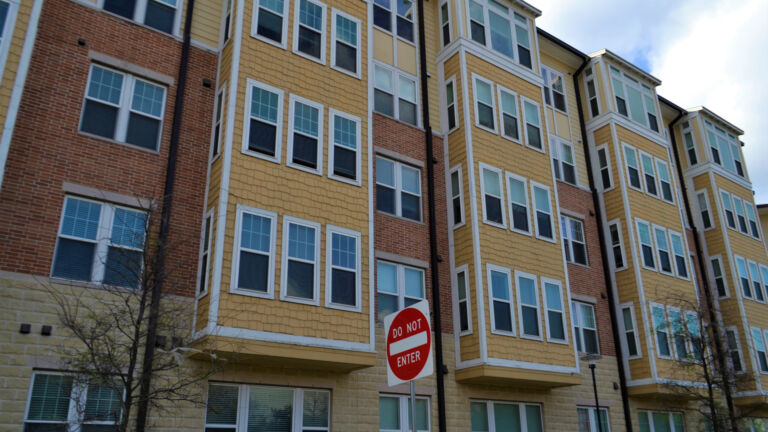
There are other ways municipalities can fulfill at least part of their obligations. For instance, they can aid home owners to add accessory dwelling units — such as a garage apartment or a second home on a single-family lot — that are deed-restricted for those with low or moderate incomes. They can also get credit for extending the affordability controls expiring on existing units, rather than allowing them to become market-rate units.
Municipalities can also reduce the number of units they need to provide by getting extra credits for certain types of housing, such as apartments for people with special needs, developments within a half-mile of public transit stations and homes with more than three bedrooms.
The prospect of ‘less uncertainty’
But Gordon said New Jersey needs a lot more housing for people at different income levels, so communities should embrace larger, mixed-income developments, as well.
“All the time, people ask, ‘Why is there no middle class housing in New Jersey?’” Gordon said. “I think there’s sort of a double-edged sword.” ‘We don’t want all these units,’ but then they say, ‘All we have is affordable housing.’”
It’s unclear how many homes will result from the new law or how quickly they will be built. According to Fair Share, the current housing round so far has resulted in the construction of more than 21,000 homes, with the potential for another 30,000 affordable units to be built by the end of the decade.
Gordon said development resulting from the new law could begin as early as next year.
“There is a real sense that there are towns that are proactively trying to get ahead of this,” he said. “I do hear from nonprofits that towns are reaching out to them, trying to get things going … Now that the law is more settled, there’s less uncertainty.”

