 Credit: (AP Photo/Evan Vucci)
WASHINGTON — Donald Trump is trying to strong-arm the U.S. Senate before he takes the oath of office.
When a president nominates someone to a senior federal job, like a judgeship, an agency commissioner, ambassador or Cabinet role, the Senate holds hearings on those nominations before voting to confirm or reject the nominee.
Vetting includes background checks, financial disclosures and public hearings.
Instead, President-elect Trump wants to bypass that process, set out in the Constitution, and push through nominees as “recess appointments” — altogether skipping this regular due diligence.
Trump’s insistence on using the recess-appointment process undermines the standard nomination system presidents of both parties have used for decades and tees up an early test for the incoming Republican-led Senate.
To carry out his political agenda, Trump called on the Senate to adjourn once he’s taken office in January, allowing him to unilaterally place high-level picks throughout the federal government.
In a Fox News interview last week, incoming Senate Majority Leader John Thune of South Dakota did not rule out ceding the recess-appointment power to Trump.
“All options are on the table, including recess appointments,” Thune said.
Speaking on Fox News on Sunday, House Speaker Mike Johnson, a Louisiana Republican, seemed warm to the idea, too. “There may be a function for that,” he said.
Recess appointments are traditionally reserved for uncontroversial nominees with experience in the positions they are chosen to fill.
The Constitution gives the president authority to adjourn Congress during “extraordinary occasions” and when the two halves of Congress — the House and the Senate — disagree about when to adjourn.
In April 2020, during the early months of the COVID-19 outbreak, Trump threatened to use this provision to force the Congress to adjourn in order to make appointments.
No president has ever forced Congress to adjourn, and the U.S. Supreme Court, in a 2014 ruling, that the Senate must recess or adjourn for 10 days minimum before a president may legally make appointments.
Adjournment resolutions have to be adopted by both chambers, meaning for Trump to use the recess-appointment process, he would need backing from leaders in the Senate and House.
For Trump, they may be the only way some of his inflammatory staff and Cabinet choices could get confirmed.
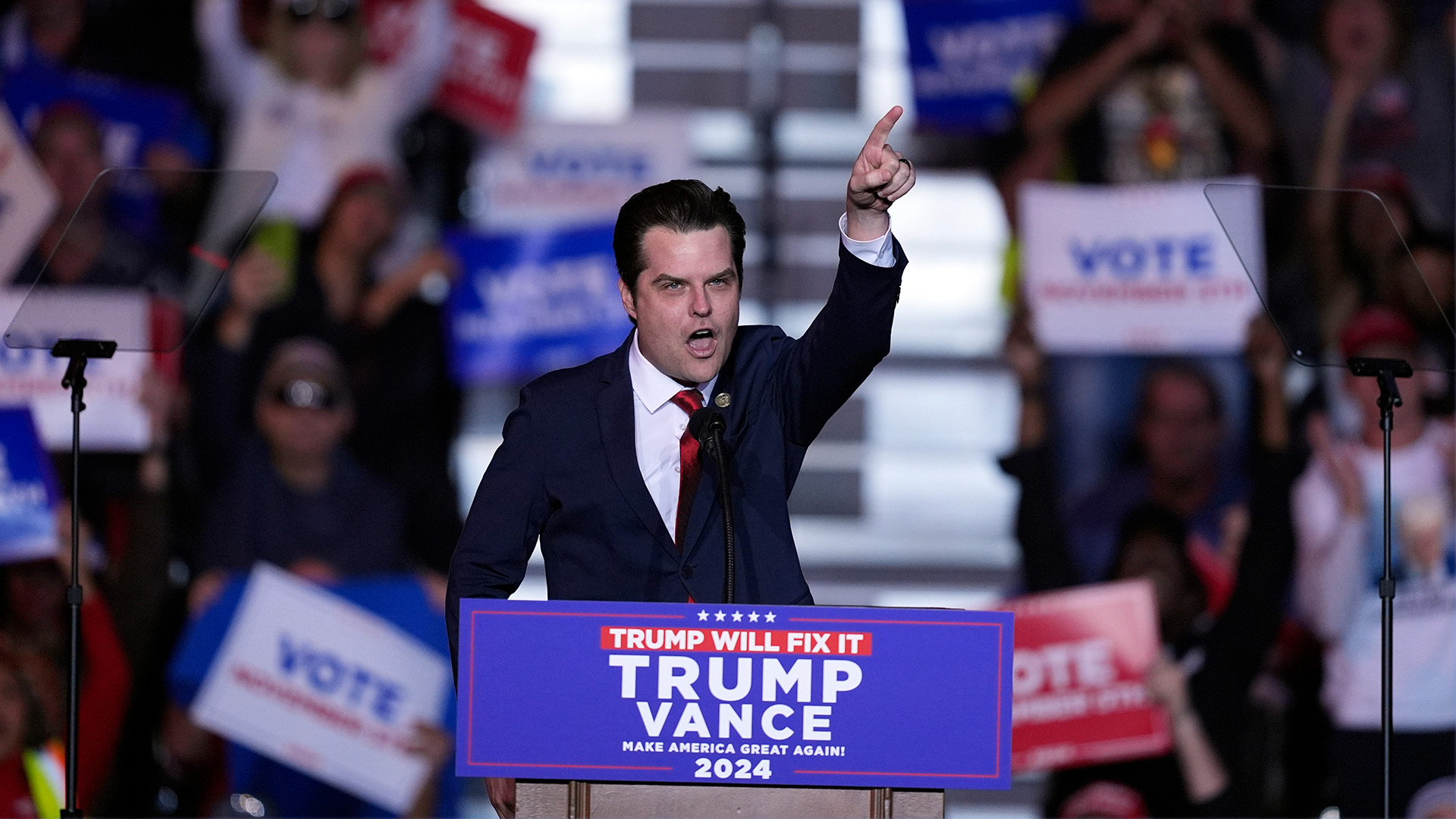
Former Republican congressman Matt Gaetz, Trump’s nominee to lead the Justice Department as attorney general, has been investigated over a series of allegations.
The House Ethics Committee investigated Gaetz, a Trump loyalist, for having sex with an underage girl while he was a member of Congress, drug abuse, taking bribes and campaign finance violations. The Justice Department also investigated Gaetz for sex trafficking and closed its investigation last year when it declined to bring charges.
Gaetz abruptly resigned from Congress last week after Trump announced his nomination.
The House Ethics Committee does not have jurisdiction over former members, though some Republicans and Democratic members of the Senate Judiciary Committee, which has jurisdiction over Gaetz’s nomination, have said they want to see the House committee’s report on Gaetz before voting on his confirmation.
Other Trump picks likely to face tough confirmation paths include Pete Hegseth, a cable television host tapped to lead the Defense Department; vaccine denier Robert F. Kennedy Jr., chosen to lead the Department of Health and Human Services; and former Hawaii congresswoman Tulsi Gabbard, selected to be the director of national intelligence, a role that coordinates the 18 U.S. spy agencies.
Gabbard, a Democrat turned political independent turned Republican, has parroted Russian propaganda about the war in Ukraine and traveled to Syria in 2017 to meet with that country’s dictator, Bashar al-Assad.
While in Congress, Gabbard demonstrated that she does not care “about rules and expectations and ethics,” said Rep. Bonnie Watson Coleman who overlapped with Gabbard in Congress.
The Senate should not give Trump recess-appointment powers, Watson Coleman (D-12th) said in an interview with NJ Spotlight News.
“If the Senate lets them do that, they need to go home,” she said.
Assuming the Senate does not bend to Trump, New Jersey’s Democratic senators next year — Sen. Cory Booker and Sen.-elect Andy Kim — will get to vote on Trump’s nominees and ask them questions at confirmation hearings. House members do not get to vote on nominees but will get to ask questions when federal officials come before their committees for hearings, like when the agencies they run present budget proposals.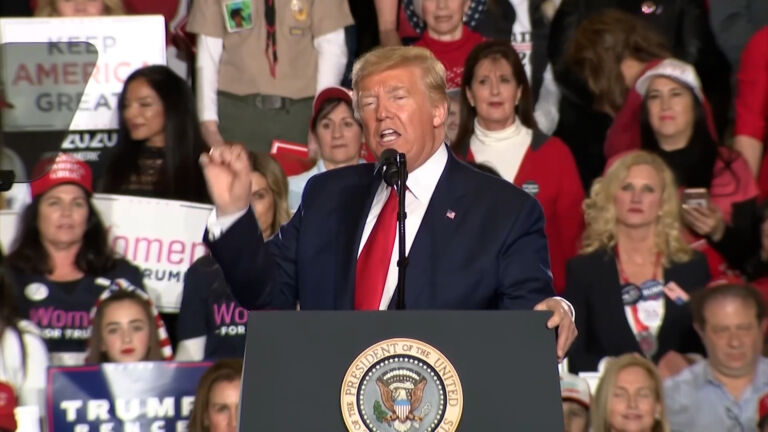
Rep. Donald Norcross (D-1st) grimaced when asked about the nomination of Hegseth, a military veteran who has been critical of women in the military and has no executive experience running a large organization.
“I just know bits about his past as a broadcaster,” Norcross, a member of the House panel that oversees the military, said in an interview with NJ Spotlight News.
Rep. Jeff Van Drew (R-2nd) said there will be a learning curve for new Trump picks like Kennedy, if they get confirmed, on how to get things done in Washington.
“Bobby Kennedy, if it turns out to be him, he’s got a lot to learn about how the system works,” Van Drew said in an interview with NJ Spotlight News. “Even when you want to change the system fundamentally, you’ve still got to learn how it works in order to achieve that goal, so I hope maybe to work with him to some degree.”