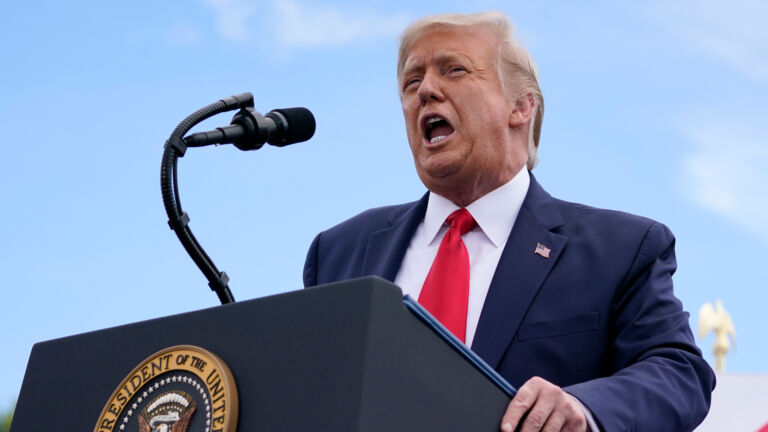
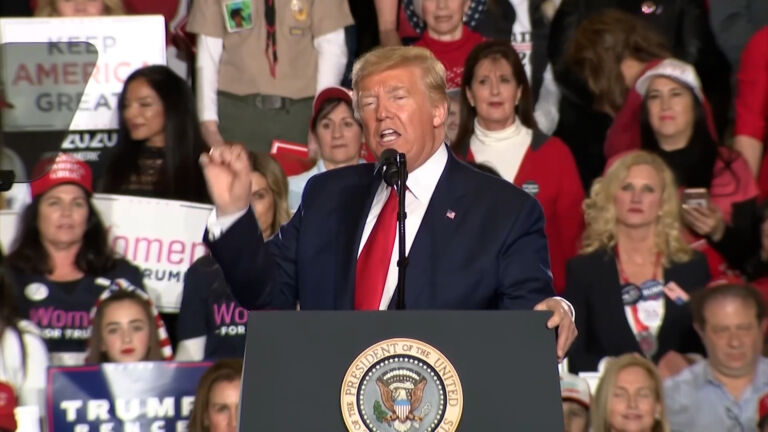
After a decisive victory last week, President-elect Donald Trump wasted no time in tapping trusted allies to serve in his next administration. But what comes next is drawing plenty of conjecture.
NJ Spotlight News spoke with Ross Baker, a professor emeritus of political science at Rutgers University, about the choices and what they may signal about the coming administration and the Congress that will need to confirm them.
Some choices, including U.S. Sen. Marco Rubio (R-FL) to serve as Secretary of State, have been viewed favorably by Congress. But others, like former Rep. Matt Gaetz as the next attorney general and Fox News host Pete Hegseth to serve as defense secretary, have caused even members of Trump’s own party to admit shock.
One possibility is the president-elect could use a clause in the Constitution allowing him to unilaterally appoint nominees if the Senate isn’t in session, known as recess appointments. But Baker said that power came from a very different time.
“The framers of the Constitution understood that given the travel conditions in the 18th century, and the fact that members and senators were likely back in their states and districts, that it would take some time to get to Washington,” he said. “So, they set up a system for recess appointment, but these recess appointments were to take place only when the Senate was formally adjourned.”
Baker said during the Obama administration, some members of Congress grew angry over the number of appointments he made during recess, through a process called pro forma recess which requires just one senator to be present to be considered in session.
“So there has to be an agreement between the House and Senate that they will agree to go out of session, strictly for the purpose of allowing the president to make recent appointments,” Baker said. “And that has never been done in the history of the United States.”