
 Credit: (Bobby Brier/NJ Spotlight News)
A patient tells a doctor that he has struggled with depression for years. The patient says he has been on several antidepressants to treat his mental health condition, but the medications make him numb.
“Therapy keeps me stable, but it only works for a little while, and I don’t really feel like I’m living,” the patient says. “And the ketamine treatments that you prescribed, they also work for a short period of time, but I have to keep going and it’s really expensive.”
“We’ve even talked about electroconvulsive therapy, but I’m worried about losing my memory,” the patient continues. “So, I’ve been looking into other alternatives. I’ve been doing some research on psilocybin. I’ve read Michael Pollan’s book, ‘How to Change Your Mind’ and I’ve seen what’s going on with the studies. I don’t know, I think I want to try psilocybin-assisted therapy.”
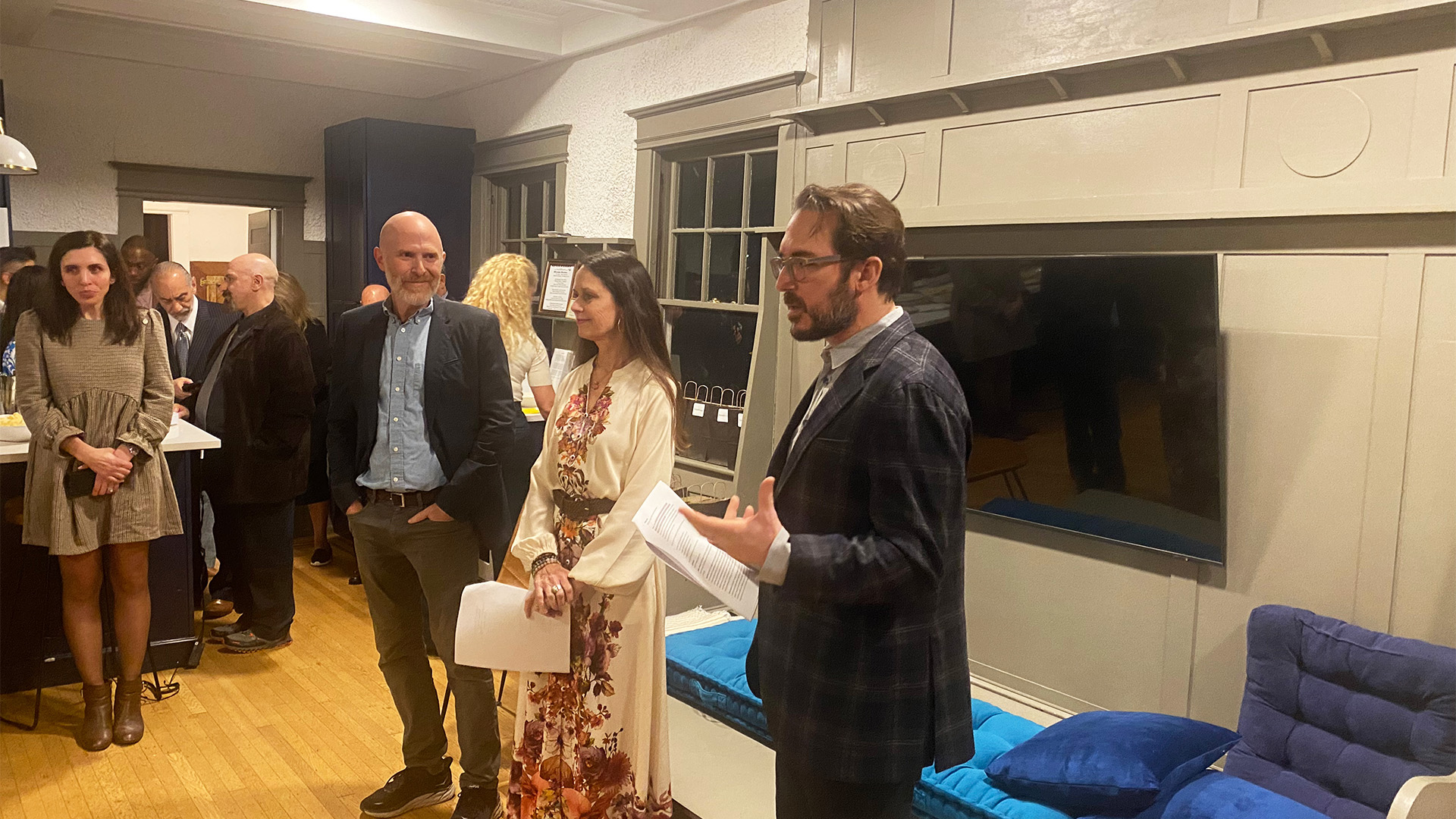
This was the start of a recent conversation between a real medical doctor and an actor playing out a demonstration of what psilocybin-assisted therapy may look like in New Jersey. That is if lawmakers agree with a pending bill that legalizes the regulated production and use of the drug for therapeutic purposes and in preventative behavioral health treatment.
The demonstration, which took place at an event hosted by the national-nonprofit Psychedelic League and held in front of a crowd last week at The Capone Clubhouse in Atlantic City, came during the New Jersey State League of Municipalities annual conference in the city. A growing body of research has pointed to psilocybin’s effectiveness in treating major depressive disorder and alcohol-use disorder, among other mental health and substance use issues.
A report published in the August 2023 Journal of the American Medical Association said that a single dose of psilocybin treatment was associated with a “clinically significant sustained reduction” in depressive symptoms without serious “adverse events.” These findings added to increasing evidence that psilocybin — when administered with psychological support — may “hold promise” as an intervention for major depressive disorder, according to the report.
 Credit: (Bobby Brier/NJ Spotlight News)
A little more than half of New Jerseyans support legalizing such treatment under a doctor’s supervision, while 20% are opposed to it and 24% are unsure, according to a report released earlier this year from researchers at Stockton University.
“Everyone is touched by mental health issues … themselves or loved ones,” said Denise Rue, a licensed clinical social worker who participated in the mock demonstration.
“I was very grateful to let people really see what this would look like in the real world because people are filled with so many misconceptions about this treatment,” said Rue, who is also the founder of the New Jersey Psychedelic Therapy Association.
Prior to starting the association last year, Rue had worked in Jamaica for three years at a legal psilocybin retreat where she supervised and facilitated over 2,000 psilocybin sessions, she told the crowd before the start of the mock demonstration last week.
The demonstration walked viewers through the four stages of a psilocybin-assisted therapy treatment model. These stages include a certification process by a New Jersey licensed prescriber — a medical doctor or mental health professional, a preparation session, the medicine or administration session and then an integration session, according to Rue.
Under the bill pending, a “preparation” session would involve an initial screening of the patient to verify their age, verify that they have a “valid written certificate” from a healthcare professional, provide the patient with any necessary health and safety disclosures and get informed consent, among other measures.
Sen. Holly Schepisi explains why she supports legalizing psilocybin for therapeutic uses.
Next, an “administration session” would take place in which psilocybin is given to the patient by a “psilocybin service facilitator,” who remains with the patient and guides them throughout the session, according to the bill. “Service facilitators” are people who are licensed to administer the drug. The preparation session is required before an administration session can take place.
Finally, a mandatory “integration therapy session” must take place after an administration session. There, a patient is required to meet with a behavioral health care provider and a service facilitator “when appropriate and necessary,” to receive any follow-up services and referrals and to “process the results” of the administration session, according to the bill.
“It is safe, in a supported setting, where you can access any hidden (or) repressed trauma and you can be supported to get through to the other side,” Rue said of the treatment.
No psilocybin was given during the course of the demonstration.
Under the pending legislation, each applicant for a psilocybin-service facilitator license will be required to submit documentation to the state Department of Health proving that they are 21 years of age or older, have a high school diploma or its equivalent, have completed the education and training requirements for licensure, and have successfully completed any required examinations, among other measures.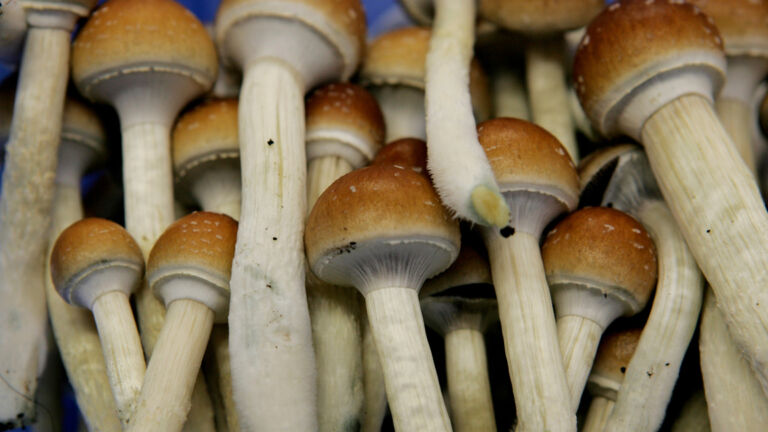
Additionally, the pending bill aims to create the Psilocybin Behavioral Health Access and Services Advisory Board in the state Department of Health. The board would be made up of 15 members and include the commissioner of health and nine public members appointed by the governor, with preference given to members who have experience with psychedelic-assisted therapy, among other considerations.
The push by advocates and lawmakers in New Jersey to legalize the use of the drug for therapeutic purposes follows similar steps taken by other states. Oregon was the first state in the country to implement and regulate legal psilocybin services. The Oregon Health Authority licenses and regulates the manufacturing, transportation, delivery, sale and purchase of psilocybin products after a ballot measure was passed in November 2020 and has since been codified into law.
But four years later, voters in a growing list of cities in Oregon have banned the substance, according to recent reporting from The Associated Press.
Four cities, across Portland suburbs and rural and coastal towns, added new voter-approved prohibitions for the federally illegal compound in the Nov. 5 election, according to the AP. A dozen other communities that approved two-year moratoriums in 2022, when a majority of Oregon counties and over 100 cities voted to temporarily or permanently ban psilocybin, voted in this election to make the restrictions permanent.
Additionally, in Massachusetts, voters recently rejected a measure that would have allowed residents over 21 to grow and use plant-based psychedelic drugs in certain circumstances. In 2022, Colorado became the only other state to legalize psilocybin for therapeutic use, according to The Associated Press.
In Congress, U.S. Sens. Cory Booker (D-NJ) and Rand Paul (R-KY) introduced a bill aimed at moving MDMA, also known as ecstasy, and psilocybin from Schedule I drugs — substances considered to have no accepted medical use and a high potential for abuse — to Schedule II. The bill is pending in both the Senate and the House of Representatives. In June, an independent advisory panel to the Food and Drug Administration rejected the use of MDMA-assisted therapy for post-traumatic stress disorder, according to The New York Times.
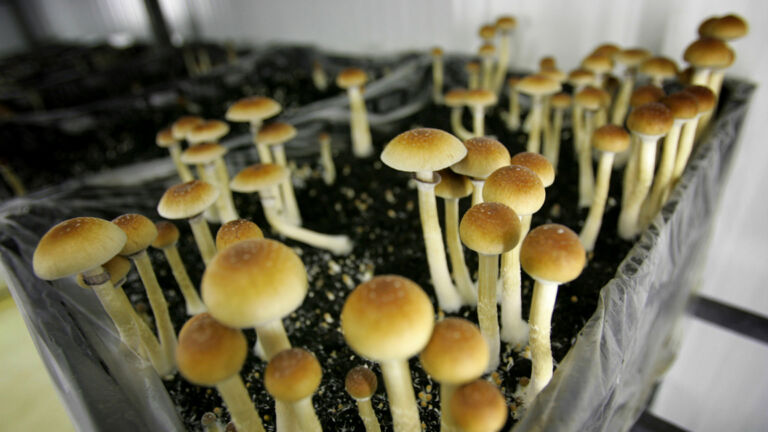
In New Jersey, the “Psilocybin Behavioral Health Access and Services Act” currently has bipartisan support in the Senate.
“My support for psilocybin within the state of New Jersey really is strictly from a medical perspective and a proper integrated medical perspective,” Sen. Holly Schepisi (R-Bergen), a co-sponsor of the bill in the Senate, said in an interview with NJ Spotlight News before the event in Atlantic City last week.
“I think that for somebody who is suffering from severe clinical depression or PTSD, we should be able to utilize every resource to provide that relief, and that’s how I kind of got on board with at least sponsoring legislation to start the discussion in New Jersey,” said Schepisi, who spoke briefly at the event in Atlantic City.
The use of psychedelics for therapeutic purposes has also found support within the veteran community.
Victor Bohm, the chief executive officer of the national-nonprofit Balanced Veterans Network, was at the event last week and found the demonstration to be comprehensive, he said.
“The things that they explained, from my experience, are actually what happens — almost to a T,” Bohm said.
“What I find in my community, leading an organization that helps veterans access alternative therapies, is a lot of veterans who have PTSD and mental health issues — they’re running from those problems that are causing those symptoms,” said Bohm.
“They try to get away from it in whatever way that they can, but what psilocybin does is it stops you from running, allows you to handle it in a safe, responsible way and deal with it and process it in a healthy way,” said Bohm.
— Editor’s note: This story has been updated with information about recent voter decisions on psilocybin restrictions.
