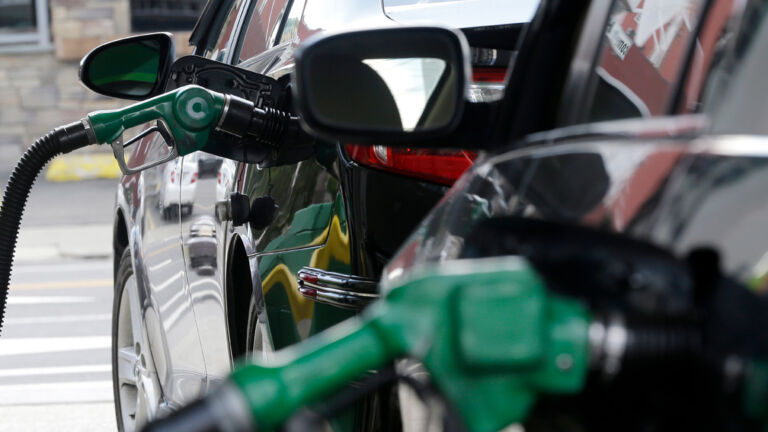
Credit: (AP Photo/Ted Shaffrey, File)
New Jersey motorists should know within a matter of weeks whether the state’s per-gallon gas tax will go up at the start of the new year to help maintain planned spending on transportation infrastructure.
Under state law, a meeting of New Jersey’s top state-government finance officials is required to occur each year by mid-November to determine whether the fund that pays for ongoing road, bridge and rail investments will stay in balance under the current gas-tax rate.
If they detect a significant shortfall, a rate hike is required, by law, to go into effect on Jan. 1. Right now, the tax is set at 42.3 cents per gallon for gasoline and 49.3 cents per gallon for diesel fuel.
Under legislative estimates released earlier this year, the gas tax would likely need to go up by roughly 2 cents annually between 2025 and 2029 to keep pace with the respective annual revenue targets set in a law enacted in March by Gov. Phil Murphy that reauthorized the state’s Transportation Trust Fund.
According to officials from the Department of the Treasury, an announcement on the gas tax is expected by early December.
“As in years past, Treasury will make the determination in accordance with the law,” agency spokesperson Danielle Currie wrote in an email in response to questions asked by NJ Spotlight News.
Up, down or unchanged
In theory, state law also allows for the rate to be kept the same or be lowered based on the results of the analysis.
But earlier this year, Murphy and fellow Democrats who control the state Legislature agreed to modify the law in a way that makes it more likely a series of modest tax hikes will be required over the next several years, pending each annual analysis.
If it turns out a tax hike is required on Jan. 1, it would be just the latest cost increase to hit people traveling around, or through, New Jersey, on the roads, or by using mass transit.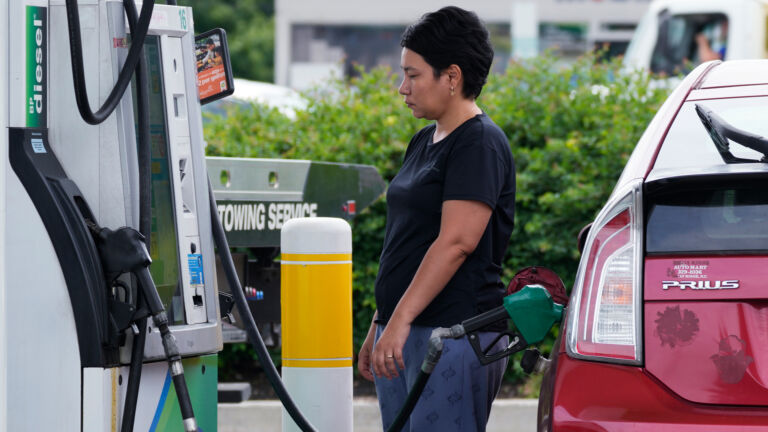
Earlier this year, tolls on the Garden State Parkway and New Jersey Turnpike were increased by 3% to help fund ongoing capital investments. Fares for New Jersey Transit’s bus and rail riders were also increased, by 15%, on July 1, under efforts to close a significant budget gap.
A new registration fee for zero-emission vehicles also went into effect on July 1, and the Murphy administration is also phasing out a state sales-tax break offered as an incentive to those buying electric vehicles for the last two decades.
Volume matters
In New Jersey, the gas tax is levied on the volume of gasoline or diesel fuel purchased, not as a percentage of the per-gallon price of fuel itself. That means the amount of revenue the state collects from motorists generally remains the same, regardless of price.
According to AAA New Jersey, the average price of a gallon of gas sold in the state as of earlier this week was roughly $2.91.
The state gas tax, which is often referred to in state law as the ‘highway fuels tax,’ is actually made up of two separate taxes levied on the sale of gasoline and diesel fuel.
That’s slightly less than the national average of nearly $3.10 a gallon, and below the roughly $3.27 per gallon that it cost to buy gasoline in New Jersey a year ago, according to AAA New Jersey.
Baked into the per-gallon cost of gasoline in New Jersey are gas taxes levied by both the federal and state governments.
At the federal level, the per-gallon rate is 18.4 cents. The federal gas tax was last changed in 1993.
For New Jersey, the state gas tax was last increased a little over a year ago. The nearly one-penny rate hike, for both gasoline and diesel, occurred after fuel consumption fell slightly short of targets heading into a late-summer analysis required by the law at the time.
Where NJ’s gas tax ranks
As of earlier this year, New Jersey’s 42.3-cent per-gallon tax on gasoline was ranked as the eighth-highest among U.S. states, according to the Tax Foundation, a Washington, D.C.-based organization that closely tracks state and federal tax policies.
The gas tax is the primary source of revenue for New Jersey’s Transportation Trust Fund, an account that is separate from the state budget that funds billions of dollars in annual spending on road, bridge and rail infrastructure improvements.
Earlier this year, when the trust fund, or TTF, came up for renewal, Murphy and Democratic legislative leaders agreed to enact a law that reauthorized the fund for another five years, allowing for $10.37 billion in new spending on road, bridge and rail projects.
Among the new wrinkles written into the latest TTF reauthorization was the establishment of the new registration fee for zero-emission vehicles that went into effect on July 1, to raise additional cash for ongoing transportation-infrastructure investments.
Initially set at $250 per year, the fee is set to increase annually until hitting $290 in 2028, according to the reauthorization law.
In addition to the gas tax and the zero-emission vehicle fee, other sources of revenue for the trust fund include a portion of the state sales tax and contributions from state toll-road authorities.
The gas tax, which is often referred to in state law as the “highway fuels tax,” is actually made up of two separate taxes levied on the sale of gasoline and diesel fuel. They are the state motor fuels and the petroleum products gross receipts taxes.
It was also the latest TTF reauthorization law that changed when an annual analysis of the latest highway fuels tax collections takes place, from Aug. 15 each year to Nov. 15.
The analysis is conducted by the state treasurer and the top fiscal official from the nonpartisan Office of Legislative Services.
New rules
Meanwhile, the same law also established a new set of annual highway-fuel revenue targets, starting with $2.03 billion during the 2025 fiscal year and increasing to $2.37 billion by the 2029 fiscal year.
Because of the new TTF law, changes to the rate that used to go into effect each year on Oct. 1 now take effect annually on Jan. 1.
The first state law linking New Jersey’s gas tax to annual consumption levels — and requiring automatic rate adjustments based on the latest revenue and consumption trends — was enacted in 2016, at the same time the state’s then gas tax of 14.5 cents per gallon was increased by nearly 23 cents.
At the time, the trust fund had run dry, and the Democrats who controlled the Legislature and former Republican Gov. Chris Christie were at odds over what to do next.
To break the 2016 impasse, Christie and lawmakers agreed to hike annual transportation spending as part of an eight-year reauthorization of the trust fund, in part, by using new revenue from a 22.6-cent per-gallon rate hike that was enacted later that year.
Meanwhile, language was also inserted into the 2016 transportation finance law to allow for additional gas-tax changes to go into effect automatically each year based on an annual analysis of any “under” or “over” collection of highway fuel taxes during the prior fiscal year.