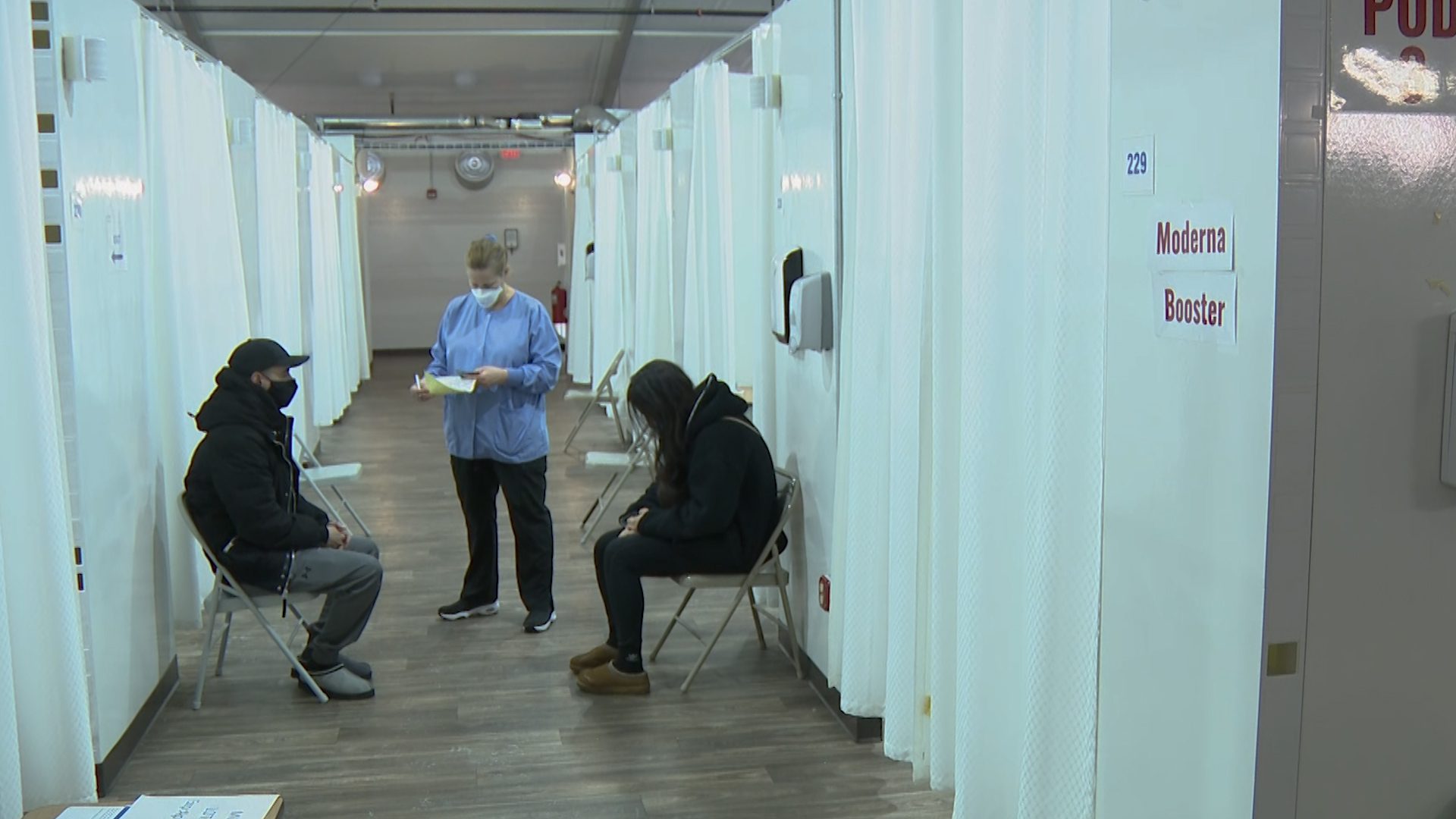
 Credit: (NJ Spotlight News)
WASHINGTON — The U.S. would be thwarted from joining international agreements about curbing, preparing for or responding to pandemics without backing from a supermajority of members of the Senate, a high threshold, under legislation the House recently passed.
After clearing the House last month, the legislation (HR 1425) fizzled in the Senate, where it will almost certainly expire this Congress.
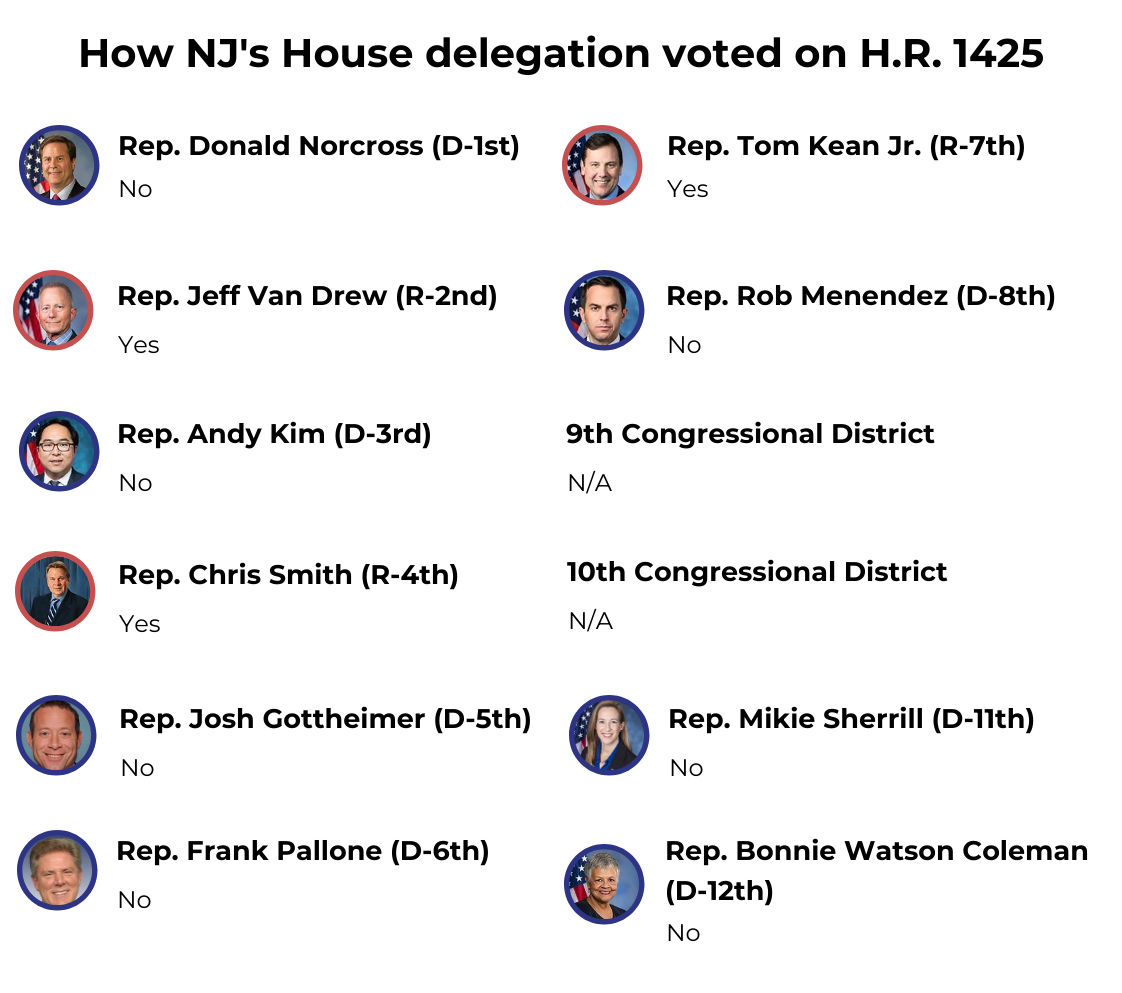
New Jersey’s House members split along party lines, with three Republicans voting for it and seven Democrats voting against it.
Though it almost certainly will not become law, the pandemic legislation likely foreshadows the types of bills Republicans would write and vote into law if they sweep to power next year by winning control of the House, the Senate and the White House in the November elections.
 The bill is one of several Republican “messaging bills” — legislation meant to send a political signal, jam political rivals or both — of Republican-authored legislation the House passed before departing for its October recess.
Both chambers of Congress are scheduled to return to Washington on Nov. 12, a week after Election Day, unless members return earlier to consider disaster-relief legislation in the wake of Hurricane Helene, which tore through the Southeast last week.
Because they control the House majority, Republicans get to set the legislative agenda and determine what bills get called up for votes in the chamber.
The same is broadly true in the Senate, where Democrats hold a slim majority, though procedural hurdles like the filibuster give individual senators power to slow down the legislative process.
New Jersey Republicans Jeff Van Drew and Chris Smith are co-sponsors of the bill, which passed 219-199, with almost all Republicans and four Democrats, in tough reelection races, in favor. Rep. Tom Kean (R-7th), the lone New Jersey incumbent facing a serious challenge, also voted for the bill.
For two years, the 194 nations that are members of the World Health Organization, a specific agency within the United Nations with a broad mandate to oversee global health topics, have been negotiating an agreement about how the world will confront future pandemics.
The agreement, expected to conclude next year and building upon the pitfalls of the COVID-19 response, could lead to better cooperation in the face of pandemics to come.
The U.S. has been one of the biggest funders of the WHO since its founding in 1948, giving between $163 million and $816 million annually over the last decade, according to KFF, a nonprofit health policy research, polling and news organization.
The Trump administration temporarily halting funding to the agency in 2020 and triggered the process to leave the organization, moves the Biden administration reversed the next year.
While debating the House legislation, Republicans said any deal the U.S. signs on to with the WHO should be presented to the Senate, where it should be taken up like a treaty.
“Americans don’t support empowering unelected bureaucrats at the WHO who don’t hold American values,” said Rep. Keith Self, a Texas Republican.
Asked Rep. Tom Tiffany, a Wisconsin Republican: “Given the vast reach of this so-called pandemic treaty, don’t we want Congress to have oversight of it?”
Smith echoed those themes after the House passed the bill.
“Under no circumstances should our critical health authorities be handed over to WHO bureaucrats,” Smith said in a statement. “They cannot be empowered to dictate policies to U.S. medical professionals and U.S. taxpayers when it comes to vaccines, therapeutics and the like.”
New York Democrat Gregory Meeks, the highest-ranking member of his party on the House Foreign Affairs Committee, called the legislation a “nakedly partisan attempt to subvert” diplomatic public health efforts.
“Only by learning from our mistakes made during the global response to the COVID-19 pandemic, this agreement could be a watershed moment in advancing global health security,” Meeks said.
Negotiations over the pandemic treaty have been rife with false assertions that a deal could allow WHO officials to mandate lockdowns.
The deaths of more than 1.2 million people in the U.S. since Jan. 1, 2020 can be traced to the COVID-19 virus, according to the latest available data from the Centers for Disease Control.
Critics from both political parties have long used the treaty approval process as a tool to sideline global agreements.
To approve a treaty, two-thirds of the senators present — 67 of 100 members, if every member is in the chamber — must vote in favor of it. In a sharply divided Senate, that can be a high bar.
When the Senate in 1997 passed a resolution 95-0 to criticize an international climate accord the Clinton administration had reached, it effectively blocked the U.S. from approving the agreement, known as the Kyoto Protocol.
Facing certain rejection, the Clinton White House never submitted the deal for approval to the Senate.
Republicans tried during the Obama administration to get the executive branch to submit a climate deal to the Senate for approval, and the day President Joe Biden was sworn in, Republican senators tried to nix American involvement in the same climate deal by forcing it through Senate approval.
The Senate last rejected a treaty in 2012, when it voted down a disability treaty. Before that, in 1999, the chamber voted against supporting a treaty to ban the testing of nuclear weapons.
Deforestation, wildlife trafficking and the destruction of natural plant and animal habitats are linked to the spread of “zoonotic” diseases, including coronaviruses, like COVID-19, that can jump between animals and humans.
Other zoonotic disease outbreaks include SARS, Middle East Respiratory Syndrome and the Ebola virus.