 Credit: (Hana Syed Khan)
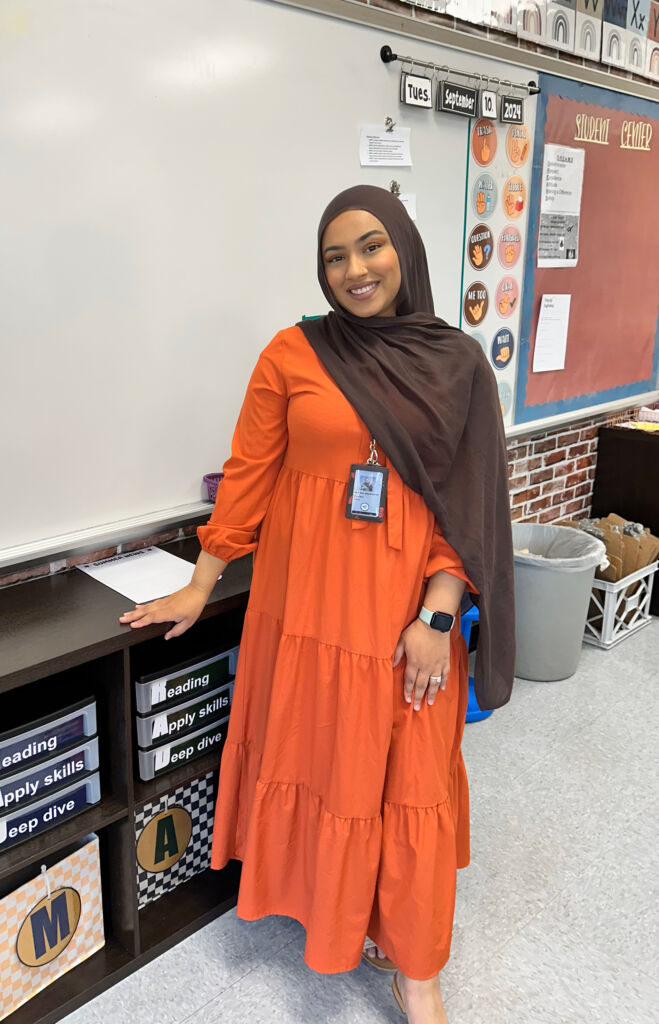
When Hana Syed Khan accepted a job in the South River Borough School District this summer, she knew after one visit that the classroom she inherited needed work.
The fourth-grade classroom needed everything from shelving to fresh paint. The school district provided many essentials, such as desks, chairs and markers, and Khan brought some library books with her that she had acquired over five years of teaching in other districts. But she knew that to make the classroom feel more welcoming and comforting to students, a greater investment would be needed.
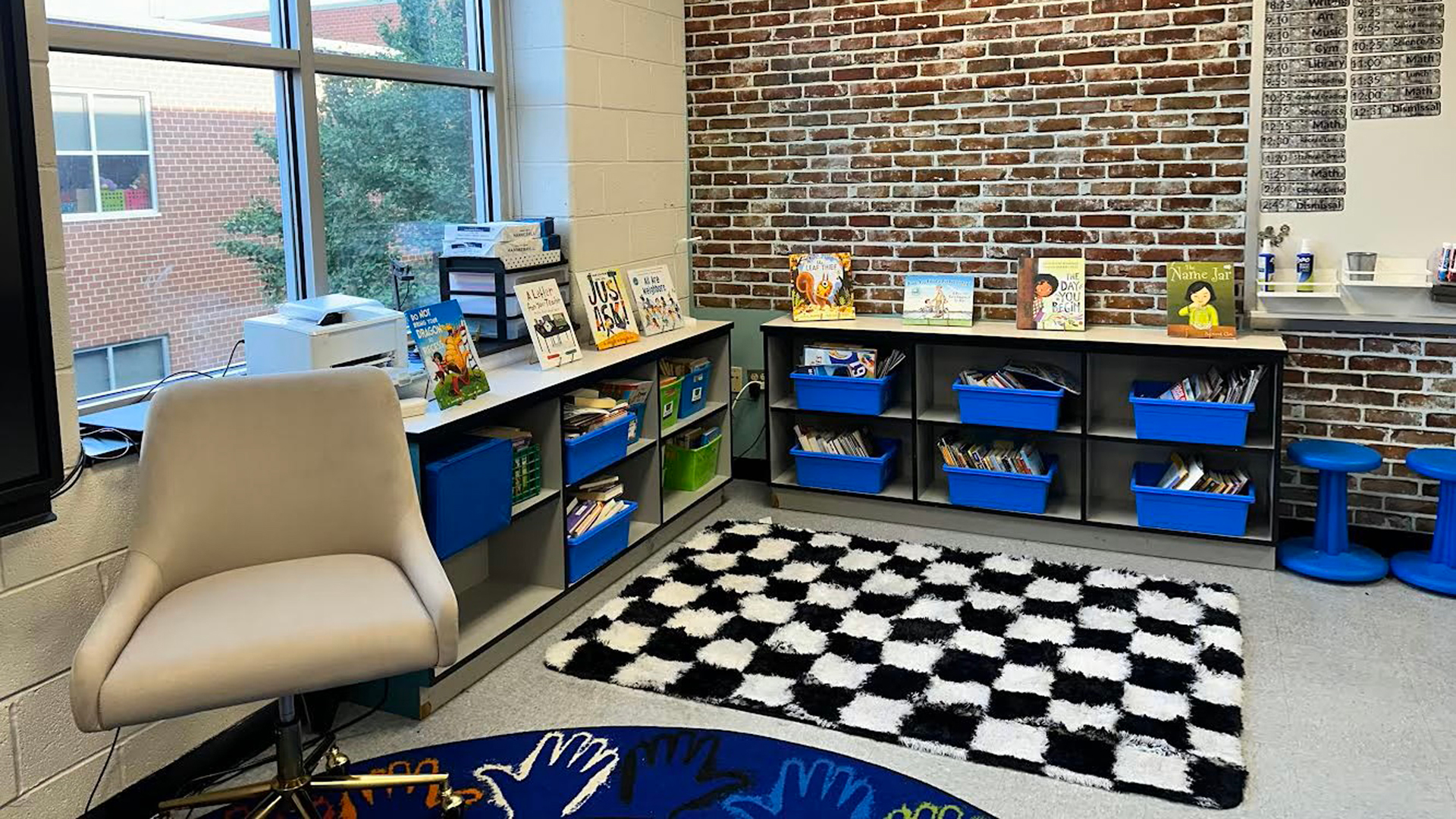
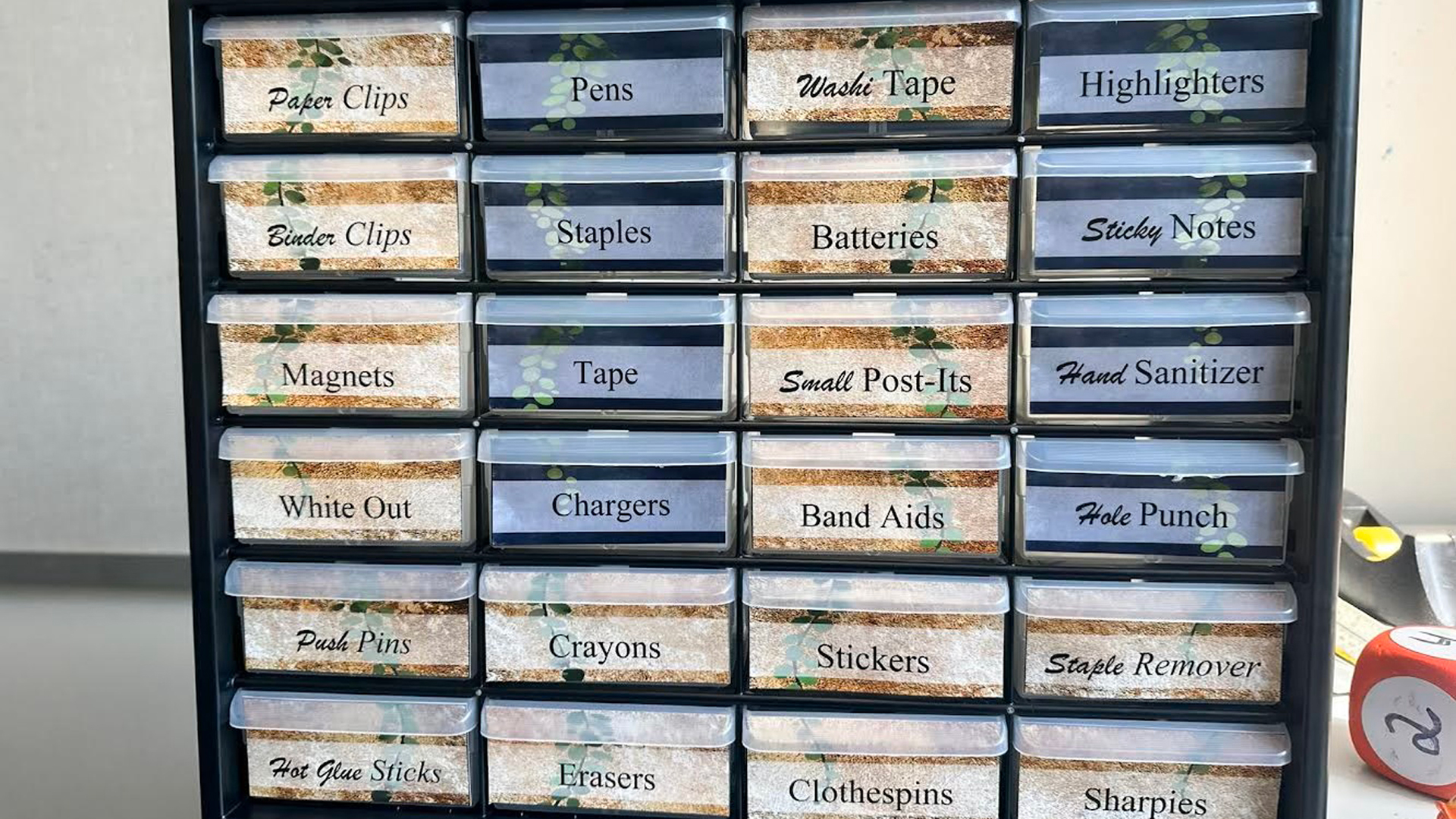
Khan started an online fundraising effort on GoFundMe. Called “A Classroom Built on Kindness,” it has raised almost $2,000. The donations have funded a library chair, checkered carpet, wallpaper, organizing drawers and a teacher toolbox with everything from pens to Band-Aids.
“You somehow always end up having to spend your own money if you want to do any fun activities,” Khan said, noting that she normally spends about $1,000 of her own money on her students each year.
Khan isn’t alone. More than 90% of teachers spend their own money on classroom supplies, according to the most recent data from the federal Department of Education. Teachers spend an average of $500 to $750 on supplies for students each year, according to the National Education Association, the nation’s largest teachers union.
GoFundMe
 Credit: (Taylor Pinto)
“I don’t think teachers should have to spend their own money,” Khan said. “I don’t think other positions or other places of work usually use their own money to do activities like that, or they do but then they get a refund.”
Khan created Instagram and TikTok pages to share updates with supporters of how their money is being used in her classroom. She said she aims to keep raising money and awareness with the goal of supporting additional classrooms in the state.
Judith Grodner moved from working at Montclair High School to teaching elementary school and needed to set up a first-grade classroom. Montclair provides money for teachers to purchase classroom materials in the spring, which was before Grodner transferred to elementary school, and the money likely would not have covered all the necessary supplies, she said.
Grodner said many parents send their kids to school with basic supplies like notebooks and pencils, but there was still a need for storage bins and hands-on activities like blocks and Play-Doh.
Other teachers have created Amazon wish lists to help pay for classroom supplies.
Grodner created a GoFundMe page that raised more than $1,000. She spent an additional $500 of her own money on supplies, which she said is typically what she spends in a school year. Grodner and Khan both received $450 grants from GoFundMe as part of their fundraising efforts.
“Teachers should not be expected to spend their own money,” Grodner said. “We don’t fund education in this country. We don’t value it and unfortunately, teachers who care about their students end up picking up the slack.”
Amazon wish lists
Other teachers have created Amazon wish lists to help pay for classroom supplies. Amy Wilson, a Jersey City resident who started a mutual aid society in the city, shared two local teachers’ wish lists on X, the social media platform formerly known as Twitter. The lists were cleared almost instantly, Wilson said.
“But of course, I have a really big question in my mind of whether or not we should be doing this, versus them just getting the supplies they actually need,” Wilson said.
She said Amazon wish lists allow supporters to see exactly where their money is going.
Sen. Carmen Amato (R-Ocean) this week introduced legislation that would reinstate the annual sales tax holiday ahead of next year’s back-to-school season.
“I just see the people who need the most support getting the least amount of support. I see students really struggling and I see teachers really struggling,” Wilson said. “I know the role that schools play in a kid’s life and to be able to help out someone who is part of that whole system, that’s something I’m always very happy to do.”
The average New Jersey teacher was paid $81,102 in the 2022-2023 school year, which is among the highest teacher salaries in the country, according to data from the National Education Association.
 Credit: (Hana Syed Khan)
But with low pay compared to other fields that require a similar level of education and the high costs of classroom supplies, setting up a classroom can be a financial burden on teachers. New Jersey school districts often operate on tight budgets which do not include much money for teachers to set up their classrooms in a way they are happy with. While teachers are not required to spend their own money on classroom supplies, almost all of them do.
Increasing costs
The cost of traditional school supplies has increased by 24.5% over the last four years, according to a July report from the financial firm Deloitte.
And teachers and families can no longer benefit from the state’s annual sales tax holiday, which lasted two years. Gov. Phil Murphy and fellow Democrats who control the Legislature enacted a law in June that formally ended the tax break for back-to-school shopping at the end of the summer.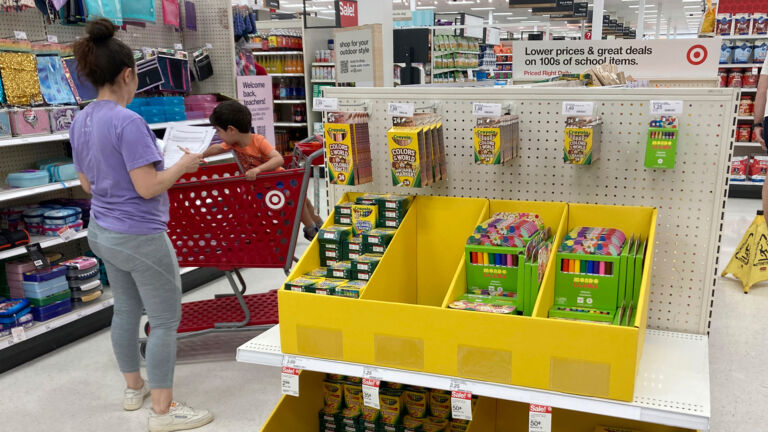
When the sales tax holiday was signed into law, its sponsors pitched it as a measure to help families — and teachers — save money while preparing to head back to school.
“The purpose of this legislation is to assist both families and teachers during the busy and potentially expensive back-to-school season. As we’ve seen a collective rise in inflation and the cost of living, it would be a preventative measure, to ensure that students are not left without the very essential school supplies they’ll need for the upcoming school year,” former Sen. Fred Madden (D-Gloucester) said in a statement when the legislation was introduced.
Reinstate back-to-school sales tax holiday?
Sen. Carmen Amato (R-Ocean) on Thursday introduced legislation that would reinstate the annual sales tax holiday ahead of next year’s back-to-school season. He said he plans to work for bipartisan support for the bill to help students, families and teachers.
“God bless our teachers and our educators who all too often go into their own pockets after the first day of school or prior to the first day of school to make sure they have extra supplies for the kids that may need it,” Amato said. “Especially now, with the funding cuts over the last few years, there’s probably more need now than there was then to provide those basic tools to succeed in education today.”
There is some debate among tax policy experts about the effectiveness of sales tax holidays as they only offer temporary relief and people from any state can take advantage of them.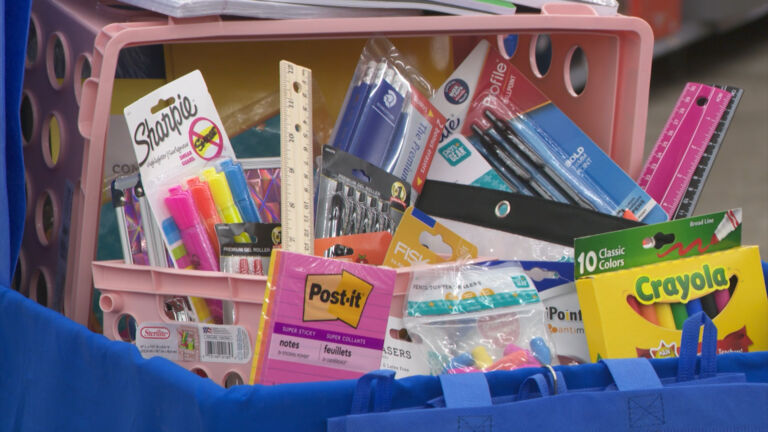
“I’m just thinking about the children that you’re going to make their day or help those parents that can’t afford it or help those teachers that go over and above each year,” Amato said.
Another measure that could help teachers save while setting up their classrooms is moving through the Legislature. Bill S-2378 would provide a gross income tax deduction to eligible educators and paraprofessionals for money spent on classroom supplies up to $250. The bill passed the Assembly unanimously and is yet to come up for a vote in the full Senate.
“Those who reach into their own pockets to provide for students” in districts that do not provide adequate supplies, “deserve to be reimbursed in some capacity,” sponsor Sen. James Beach (D-Camden) said in a statement when the bill cleared the Senate Education Committee.
He said providing teachers and other educational professionals a gross income tax deduction would lessen that financial burden “and show thanks for their generosity.”
A similar federal measure is already in place that allows teachers to deduct up to $300 of expenses for classroom materials and equipment.