Credit: (NJ Spotlight News)
Mediation continues in a major school segregation lawsuit with interdistrict school choice, magnet schools and charter schools being discussed as potential solutions to desegregate New Jersey public schools, according to recent court filings.
As the confidential talks approach their one-year mark, the parties have asked for another three-month extension in recent court filings. The two sides are still having “good-faith discussions in furtherance of a possible resolution,” according to a filing from the plaintiffs’ attorney on July 11.
Lawyers for the Murphy administration and the plaintiffs in Latino Action Network v. New Jersey entered mediated talks to come up with an agreement to address long-standing segregation in New Jersey schools in November 2023. While the initial deadline was in January, the parties are now looking toward at least an Oct. 15 deadline, with the possibility of further extensions. This is the third extension they’ve sought in the process.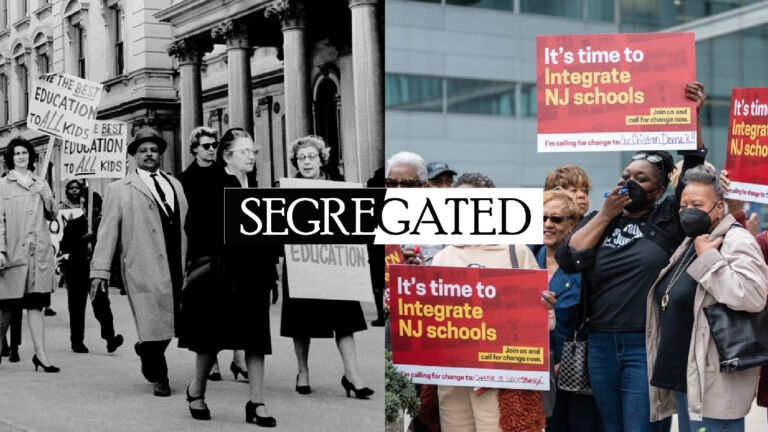
The sides have already engaged in what they said were eight productive sessions with the mediator, according to court filings. The most recent session was on June 24 and another is scheduled to occur in July. The parties regularly confer with each other and the mediator in between sessions, according to the filings.
Mediation or litigation
The scope of the mediation, which addresses both liability and remedy, and the “significance and tremendous complexity of the issues to be resolved” will require additional mediation sessions before a resolution is possible, according to the plaintiffs’ attorney Larry Lustberg.
Lawyers for both sides previously said they hoped mediation would provide the quickest path to resolving the complex issues concerning school segregation, which can vary by district and community. The case had already lasted five years before entering mediation.
The mediation discussions are addressing interdistrict choice, magnet schools and charter schools as potential remedies to public school segregation.
The parties still believe mediation is likely to resolve the matter faster than litigation, potentially saving the state from years of expensive litigation, Lustberg wrote in a recent filing.
If the court approves the request for an extension, the sides have agreed to file status reports on Aug. 15 and Sept. 13 indicating that progress is being made. If another extension is needed, it must be requested by Oct. 12.
How the lawsuit started
The sweeping lawsuit was initiated in 2018. State Superior Court Judge Robert Lougy ruled in October 2023 that the state has failed to ensure children’s constitutional rights to an education free of racial segregation. The ruling did not say what the state must do where school segregation exists.
School segregation has been a long-standing issue in the state, with many legal challenges over the last 50 years. New Jersey has some of the most segregated schools in the country, in large part due to residential segregation and the requirement that students attend schools in their neighborhoods. This has put attention on remedies that would change which school students attend.
The sides involved in the mediation are discussing interdistrict choice, magnet schools and charter schools as potential remedies to public school segregation. The state already has an interdistrict public school choice program that allows “choice districts” to admit students who don’t reside in the district without cost to their families. The choice districts must be approved by the state Department of Education; there are 119 choice districts for the 2025-2026 school year. New Jersey also has 85 charter schools and a smaller number of county-run magnet schools.
Jersey City Mayor Steve Fulop, a Democratic gubernatorial candidate, has named desegregating the state’s public schools as a top priority if he is elected governor. His plan includes leaning on magnet and regional schools to bring diverse groups of students together from wider geographic areas.
Republican gubernatorial candidate Jon Bramnick, a state senator, has been a vocal opponent of remedies that would mean students cannot attend their neighborhood schools. In 2019, he proposed a constitutional amendment that would prohibit students from being required to attend public schools other than the one closest to where they live. Other candidates for governor have yet to release detailed education policies.