Credit: (NJ Spotlight News)
Jersey City Mayor Steve Fulop said desegregating the state’s public schools would be a top priority if he is elected governor. He is the first in a crowded field of hopefuls to introduce a plan for education in New Jersey.
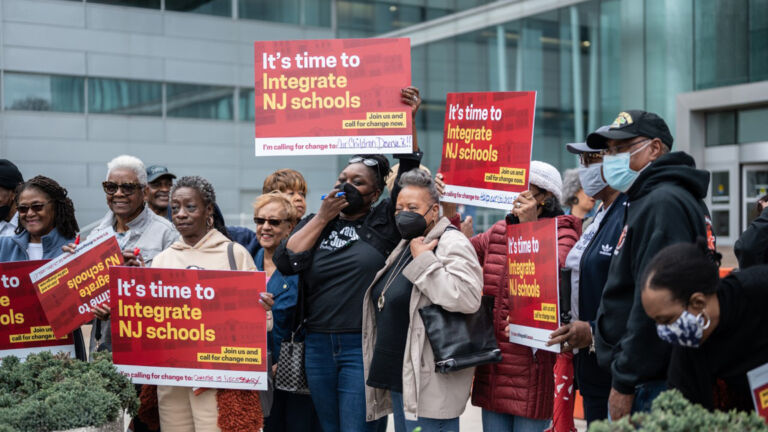
The state has some of the most segregated schools in the country, in large part due to residential segregation and the requirement that students attend schools in their neighborhood. Fulop said he wants to confront school segregation head-on, working alongside educators, activists and state leaders to create a statewide plan addressing segregation in his first year.
“We know it’s not productive to have school segregation and communities that exist like this,” Fulop said in an interview with NJ Spotlight News. “We will proactively use the dollars in Trenton to achieve the goals that I have outlined and reward those that are actually doing it.”
Fulop was the first Democrat to announce his candidacy for governor more than two years ahead of the November 2025 election. On the Democratic side, candidates also include Newark Mayor Ras Baraka and former state Senate President Steve Sweeney. For the Republicans, candidates include state Sen. Jon Bramnick (R-Union) and Jack Ciattarelli, a former state assemblyman who narrowly lost to Gov. Phil Murphy in 2021. The field is expected to grow.
Significant issue
School funding has the potential to be a significant issue as state lawmakers discuss plans to revise the state aid formula, which was last updated in 2018 under Sweeney’s leadership in the Legislature. Baraka was an educator and principal in Newark before becoming mayor. He and Fulop will likely be judged on school performance as mayors of two of New Jersey’s largest cities.
If elected, his administration would use an updated school funding formula as a tool to incentivize districts that seek diversity proactively, Fulop said.
Fulop said his early announcement gave him time to develop substantial policy positions based on his tenure as mayor of Jersey City and input from policy experts, teachers, university presidents and others.
His plan to desegregate schools suggests leaning on magnet county schools and regional schools to bring diverse groups of students together from wider geographic areas. Districts would also combine after-school sports, music and art programs for middle school students with neighboring districts to expand offerings and increase diversity.
Fulop said desegregation will require intentional work and incentivization, since school segregation is determined by residential segregation. Part of the solution is building more affordable housing to create more diverse communities, he said.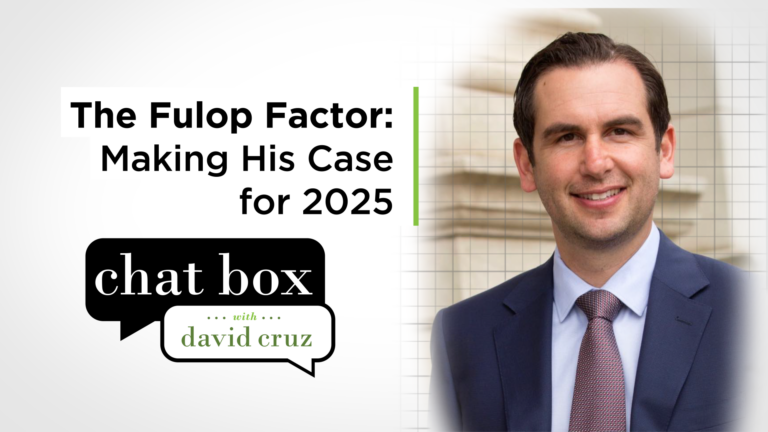
“There’s no incentive for XYZ municipality to move in the direction of desegregation if they don’t believe the state will reward them if they do it or penalize them if they don’t,” Fulop said.
Consolidating school districts can also help lower costs and the strain on taxpayers, his plan notes. Fulop will support proposed legislation to require the commissioner of education study the most efficient ways to consolidate school districts, focusing on districts with fewer than 300 students.
Ongoing mediation
The state is currently engaged in mediation with plaintiffs in a major school segregation lawsuit. Talks have been ongoing since November and are now expected to wrap up this summer if no further extensions are requested.
“I think it’s a big, missed opportunity by the governor, that we’re fighting this stuff in court instead of really proactively thinking about how we actually use our money to achieve that,” Fulop said.
If elected, his administration would use an updated school funding formula as a tool to incentivize districts that seek diversity proactively, he said. His education plan includes revising the formula during his first year in office to increase transparency and adjust for changing student needs and expectations.
Fulop suggested districts should be reimbursed for special education funding based on the number of students with disabilities and the type of disability they have.
Fulop said he would publicly release the formula for parents, students and school leaders to see.
“The biggest problem we see is that it’s very opaque and difficult to understand,” Fulop said. “100%, it should be transparent and public.”
He said the recent back-and-forth in the Legislature over restoring aid to a minority of districts losing state aid under the formula is a sign the formula needs to be updated. Modernizing the formula and increasing transparency would eliminate the need for stabilization aid, Fulop said.
“Supplemental projects, the aid that was passed [last week], are not in the best interest of moving education forward long-term, even when it’s tough on municipalities. You have got to modernize the formula so that it moves forward in a healthy way,” he said.
Special education
He also said it’s important that districts can raise up to their local fair share, which is the amount districts are able to raise locally from property taxes, according to the formula. Fulop said he would support raising the 2% property tax cap with guard rails in place.
Fulop also proposed changing the way special education is funded, moving away from a census-based formula, which allocates funding based on an average percentage of students with disabilities. Fulop suggested districts should be reimbursed for special education funding based on the number of students with disabilities and the type of disability they have.
He said the benefits of switching to a direct-cost model outweigh concerns about over-classification of students with disabilities to get additional funding. Under the current model, many districts with a higher-than-average population of students with disabilities do not have enough funding to meet the needs of those students, he noted.
After taking office, he said he would direct the commissioner of education to work with the Legislature to hold hearings with experts in public school finance to determine the best way to update the formula.
His education plan also includes more funding for school construction, increasing access to mental health services and continuing to expand access to public preschool. In higher education, Fulop said he would fund community colleges proportionally to four-year colleges. He also announced several initiatives to make college more affordable, such as expanding eligibility for college savings plans and putting a 2% cap on annual tuition increases at public universities.