
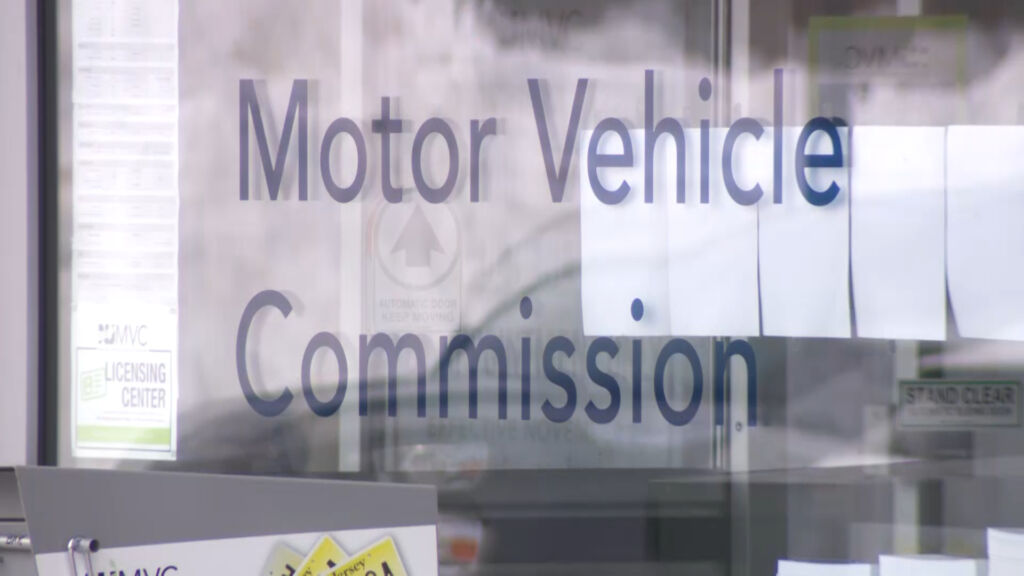
As New Jersey’s Motor Vehicle Commission ramps up services it offers to motorists by appointment and online, the agency itself will soon be operating at a deficit due, in part, to inflation and rising employee costs.
That’s the message being shared with members of the Legislature this year as lawmakers continue to scrutinize executive-branch departmental budgets in the run-up to the July 1 start of the state’s next fiscal year.
Right now, the MVC — an agency that interacts directly with millions of New Jersey residents on an annual basis — has a projected an operating gap for the 2025 fiscal year totaling about $50 million, according to budget documents.
Higher costs for goods and services, as well as rising wages and benefits costs for the agency’s more than 2,500 employees, are among factors being blamed for the projected operating deficit, according to the budget documents.
If lawmakers sign off, the MVC will receive a subsidy from the state budget’s general fund under the nearly $56 billion spending plan Gov. Phil Murphy has proposed for the 2025 fiscal year.
That subsidy, which would be a rarity for the agency, will help close the gap without hiking fees, slashing services or closing any of the MVC’s brick-and-mortar facilities. The MVC each year brings in hundreds of millions of dollars from motorists in the form of fees for licenses, registrations and more. But, by law, the agency is required to earmark a sizable portion of its annual revenues that are then transferred to other state departments and dedicated uses previously mandated by lawmakers. For the 2025 fiscal year, the Murphy administration expects a little over $1 billion in total motor vehicle fee collections. Of this total, $516.7 million would be certified as general fund revenues, according to an analysis prepared by the nonpartisan Office of Legislative Services.
“The Motor Vehicle Commission’s commitment to minimizing the projected budget deficit remains a priority,” said LaTrecia Littles-Floyd, the commission’s acting chief administrator, during Monday’s Assembly Budget Committee hearing.
MVC’s real-world reach
In addition to its 40 brick-and-mortar agencies, the MVC also operates 25 vehicle inspection facilities, 15 road test locations and four mobile units, Littles-Floyd said.
However, the MVC has also improved its online capabilities in recent years, including in the wake of the COVID-19 pandemic. About 80% of its services can now be handled online, Littles-Floyd said during the hearing.
Anong other emergent fiscal challenges are ‘rising operating costs, compliance with unfunded federal mandates and imposed operational changes,’ according to written summaries by the Murphy administration.
More than 7 million transactions were completed online last year, up by more than 400,000 transactions from the year before. And the share of transactions being handled by the MVC online has now grown to double the amount of in-person visits, Littles-Floyd said.
“We’ve come a long way from the 50-50 split in online versus agency transactions that we saw just five or six years ago,” she said.
Meanwhile, mail transactions have also declined, from 1.8 million in 2022 to 1.6 million last year, while the MVC’s call center experienced a 24% increase in volume year over year, she said.
And for those who are still going to the MVC in person, more than 5 million appointments were logged last year, setting a record for appointment services that topped the agency’s 2022 record by more than 100,000, she said.
‘Long waits, short tempers’
“No more taking the day off from work or school because the old, take-all-comers-at-anytime system so often resulted in long waits and short tempers,” Littles-Floyd said.
A push to improve the hiring and retention of employees has increased staffing levels at the same time wages and benefits costs have been rising, according to written budget summaries submitted by the Murphy administration to the OLS.
Anong other emergent fiscal challenges are “rising operating costs, compliance with unfunded federal mandates and imposed operational changes,” according to the written summaries.
To be sure, the MVC is not the only state transportation agency facing fiscal pressure amid a period of elevated inflation and high interest rates.
If lawmakers sign off, the MVC will receive a subsidy from the state budget’s general fund.
Last week, New Jersey Transit’s board approved a 15% fare hike due to go into effect this July as part of efforts to close a more than $100 million projected operating deficit in fiscal year 2025. Annual 3% fare increases are also in the offing for future fiscal years under the board’s recent action.
Meanwhile, lawmakers also voted in recent weeks to renew the state’s Transportation Trust Fund, or TTF, for another five years.
A finance plan for that transportation fund enacted by Murphy and lawmakers has set the stage for a series of gas-tax hikes that are now due to go into effect annually over the next several years, as well as the establishment of a registration fee for the owners of electric vehicles, all to maintain billions of dollars in annual spending on transportation infrastructure.
“Thank you for making this happen,” acting Department of Transportation Commissioner Fran O’Connor told members of the budget panel during his own testimony on Monday.
