Credit: (AP Photo/John Minchillo)
WASHINGTON – The Biden administration urged Congress to provide $700 million for a tunnel project beneath the Hudson River, $5 million for upkeep on the Statute of Liberty site and about $140 million for Energy Department projects across New Jersey, including nuclear fusion research at a Princeton lab.
The White House made these requests last week to Congress, which ultimately writes and passes federal budgets, as portions of its sweeping $7.3 trillion budget proposal for the fiscal year that begins in October.
Many of the administration’s goals, such as raising the corporate income tax and ending billions of dollars’ worth of fossil fuel tax incentives, are non-starters for congressional Republicans, who control the House.
Appropriators on Capitol Hill are in somewhat of a budgetary limbo this week, as Congress faces a potential government shutdown on Friday, when funding for military, homeland security, health care, labor programs and more will start to lapse, and committee hearings about the next budget will start.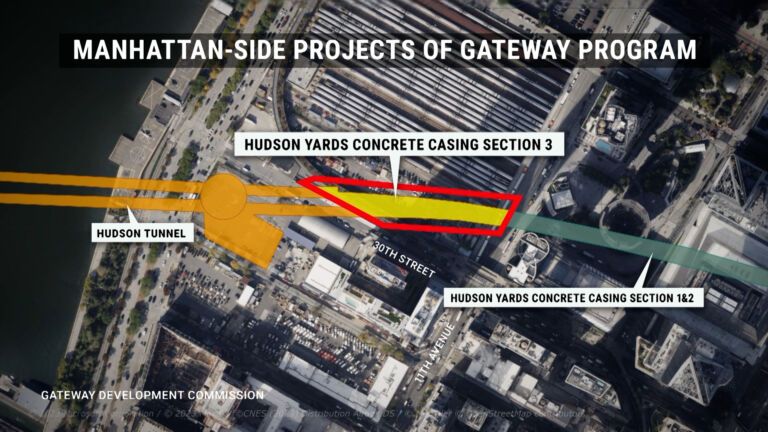
“The president has really laid out a plan that invests in America,” Sen. Cory Booker (D-NJ) said in an interview with NJ Spotlight News. “He’s trying to lower costs, make things easier for the average American family making ends meet.”
Republicans will almost surely strike a different tone in the budget hearings that start this week, when Cabinet secretaries start a series of appearances before the House Appropriations Committee to field questions about their proposals.
The biggest item for NJ
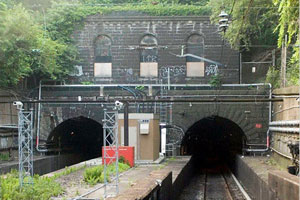
The largest New Jersey-related item in the White House proposal for the budget is $700 million for the Hudson tunnel project, an element of the broader Gateway rail project to ease train traffic between north Jersey and New York City.
That proposal, an agreement between several agencies, including the Port Authority of New York and New Jersey, New Jersey Transit and Amtrak, would create a new tunnel for heavy-rail traffic beneath the Hudson River, connecting New Jersey to Penn Station in Manhattan.
‘Even though the budget has come over, we’re still trying to get last year’s done.’ — Rep. Donald Norcross (D-1st)
“It’s going to impact my residents, my constituents a great deal, because they’re the ones living in New Jersey, traveling to New York,” Rep. Donald Payne (D-10th) said in an interview. “It should be more, actually,” Payne said of the Hudson tunnel request, adding that the broader Gateway project will loom large for generations. “This is the largest infrastructure project in the country and really one of the most important over the next 50 years.”
The Biden administration called for $14.3 billion for a variety of public transportation grants, up $645 million from the 2023 fiscal year. That grant funding could be used for transit agencies like NJ Transit, which in January proposed fare hikes of 15% to shore up its budget.
A new bridge to Ellis Island?
In its budget documents, the National Park Service outlined plans to spend $5 million to acquire 3 acres within Liberty State Park, home to the Statue of Liberty, that would be used to build a new bridge to Ellis Island, as well as a new screening site in Lower Manhattan for visitors to the statue.
The current screening system to visit the Statue of Liberty, established after the Sept. 11 terrorist attacks, was meant to be temporary.
New Jersey would see about $140 million in funding from Energy Department projects under the administration’s proposal, an increase from the $116 million under the budget reached two fiscal cycles ago.
In particular, the Princeton Plasma Physics Laboratory, one of the 17 national labs across the country, would get $55 million for two of its research programs, up from $14 million for the 2023 budget year.
The Federal Emergency Management Agency said in its budget proposal, it plans to update a radio station in Lodi, N.J., that’s part of a national emergency broadcasting network in the upcoming fiscal year.
Coast Guard projects
And the Coast Guard, which like FEMA is part of the sprawling Department of Homeland Security, said it would use money from its budget request to complete four projects in New Jersey, including two in Cape May, where the agency has a base.
The other two are in Beach Haven and Wildwood, the Coast Guard said.
The herky-jerky trends that have come to dominate the federal budget process make it difficult for federal officials to plan.
Rep. Bill Pascrell (D-9th), the lone member of the New Jersey delegation who sits on the Committee on Ways and Means, the mighty tax-writing committee of the House, singled out the White House proposals on Social Security, the tunnel money and two elements of the tax code as positive elements of the administration’s proposal.
“I see this Biden budget as another blueprint for a strong national future,” Pascrell said in a statement. ‘Social Security is protected. There is big money for the Hudson Tunnel to ease travel for New Jerseyans over the next generation. In name of tax fairness, the president targets some of the worst tax loopholes in the entire code that I have been trying to close for years.”
Tax provisions
The tax provision Pascrell wants Congress to close are the so-called carried interest loophole — a benefit to investment managers and the financial industry — and a separate law on inherited assets.
The White House also called for $6 billion from Congress for an internet access program that emerged from the COVID-19 pandemic but has since begun to wind down and is running out of money.
Of the 12 bills Congress passes every year to fund the government, six from the previous budget have been signed into law. The other six, including the bill to fund the Pentagon, will expire at the end of the week — a maddening fact to Rep. Donald Norcross, (D-1st).
“Even though the budget has come over, we’re still trying to get last year’s done,” Norcross, a member of the House committee that oversees the military, said in an interview.
The herky-jerky trends that have come to dominate the federal budget process make it difficult for federal officials to plan.
“It’s incredibly disruptive,” Norcross said. “China doesn’t have this problem.”