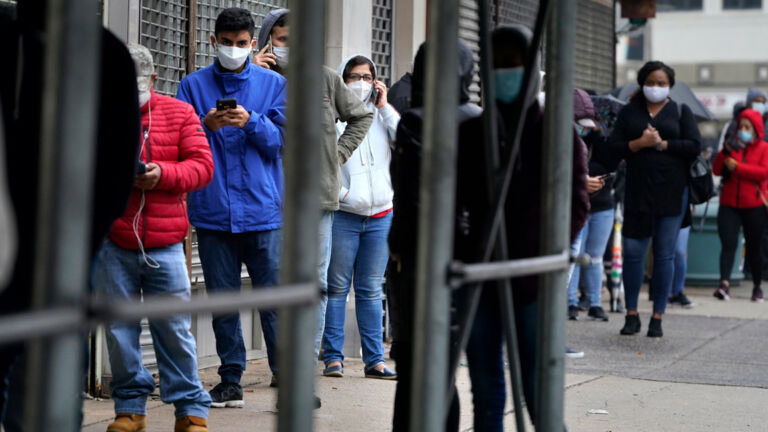
 Credit: (Rich Hundley III, the Trentonian)
Almost every agency across New Jersey described the “extremely detrimental” and “long-lasting effects” that COVID-19 has had on their employees’ mental health and ability to work. State employees often broke down in tears when asked to explain what it was like to be part of New Jersey’s pandemic response.
The governor’s office noted that employee mental health “needs to be a priority in future emergencies,” stating that at one point in the pandemic, its employees needed to be reminded to eat, sleep and take showers.
Those are just some of the findings chronicled in a long-awaited review of the state’s response to the COVID-19 pandemic released by the governor’s office last week. The 910-page report details the trauma and fear that many state employees faced when confronted with the difficulties of personal loss and increased workloads, among many other elements outlined in the report.
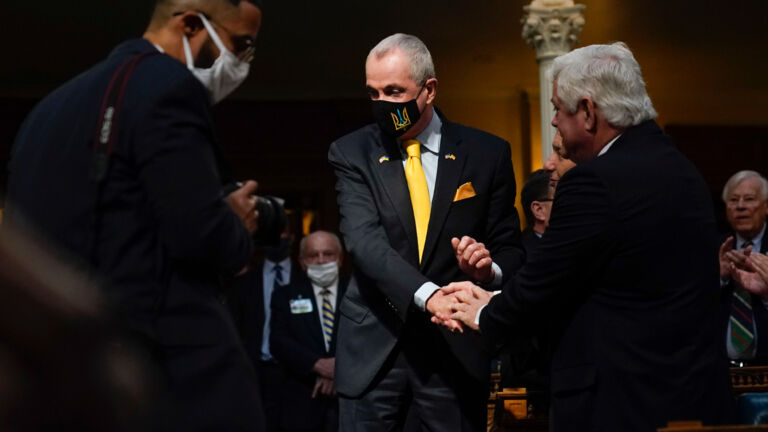
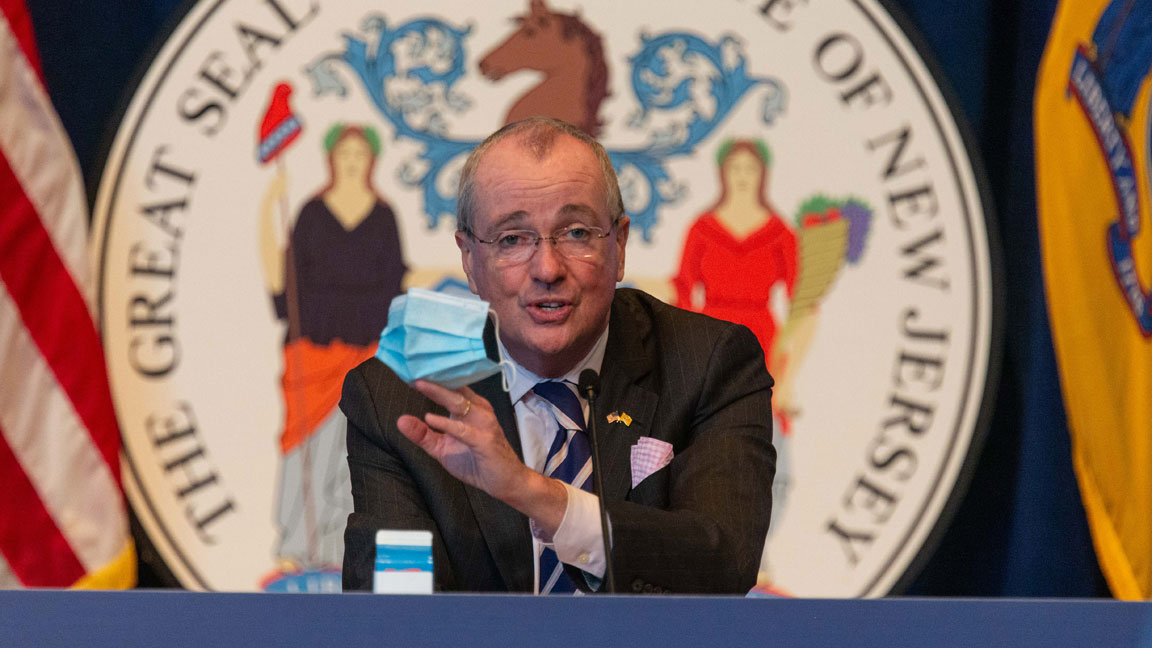
Gov. Phil Murphy pledged that there would be an assessment of the state’s response. In November 2022, Murphy announced that analysis would be led by attorney Paul Zoubek, a partner with Montgomery McCracken Walker and Rhodes in Cherry Hill, with help from the Boston Consulting Group. The state will pay $9 million for this work, officials said — roughly $5 million for Boston Consulting and the remaining $4 million for Zoubek’s team.
Murphy said he is pledging a task force to act on the report.
Waiting and waiting …
The release of the review comes as New Jersey residents continue to feel an emotional fallout from the pandemic, exacerbated by a lack of providers and wait times that can stretch for months.
“It was extremely comprehensive and I think quite accurate with regard to the experiences of state employees,” Dr. Dawn Apgar, the former deputy commissioner of the state Department of Human Services, said of the review.
“Some of the key challenges that were highlighted I think really had a pretty dramatic impact on mental health, for example, related to who’s essential and who’s not,” said Apgar, now an associate professor at Seton Hall University in the Department of Social Work.
COVID pressure cooker
Many frontline agency workers reported experiencing significant trauma due to the panic and urgency of the response and the demands associated with their jobs, the report notes. Some workers, like those in the New Jersey State Police, had to identify, transport and plan for the storage of dead bodies. While other state employees, like those who worked in correctional facilities and state psychiatric hospitals, had to continue to work among large groups of people despite the coronavirus’s potency and transmissibility, according to the review. Consequently, the fears and trauma that New Jersey employees endured day after day had a significant impact on their ability to be fully present at work and provide for constituents.
In a “perfect world,” people need to be proactive and identify potential issues and potential threats to safety, security and health and develop a plan, said Edward F. Sullivan, the president of the New Jersey Superior Officers Law Enforcement Association. The labor organization represents state law enforcement employees across nine different state agencies, including corrections, juvenile justice, human services, treasury, campus police, park police, parole and fish and wildlife, according to Sullivan.
React rather than anticipate
“The response to COVID was a reactive one, it wasn’t very proactive,” said Sullivan. He added that the responses from the government “weren’t very clear.”
“A lot of times when they actually … took some kind of affirmative action and put a plan in place, it was because of a liability on their part,” he said.
In addition to adjusting to remote work and responding to an increased workload, many state workers were forced to continue to operate in the face of “tremendous” loss, according to the report. COVID-19 had caused the deaths of more than 10,000 New Jersey residents by the end of June 2020. The state’s agency staff were “unquestionably impacted” by these losses, the report said. One worker in the office of the public defender lost 11 family members, yet had to return to “business as usual” at the office, according to the report.

Additionally, both the Department of Transportation and the Division of Children and Families noted that staff struggled to maintain their mental health after enduring the deaths of multiple co-workers. State workers were “terrified” of continuing or returning to in-person work due to fear of contracting COVID-19 and spreading it to their loved ones, the report notes. These fears were particularly strong in the early months of the pandemic when the virus and its transmission were not well understood.
And many agencies across the state recognized that their employees were struggling, but lacked the time and resources to provide them with additional support. Other agencies took steps to support their employees’ mental health by ensuring that they had transparent communications, provided programs for mental health support and updated their operations, the report notes.
“Gov. Murphy is extremely grateful for the sacrifices made by state workers, medical professionals, first responders and all who helped serve the public during the pandemic,” Natalie Hamilton, a spokesperson for the Murphy administration, said in a statement. “The diligence and dedication that was demonstrated by New Jersey’s workforce during this unprecedented crisis in our history will never be forgotten. Many employees worked tirelessly even when they were experiencing a toll on their mental health, which only highlights the need for us to continue focusing on mental health and the stigma that surrounds it.”
Ensuring remote access
The report recommends that New Jersey should pursue several measures to increase staff mental wellness in a future emergency including further developing and “institutionalizing” telework policies that reduce stress and improve “work-life balance” for employees. This includes ensuring that employees have the necessary equipment and access to “secure systems” for working from home efficiently.
It also recommends the development of “comprehensive” mental health support and resources for employees when they return to the workplace and increasing awareness of existing mental health supports to ensure that services are being used. Implementing enhanced safety measures, such as rigorous cleaning protocols and adequate availability of personal protective equipment, and reevaluating essential versus nonessential designations are also among the recommendations listed in the report.
“When we think about systemic change, we have to think about it at the policy level. We have to think about it at the administrative or the organizational level, and then we also have to just think about providing individual supports, and that could be counseling, employee assistance programs and things like that for employees,” said Seton Hall’s Apgar.