Credit: (NJ Spotlight News)
People of color and low-income commuters will be hurt most by the newly proposed New Jersey Transit fare hikes, say advocates, because they are more likely to use and rely on public transportation.
Gov. Phil Murphy and NJ Transit have faced mounting criticism since they announced a 15% fare increase last week. Fares will also go up an additional 3% every year to help cover the transit agency’s funding deficit.
However, an increase in fares will only help cover a fraction of NJ Transit’s projected budget deficit, which will balloon to $760 million by the middle of next year. The agency, notably, does not have a dedicated funding source aside from fares. And NJ Transit faces a projected nearly $107 million shortfall in the fiscal year that begins July 1 amid a pandemic-related ridership falloff.
And while Murphy has kept NJ Transit fares stable since he came into office, riders now face one large fare hike — versus consistent incremental price increases — that will force people to foot the funding deficit bill, say transportation advocates. This will disproportionately impact people of color and low-income communities that use public transportation at higher rates, they say.
Temporary solution
Charles Brown, founder and CEO of Equitable Cities, said that the increase in fare revenue could help improve service and infrastructure, but that it is only a temporary solution.
“It’s just a quicker, more direct way to address immediate budget shortfalls … And so from an equity standpoint … [this will] impact low-income riders. Because without that dedicated funding source, there’s not a good way to stabilize and improve services,” he said.
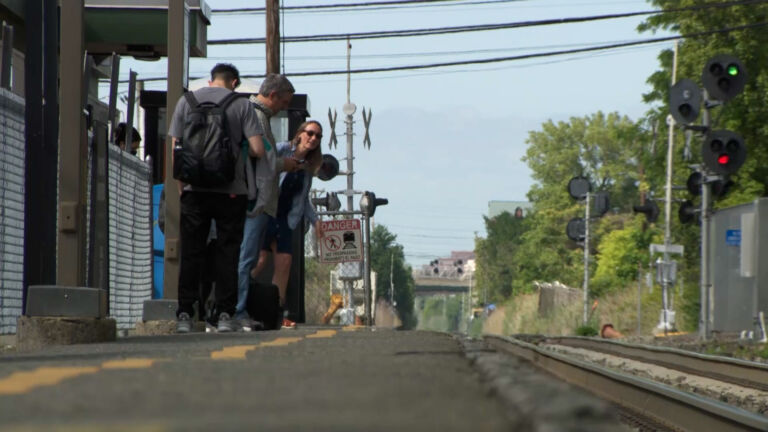
“What we need from New Jersey Transit is a system that doesn’t punish the poor, doesn’t punish the rural, and doesn’t punish minorities who are living in underserved communities,” Brown added.
A study by the New Jersey Policy Perspective think tank found that more than half of NJ Transit bus riders make less than $35,000 a year, and 80% of riders use the bus five times per week. Latino workers commute by public transit at three times the rate of white workers, and Asian and Black workers commute by public transit at four times the rate. Black, Latino and Asian residents are also less likely to own a car than their white counterparts.
Location, location, location
Where a person lives can also determine what NJ Transit options are available to them. Train stations are mostly located in northern New Jersey. Buses can connect people across the state; however, southern New Jersey is a notable transit desert where there aren’t as many bus or train options.
People of color in low-income neighborhoods are underserved by NJ Transit, said Brown, and face longer, costlier commutes as a result. “And so these communities are more likely … to be affected by all transportation policies such as this fare increase in public transit.”
‘When we invest in public transportation, we are investing in the most vulnerable among us…’ — Alex Ambrose, New Jersey Policy Perspective
Brown said that lack of public transportation options can push car ownership, which is costly for low-income communities. And well-funded public transportation is critical for people of color and low-income residents, say advocates, because it can help with economic mobility.
Mobility is key
“Mobility is the greatest determinant of quality of life. Access to jobs, education and health care, seeing friends and family … a transportation network that’s effective, should offer the greatest mobility to its users,” said Talia Crawford of the Tri-State Transportation Campaign.
One solution to fund NJ Transit could be to use a surcharge on the corporate business tax, which Murphy allowed to sunset in 2023. That surcharge on the existing corporate tax could bring in around $1 billion, public transportation advocates argue, around the size of the transit agency’s deficit. The temporary surcharge was added in 2018 and extended throughout the pandemic to help with state revenues.
While reinstating the surcharge as an option has drawn criticism from the business community, Senate President Nick Scutari (D-Union) said in the past that he could support using the surcharge to help fund NJ Transit. Assembly Speaker Craig Coughlin (D-Middlesex) has also pushed Murphy to “explore options” to help source funds for the agency.
Murphy, however, has repeatedly rejected using the tax surcharge. A statement from his administration last week said that “it has kept its promise to hold the line on fare increases until staffing, capital funding, and reliability had markedly improved at NJ TRANSIT, and we will continue to pursue additional avenues to respond to NJ TRANSIT’s fiscal needs.”
Tax big businesses?
But for some transportation advocates, they view the situation as a dichotomy between wealthier corporations, who could help fund NJ Transit, and everyday riders, who will bear the brunt of funding the deficit.
“There’s a fork in the road in front of us. Do we want to see a possible transit death spiral where the budget is balanced on the backs of the poorest among us? And we’ll make headlines because of that? Or do we want to enact a modest tax on the wealthiest corporations in the country, and keep NJ Transit thriving?” said Alex Ambrose of New Jersey Policy Perspective.
Without a stable revenue source for NJ Transit, advocates fear a “transit death spiral,” where increased fare, service issues and decreased ridership could lead the vital service to ruin. Ultimately, good, affordable public transportation is a policy decision, say advocates.
“When we invest in public transportation, we are investing in the most vulnerable among us — in Black and brown communities, and communities that have been historically left behind by planning decisions,” Ambrose said.
Public hearings on the proposed fare increases are planned throughout the state beginning in March, where residents are invited to share feedback on the increase proposal. More information can be found here.