
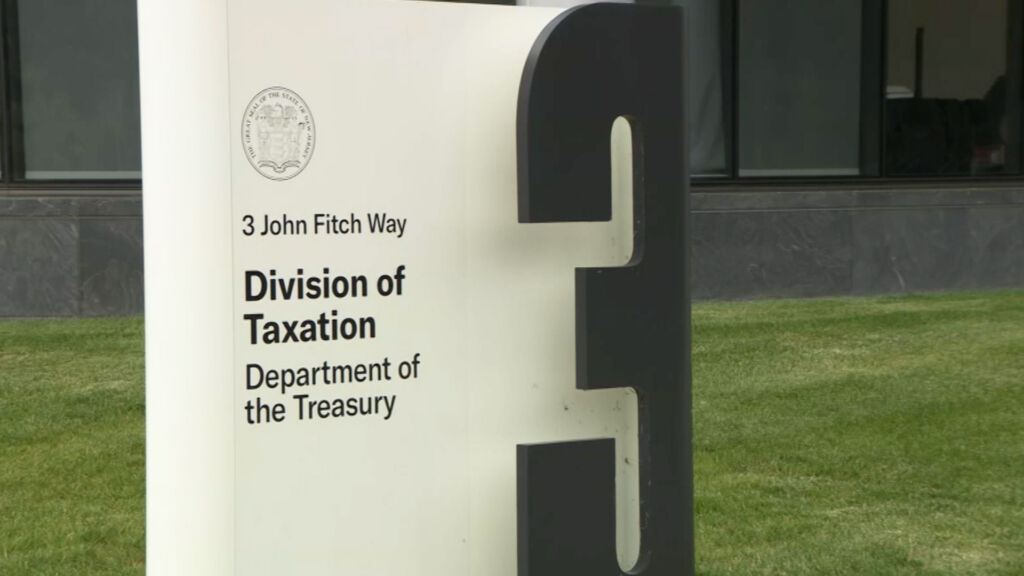
In a matter of weeks, a state law will trigger the planned end to a hotly-debated, temporary tax surcharge that for the last several years has been levied on the incomes of New Jersey’s top-earning corporations.
The special add-on to the state’s existing corporation-business tax has generated extra funding for the state budget at a time when Gov. Phil Murphy and lawmakers have been increasing spending in several key areas, including the pension obligations for public workers.
The surcharge effectively increased the top-end rate for New Jersey’s corporation-business tax from 9% up to 11.5%, but only for the top-earning businesses required by law to pay it. And when it was established in 2018, it was intended to be temporary.
But a short-term extension enacted during the worst months of the COVID-19 pandemic has kept the surcharge — or “surtax” in Department of Treasury parlance — in place longer than the four years that were originally envisioned. That’s why it is now scheduled to sunset on Dec. 31.
However, just as the tax add-on is due to expire, New Jersey is facing several big fiscal questions. They include major concerns about mass transit funding that could soon bring fare hikes and service cuts to New Jersey Transit. And the state budget itself is operating this year with a structural gap because projected annual spending is forecast to outpace revenue collections by a wide margin.
That’s led some to call for the surcharge to be left in place on a permanent basis, something New Jersey’s highest-ranking state lawmaker recently said deserves consideration. But Gov. Phil Murphy has been steadfast in his belief that the temporary surcharge should be allowed to sunset on schedule.
John Reitmeyer explains how the tax has been used.
Here’s a closer look at New Jersey’s corporation-business tax, the surcharge and the debate over what should happen next.
What is the corporation-business tax: The tax, commonly referred to as the CBT, has a long history in New Jersey, where a “franchise tax” on domestic corporations was first established in 1884, initially using capital stock as a basis for the tax. Today, the business tax is levied in a more complicated manner, using a rate structure that effectively applies higher rates on the incomes of businesses with larger profits and lower rates on those with smaller profits. It generates more than $5 billion in revenue each year for the state’s more than $50 billion annual budget.
The surcharge: After many businesses and corporations received a major tax break at the federal level in 2017, Murphy and fellow Democrats who control both houses of New Jersey’s Legislature tweaked the state’s own business-tax structure. As a result, they temporarily established a new top-end rate of 11.5% for businesses with net income above $1 million in New Jersey. Without it, the rate would be 9% for these businesses. The tax-policy change was established as a temporary measure at a time when the state was working to ramp up investments in several key areas, such as worker pensions and budget reserves.
However, during the first year of the COVID-19 pandemic concerns about the state budget were running higher than ever, and a new law was passed to override the original sunset plan for the surcharge. So instead of phasing out by the end of 2021, the 11.5% top-end rate was extended until Dec. 31, 2023.
The case for a permanent surcharge: Even before the onset of the COVID-19 pandemic, there were calls to leave the surcharge in place, at least on a partial basis. A proposal to make permanent a 1% surcharge on top-earning businesses, and to dedicate all the revenues generated by the tax add-on to New Jersey Transit operations, was floated by several prominent Democratic lawmakers in early 2020. While consideration of that plan was eventually shelved due to the pandemic, concerns about NJ Transit’s long-term financial health and need for more state funding have only grown, including after the statewide bus and rail agency was dealt a major financial blow by COVID-19.
This year, leading transportation advocates and policy experts have called for leaving in place the full 2.5% surcharge, and for dedicating all the revenue generated by the tax add-on to funding NJ Transit operations. They note NJ Transit is facing projected annual operating deficits that will soon grow to near $1 billion, according to agency budget documents, while the latest projections from Treasury indicate the elimination of the surcharge is expected to eventually cost the state about $1 billion in lost revenue over the course of a full fiscal year.
Meanwhile, many have also argued top-performing companies can continue to pay the higher tax bill in the current economic climate, and that businesses, in general, stand to benefit from the state’s continued investment in mass transit. Senate President Nicholas Scutari (D-Union) is among those who have recently suggested the idea of leaving the surcharge in place deserves consideration. And environmental advocates have also called for maintaining the surcharge since a portion of overall CBT proceeds are dedicated annually to funding land-preservation efforts.
The case for expiration: Among the steadfast proponents for allowing the surcharge to expire at the end of the year has been Murphy, a second-term Democrat who has labeled himself a “pro-growth progressive.” Earlier this year, Murphy re-committed to the current sunset timeline, telling Bloomberg Television “a deal is a deal.” He also discussed the surcharge during a February budget speech, suggesting the rollback would better position New Jersey to retain and attract businesses, including startups that have the potential to grow into profitable companies and major corporate taxpayers. And Murphy reiterated his stance earlier this week during a conference held by the New Jersey Business & Industry Association, even as he also discussed some of the state’s broader economic challenges.
In their own calls to allow the surcharge to sunset on schedule, the NJBIA and other business-lobbying groups have raised concerns about damage it has done to New Jersey’s reputation and regional competitiveness. Indeed, New Jersey was once again ranked at the very bottom among U.S. states in the latest edition of the “State Business Tax Climate Index” compiled annually by the Washington, D.C.-based Tax Foundation. New Jersey’s 11.5% top-end rate was identified by the group as the highest marginal rate levied in the country.
Moreover, a recent NJBIA survey of New Jersey business leaders found that just 4% believe Murphy and lawmakers have done enough to address business affordability concerns over the last 12 months, with only 30% identifying New Jersey as a “good” or “very good” location to expand operations. The business-lobbying groups have also noted New Jersey’s top-end CBT rate will remain among the highest in the nation after the surcharge sunsets, meaning wealthy corporations will still have a hefty state tax liability come January.
