 Credit: (Taylor Jung/NJ Spotlight News)
America has a history of systematically excluding Black and brown communities from outdoor recreation — and now a few groups in New Jersey are trying to change that.
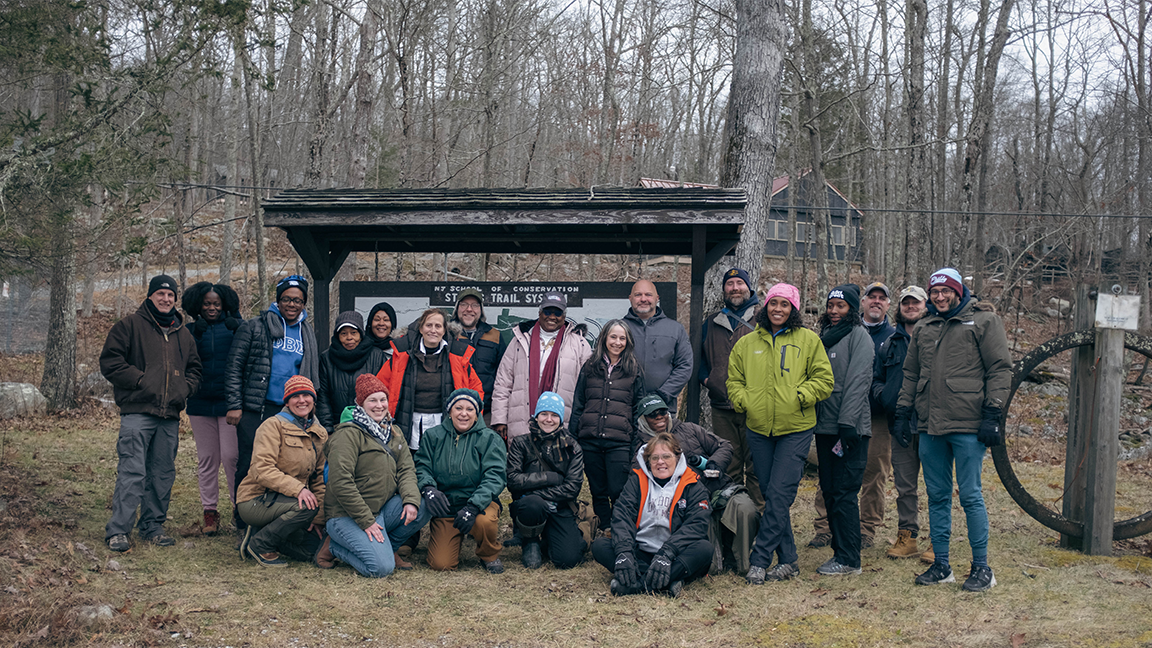
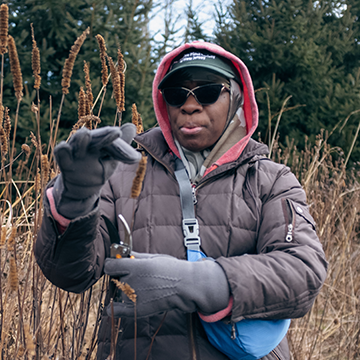
To promote racial equity in the outdoors, Outdoors on Purpose, Natural Ground 1 and the New Jersey School of Conservation gathered on Martin Luther King Jr. Day for a day of service. Some two dozen volunteers helped clean up the school’s Sandyston campus by removing debris, pulling up invasive plants, harvesting native plant seeds and more.
Outdoors on Purpose founder Tenisha Malcolm-Wint said the day was about demonstrating to others that “You don’t have to have a whole lot of experience, wealth, knowledge and money … to decide to give back.” The meaning of the day fit into the groups’ goals to promote education on outdoor conservation and to make the outdoors more equitable for everyone.
Outdoors on Purpose “was birthed not just to encourage more brown and Black people to enjoy outdoor spaces … but also to empower folks to better engage in community and also give back in ways in which they don’t know. So really build in a spirit of reciprocity,” Malcolm-Wint said.
Pandemic hikes
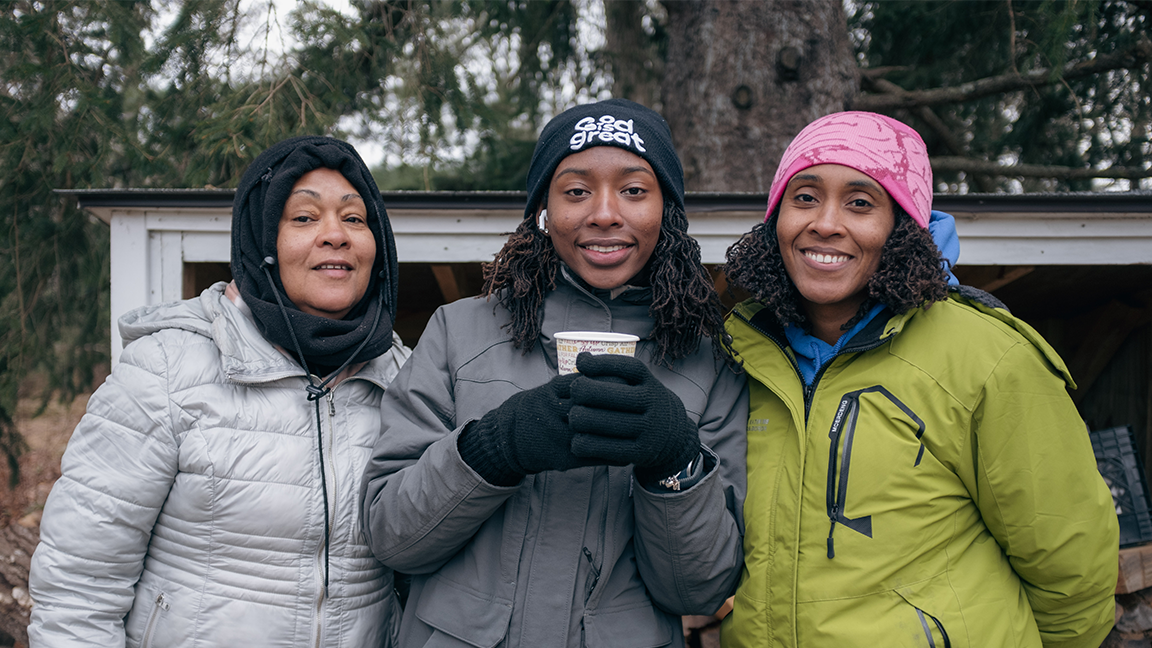
Malcolm-Wint started her hiking community to help get more people curious about the outdoors and help increase Black and brown communities’ access to recreational activities. She began posting her hikes back in 2020, which led followers to become curious about spending time outside during the pandemic.
 Credit: (Taylor Jung/NJ Spotlight News)
She said that creating a safe space for Black and brown people to enjoy the outdoors is key — it’s about a “reclamation of space.” Historically, she said, the outdoors was a place of survival that was “traumatizing.”
“Folks are running from slavery, folks are being chased by dogs, folks are seeing people hung from trees. So there is a trauma that we have to address and identify those outdoor spaces,” she said. “But nonetheless, there’s also a number of our ancestors that are survivalists and managed to use their intellect and ingenuity … to ensure that their safety was made a priority.”
Studies show that people of color are not as engaged with outdoor activities as white people. White people also account for 77% of visitors to national parks, according to a 2020 survey.
Back to ‘our roots’
New Jersey School of Conservation Executive Director Kerry Pflugh is trying to increase access for people of color.
When Malcolm-Wint approached Pflugh in October to host the event, Pflugh said it was a no-brainer. Pflugh said she is shifting the school’s direction to expand access to communities of color after helping save it from shutting down a few years ago.
“When we restarted, one of the things that we wanted to do really was to go back to our roots, which was the idea of working with communities of color, and communities who are disenfranchised and urban communities and bringing the young people here to the School of Conservation,” said Pflugh, whose father also was once head of the school.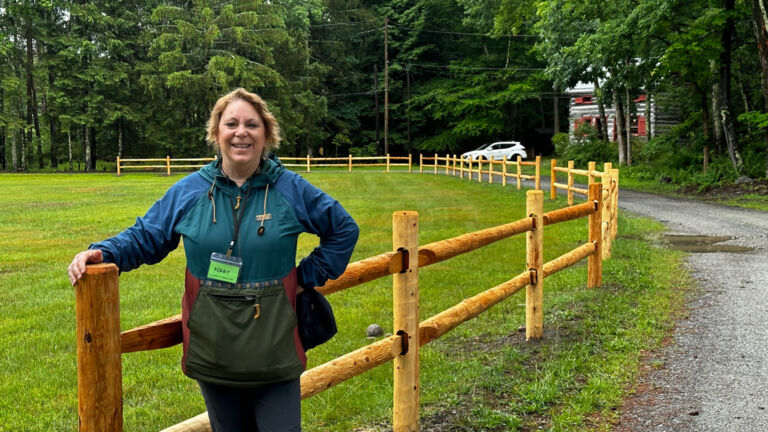
Pflugh met Malcolm-Wint over a year ago through their work at the New Jersey Conference of Mayors and the New Jersey Urban Mayors Association, where they both learned they were “outdoors women” trying to get more people engaged with the outdoors. Her goal, Pflugh said, is to continue working with Malcolm-Wint and others to “reach the young people as well as potential future leaders in their communities.”
Remote location
 Credit: (Taylor Jung/NJ Spotlight News)
One significant barrier to accessing outdoor spaces like the school, however, is transportation. Public transit doesn’t go to the Stokes State Forest, where the school is located. Natural Ground 1’s Dena Corbin wants to connect more schools to bring more Black and brown students, but the cost of transportation is an issue.
“They told us like $1,500 for our yellow school bus. Are you kidding me? How many school systems are going to put that into their budget? How can they afford to put it in their budget?” she said.
“So it’s not that our kids don’t understand or don’t want this. It’s access,” she said.
Malcolm-Wint said transportation was an issue for some the day of the cleanup, but that relying on community members by carpooling helped make the event accessible.
“That’s how urban communities tend to function and operate, thrive and strive around, rallying behind each other and really developing that sense of community,” she said.
‘Freedom to be’
Marsha Benovengo, a member of the board of directors at the School of Conservation, said it’s important to make sure that people help increase diversity and access to the outdoors. “If we aren’t active and making sure that these things happen, how do they happen?” she said. Benovengo is also one of four women who are state chairs of Trout Unlimited chapters, a group dedicated to conserving cold-water fisheries and watersheds. She is the only woman of color to lead a chapter.
Benovengo said, in some ways, Martin Luther King Jr. Day is hard for her, but at the same time, it reminds her of “freedom.” She was a young child when her mother attended the March on Washington, she said. Her dad told her that she was at the country’s capital for “little girls like (her).”
“The first word that came to my mind was ‘freedom.’ Freedom to be. Freedom to appreciate. Freedom to be with other people who appreciate it. Freedom to be on the board… Because not everybody … gets to take part in this,” she said.