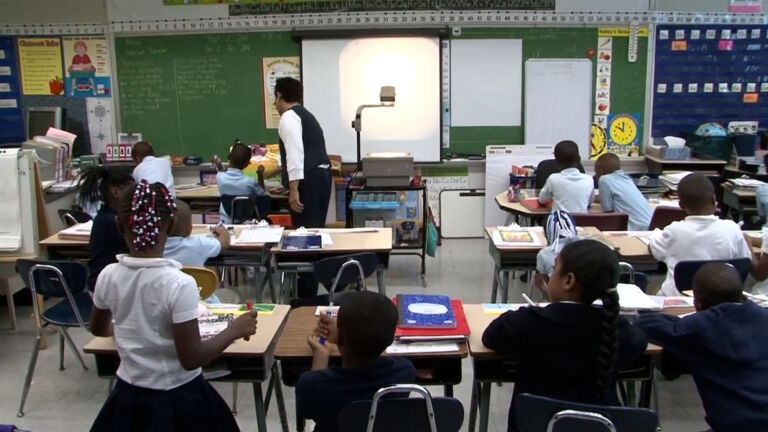
Credit: (Taylor Jung/NJ Spotlight News)
[Editor’s note: For more of NJ Spotlight News’ and its partners’ special project on school segregation in New Jersey, visit Segregated.]
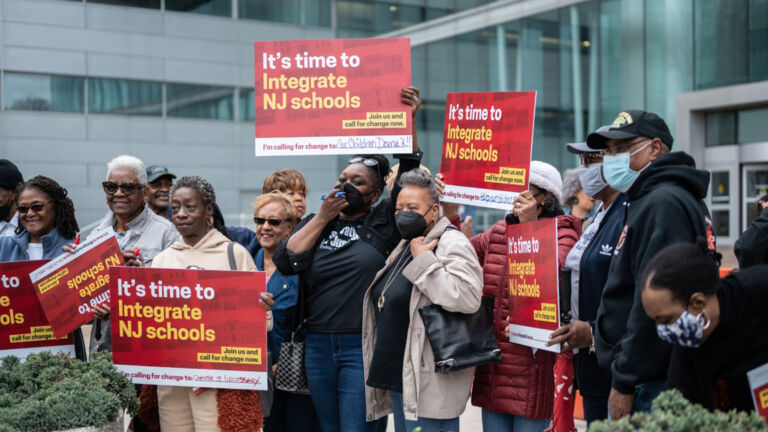
Advocates on Friday pressed lawmakers to end New Jersey’s legal mandate that students attend neighborhood schools, which has contributed to statewide racial segregation in public schools.
The Joint Committee on the Public Schools met Friday to air possible solutions to that segregation, the subject of a state court lawsuit since 2018. The Murphy administration and plaintiffs are currently engaged in mediation to come up with an agreement to address the issue as part of that court case.
Representatives from plaintiffs NAACP and the Latino Action Network Foundation, as well as other organizations, shared potential remedies on Friday for lawmakers. Speakers acknowledged the implementation of proposed remedies would require a strong commitment from everyone involved to overcome obstacles, such as funding for transportation if school district boundaries are expanded.
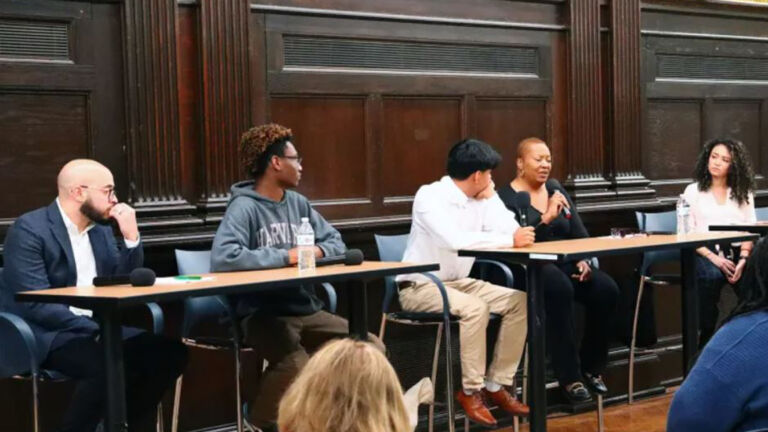
‘Segregated’ news project hosts live event to talk about the data and the learning environments of segregated schools in NJ
“Our schools are deeply segregated, with students disproportionately concentrated by race and socio-economic status. The segregation leads to unequal access to quality education, resources and opportunities, which ultimately hinders our state’s potential and perpetuates systemic inequalities. We can’t afford to ignore the issue any longer,” said Austin Edwards, senior policy counsel for Salvation and Social Justice, a faith-based social justice organization.
Speakers proposed multiple remedies centered on changing which schools students would attend, since school segregation is often determined by residential segregation.
ZIP code is destiny
“New Jersey law requires students to attend schools only in their home districts, which effectively limits access to diverse and high-performing schools based solely on whether you can afford to live in a ZIP code,” Edwards said.
That could mean school choice across district lines, creating magnet schools that cross district boundaries and merging school districts, he explained.
Tom Puryear, chair of the NJ NAACP education committee, suggested implementation could take the form of countywide regional school districts. That is one of the remedies the education committee will propose to the state’s Executive Committee for approval.
Assemblywoman Mila Jasey (D-Essex), who serves on the joint committee, said she has advocated merging school districts for a long time, but it’s difficult because it requires changes to the law.
Segregation is a long-standing, near-intractable problem in NJ schools. Can state’s approach help find a solution?
She mentioned the interdistrict school-choice bills the Legislature has passed but said it’s difficult to get people to participate. Puryear noted none of the municipalities in Essex County, which Jasey represents, have chosen to participate.
Charles Payne, director of the Joseph C. Cornwall Center for Metropolitan Studies at Rutgers University, said remedies must focus on creating diverse environments that broaden students’ social experience while providing the best possible education for every child.
“There are clear and distinct benefits to both. We should not treat this as an either/or discussion,” he said.
Neighborhood hubs concentrate services
Payne advocated for listening to voices from impacted communities and successful practitioners who are already doing the work. One of the solutions he proposed is turning schools into community schools, which Saray Ramos, director of policy and advocacy at the Latino Action Network Foundation also recommended. Community schools serve as neighborhood hubs, offering academic, health, financial and other services to students and community members based on their needs.
“Our state has a long-standing obligation to rectify the systemic inequalities prevalent in our education system,” Ramos said. “The initiatives today are not merely suggestions — they present a pathway for fostering an educational environment that is inclusive, equitable and conducive to the success of all students.
Other remedies proposed by Salvation and Social Justice include fully funding the school-funding formula and creating more mixed-income housing in neighborhoods. NAACP’s Puryear also mentioned universal preschool, increasing access to mental health resources, and diversifying county vocational schools. Several speakers also proposed an end to zero-tolerance policies, which can lead to harsh and automatic punishments for minor infractions, especially for students of color.
As Jasey prepares to retire from the Legislature in January, she said she is frustrated by the minimal change she has seen over the past 20 years.
“We’re such a segregated state, economically and racially. As long as our children are compelled to go to the public schools in their communities, we’re going to have this problem. I’m really frustrated that we’re not doing a better job,” she said.