
 Credit: (NJ Spotlight News)
Acting Education Commissioner Angelica Allen-McMillan announced she will retire on Feb. 1, opening the seat in Gov. Phil Murphy’s cabinet.
Allen-McMillan served for over three years, leading the state’s public schools through much of the COVID-19 pandemic and recent recovery efforts. The next leader will be tasked with continuing these efforts, as well as responding to a shortage of teachers and staff; efforts to desegregate schools as well as several culture-war issues including sex education and the department’s equity code. Doing that will require a strong leader who is a good listener and open to collaborating with partners and stakeholders, advocates said.
“Capping my vocation with the privilege of serving as Commissioner of Education for the last 3+ years has been one of the most rewarding professional accomplishments and experiences of my career. That reflection has led me to this decision to boldly look forward to the next chapter of life knowing that the future of our great state’s education system remains in great hands,” McMillan said on X, the platform formerly known as Twitter.
As Allen-McMillan finishes out her term, advocates are weighing in on what they think will make the next commissioner successful in confronting the challenges facing New Jersey schools.
Staff shortage
One of the biggest issues they hope the next commissioner will address is the shortage of teachers and other district staff.
“The educator shortage that we’ve been facing is probably one of the greatest challenges we face collectively. It’s not just teachers … It’s really across the educational spectrum,” said Sean Spiller, the president of the New Jersey Education Association, the state’s biggest teachers union.
Solving the staffing shortage is not just about recruiting teachers and staff, but also enticing them to stay in the field, Spiller said. The commissioner can help by eliminating barriers to recruitment and retainment, such as limiting paperwork, he said.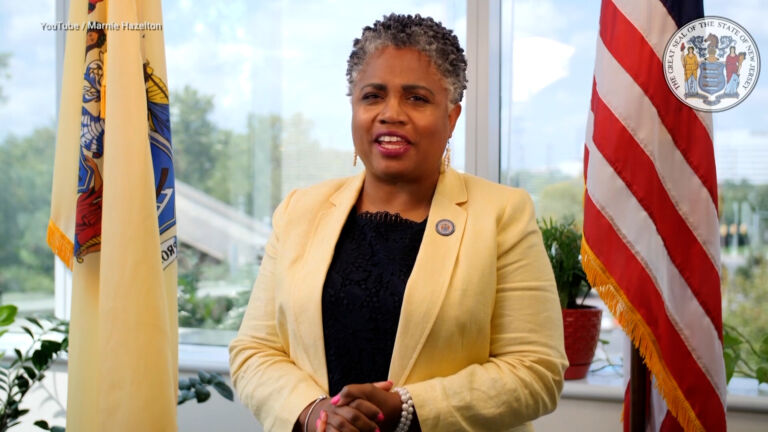
Betsy Ginsburg, executive director of the Garden State Coalition of Schools, said the staffing crisis extends to the Education Department itself. She said one of the first tasks the next commissioner must complete is hiring staff.
“Many of the complaints about the various aspects of department performance, whatever issues they have, are exacerbated by a lack of personnel,” Ginsburg said.
COVID-19 recovery
The commissioner will also need to focus on recovery from the learning interruption caused by the COVID-19 pandemic, advocates agreed. This means providing resources for teachers and leaders to help students access extra help, they said.
This pandemic recovery isn’t just academic. Karen Bingert, executive director of the New Jersey Principals and Supervisors Association, said there is a fiscal cliff coming as federal funding dries up following the pandemic. This means the commissioner will need to find new ways to support schools and districts doing important work, she said.
Desegregation efforts
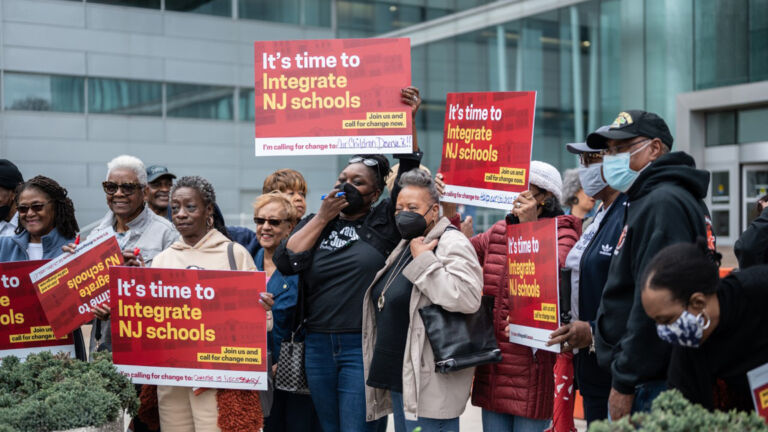
The next commissioner could also play a role in efforts to desegregate schools.
The Murphy administration and plaintiffs in a major school segregation lawsuit recently agreed to try mediation to come up with a settlement, with a tentative deadline set for January. Depending on the remedies they land on, the next commissioner could have a significant part to play.
“There’s no solution out there for addressing an issue like this that doesn’t take into account the person who oversees the entire program in the state of New Jersey,” Bingert said.
Culture wars
Bingert also named the so-called culture wars as a challenge for the new commissioner. During Allen-McMillan’s term the department faced pushback on sex-education curriculum and changes to guidelines for equity in schools.
“The commissioner is really going to have to maintain a focus on creating and maintain a space for all students and all learners in their schools,” Bingert said.
Andrew Mulvihill, the vice president of the state Board of Education and the leading opponent of recent changes to the equity code, said he wants the department to avoid getting distracted by “political and social agendas.”
“I would hope that we could maybe go back to some of those fundamentals, focus on reading, writing and arithmetic,” he said.
Vision needed
Mulvihill said it’s important the next commissioner takes this opportunity to acknowledge the schools are in a crisis and work to address it aggressively. He said academic performance is not where it should be and the commissioner must work to improve student outcomes.
“We don’t have a year to sit back and have someone put in the 12 months. There’s an opportunity here for a hero to emerge,” Mulvihill said.
Paula White, executive director of the JerseyCAN advocacy group, said the commissioner must be able to deliver when it comes to high-yield programs, such as the state’s high-impact tutoring program and the implementation of new learning standards for literacy.
“How do we execute that vision? What does it look like on a very granular level? Those details matter when it comes to kids,” White said.
She said by sharpening their focus on a small number of initiatives the next commissioner can have a greater return on investment rather than managing a lot of programs at once.
Relationship building
Ginsburg of the Garden State Coalition of Schools said the best commissioners are good at building relationships —including within the Education Department and the Governor’s Office.
She urged transparency and timely communication about decisions, which could require adding communications staff or rethinking how communication happens, she said. Districts should receive timely warnings of any major changes so they can implement new initiatives thoughtfully, Ginsburg said.
State Board of Education member Joseph Ricca agreed that transparency is important to success.
“It shouldn’t be difficult for the free, open [news] media to get access to information or to have questions answered. That should be a huge priority,” Ricca said.
The commissioner should work to establish strong rapport with the public education community and listen to stakeholders about what’s happening and what supports are necessary, he added.
State Board of Education President Kathy Goldenberg said collaboration and open dialogue between the commissioner and the state board is incredibly important. All its members are currently sitting in expired seats, so this could mean building relationships with new members if any are confirmed in the Senate during the lame-duck session.
Classroom experience
Advocates said picking someone with career experience in a school system can give the next commissioner an advantage.
Bingert said hiring someone with a demonstrated history of success in a school is critical. She said someone who has worked in a school system recently will have the best understanding of how things have changed because of the COVID-19 pandemic.
Ginsburg said she thinks the next commissioner should be a current or former superintendent, which is true of the best commissioners she has seen.
She said the pool is likely quite small, considering that potential candidates must want the job, be qualified and have ideas and attitudes that align with the Murphy administration.
Ricca, a superintendent and the state board’s only working educator, said while he does not believe the next commissioner necessarily has to be a superintendent, deep professional connection to education is an advantage.
“If you’re talking about being able to make meaningful connections with the field and being able to understand the complexities of the classroom, the challenges and the stresses that faculty members, support staff professionals, administrators, parents, guardians and students are dealing with on a day-to-day basis, that would absolutely be an advantage for the next person in the role,” Ricca said.
